Gooding, David: 1 - The Way of the Lord—Chapters 1–4
ID mfh_1107577540Date unavailableBefore 3.59Restored 4.56
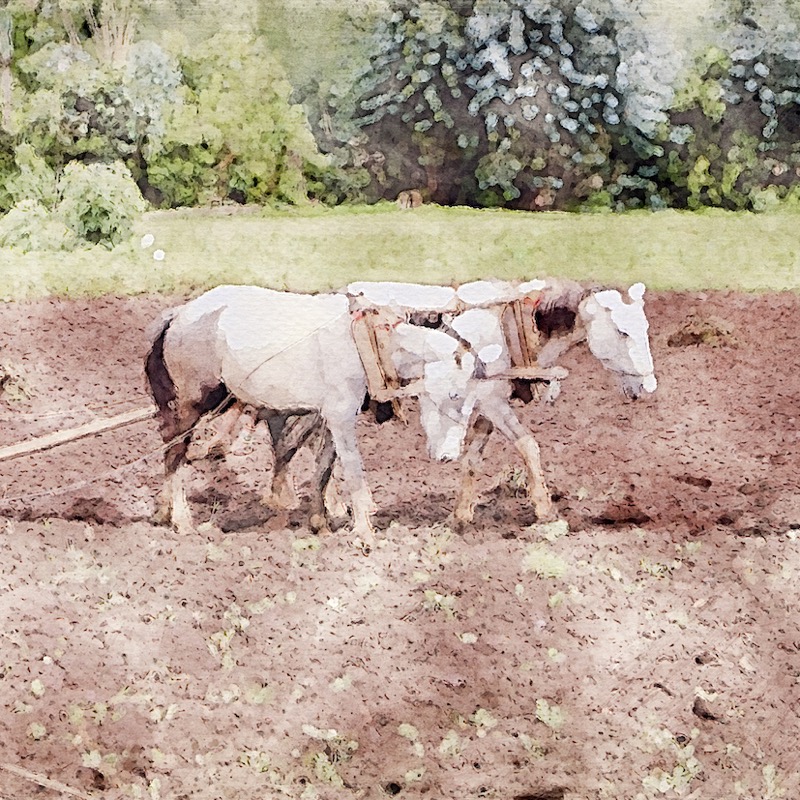
Let, let me explain what we are at. The church here is currently, uh, studying the gospel by Matthew. At great risk to themselves, they have invited me tonight and in the ensuing two Thursday evenings, God willing, to give a kind of overview of the gospel, so that when they proceed again to consider the detail, they shall have some kind of framework into which to place it meaningfully. So my aim tonight is not to preach a sermon on any particular verse, nor to attempt to expound verse by verse, but rather to give some kind of a general prospective- prospectus of the book. Now, if I were about to expound the gospel by John, and I asked you to cite one verse from that gospel that, to your mind, sums up its most important message. I hazard a guess that many of you would choose the time-honored and long-loved verse, John chapter three verse sixteen, for God so loved the world. And your choice would be a very wise choice. I have the privilege of choosing a verse tonight from the gospel by Matthew that, to my mind, sums up one of Matthew's greatest concerns in the writing of this record of our Lord's life and teaching. And the verse I refer to is to be found in chapter eleven, verses twenty eight, twenty nine, and thirty. It is our Lord speaking, and graciously he says, come unto me, all you that labor and are heavy laden, and I will give you rest. Take my yoke upon you and learn of me. For I am meek and lowly in heart, and you shall find rest unto your souls. For my yoke is easy and my burden is light. This is a key verse in Matthew, as we know from the fact that only Matthew records this invitation from our blessed Lord. It must have meant a great deal to Matthew, and we shall presently see why. In it, our Lord offers us first to rest, and then to learn. That is a good order to remember, isn't it, when we come to learn the lovely things and the profound doctrines that our Lord teaches, lest our learning should itself become an excessive burden. First of all, our Lord invites us to come and from him to receive. Twice over he mentions it. Come unto me, all you that labor and are heavy laden, and I will give you rest. Take my yoke upon you and learn, and you shall find rest to your souls. The practical question that rises, therefore, is what our Lord means by inviting us to come and take his yoke. Now, I know that there are various views held about what he meant, and one of them that appeals to many people is to recall that in the ancient world, as in ours, not so ancient, farmers plowed with horses, and it is said that the there would be two horses, and the farmer would put a younger horse beside an older horse, because the older horse knew the ropes, so to speak, and knew the furrows, and had the strength and the sense in its head to persevere. Whereas the younger would take a lot of help in, uh, uh, calming down and doing things properly, you'll see. And they say that the Lord Jesus is offering us a rope like that. He is, so to speak, the equivalent of the old experienced horse, and he will bear the heavy end of the yoke. And we come alongside as the learners who stumble around and get up to our antics and have to be calmed every now and again by the Lord. If that is your preferred interpretation and you have found comfort in that, far be it from me to destroy your comfort, but I don't think it's what our Lord meant. To suggest what our Lord meant, I ask you to turn, if you will, to First Kings and chapter uh twelve. First Kings and chapter twelve. And this is a story how that when Solomon's son Rehoboam came to the throne, there took place a rebellion, and ten of the twelve tribes deserted Solomon's son Rehoboam and set up the alternate alternative kingdom of the ten tribes of Israel. But the revolt was provoked in part by the king's response to the people's appeal. Do you see, uh, uh, the people came along with Jeroboam, their leader, verse three of one Kings twelve: And all the congregation of Israel came and spake unto Rehoboam, that is to Solomon's son, saying, Thy father made our yoke grievous. Now therefore make the grievous service of thy Father and his heavy yoke which he put upon us lighter, and then we will serve thee. And he said unto them, depart yet for three days, then come again to me. And the people departed. I think that's already enough to show us what the people meant by the yoke. The yoke that our Fa- your father put upon us. They're not talking how Solomon, in all his glory, stepped off his throne, took his jacket off and rolled up his sleeves and worked alongside of the other Israelites. Not at all. He sent them to work. As a king, he put his yoke on them, his government, his control, and the yoke he put on them was exceedingly heavy. So now Solomon was dead, the people come to Rehoboam, and they said, now look here, Rehoboam, sir, and your majesty, make your father's yoke lighter, and we will serve you. If you make it the same or worse, we shall depart. So Solomon, so Rehoboam, we're told, had, uh, uh, took counsel from the older men, and they said, the people's request is reasonable, you know. Make it lighter, and they'll serve you forever. Then Rehoboam consulted the younger men. You'll scarce believe this. And they said, make it lighter, my foot, by no means. Make it ten times harder. So when the people came to Rehoboam, he said, I tell you, my father whipped you with whips, I shall whip you with scorpions. My little finger will be thicker and heavier than my father's loins. He was for making the kingly yoke harder and more difficult. And the people said goodbye. That initiated a split in Israel from which Israel never recovered. It is against that kind of background that our Lord issues his invitation. For Matthew, so the theologians tell us, is the gospel of the king. And it is the king who is saying to us, come, take my yoke, accept my kingly government, and learn from me. First, of course, he gives us rest. But when we have rest, then he asks us to come and learn. But of course, the key to learning is the being willing to do what the king says. So take my yoke and learn from me, for my yoke is easy and my burden is light. The word yoke is also used, eh, in a slightly different sense. Let's look at it, one instance of it in the book of the Acts in chapter fifteen. Acts chapter fifteen. And this is the record of the dispute that arose among some of the early churches as to whether the Gentiles had to be circumcised and to keep the food laws in Israel in order to be saved. And so the apostles went up and got together in Jerusalem to make sure that all the apostles held the same doctrine. And there came down some of the Pharisees which believed what they believed, it would be interesting to find out, but they sa- it is said they believed, and they said, yes, it is necessary that the Gentiles be circumcised and keep the law if they're going to be saved. And in that council, when they had debated a long time, Peter rose up, the man who had been chosen by God to open the door of faith to the Gentiles. And he said to them, verse ten, now therefore, why tempt you God, that you should put a yoke upon the neck of the disciples, which neither our fathers nor we were able to bear? And then he added, if I might beg your pardon of putting it in modern English, it is our conviction that it is by the grace of the Lord Jesus that we Jews, if you please, are to be saved exactly the same and on the same terms as the Gentiles. That was a conviction of Peter and all the other apostles. We're glad to have it as a fundamental statement of Christian teaching on the matter of salvation. But note when he uses the term yoke, he's talking of doctrine, of teaching, of commandments. And these who were teaching that Gentiles had to be circumcised in order to be saved, Peter says, you're putting a yoke by your very teaching on their necks. Our Lord is saying, come, take my yoke upon you and learn of me. How do we accept his yoke? And what, how does he, so to speak, impose it on us? So let us turn now to one other famous verse in Go- Matthew's gospel, which is the last few verses of the last chapter, that is chapter twenty eight. This is our Lord's farewell message to his apostles and disciples. This is Matthew twenty eight verse eighteen. And Jesus came to them and spoke to them, saying, All authority has been given unto me in heaven and on earth. Go you therefore and make disciples of all the nations, baptizing them in the name of the Father and of the Son, and of the Holy Spirit, teaching them to observe all things whatsoever I commanded you. And lo, I am with you alway, even unto the end of the world. And we notice, of course, at once the particular emphasis that Matthew is inspired to bring us. Not now, like John saying, go and preach and tell them you must be born again, and tell them that they must put their faith in Christ, and if only they put their faith in Christ, they will have eternal life. Matthew believed it with all his heart, but he was commissioned to put another side of our gospel. Go and make disciples. And as we shall all know, the word disciple in Greek means a learner. It's a thing to be remembered, isn't it? Particularly of any who preach. What we're supposed to be doing is not just to create believers, we are to make learners. I once was at a Bible study, and a man, um, I think not long converted, so excuse in advance for him, and he was going to talk on discipleship, you'll see. And, uh, he was, uh, getting just a little bit lost. He hadn't been long converted, and he was saying all sorts of wonderful things about discipleship, you'll see, and some of them true. So I gin- gingerly suggested that it could, you know, perhaps in in in Greek, the thing could be a learner. No, no, he said, no, no, certainly not. But it is so, isn't it? Go and make learners. And in that context, we mustn't say you can have too much learning, must we? Go and make learners. And how do you do that? Well, he says, you'll see, uh, baptizing them in the name of the Father and of the Son and the Holy Spirit, teaching, teaching them to observe all things, whatever I commanded you. Lo, I am with you all the way, even to the end of the age. This is Matthew. And I quote the two verses to put us in the right mood, so to speak, for when we come to our detailed study. I think, well, I don't know for exact, of course, I haven't seen them, of course, but I get the impression that as we study, Matthew will have his m- his eye on us, you know. What are they doing with my gospel? Are they really taking it in? Hmm. Are they taking the yoke of Christ? Are they enthusiastic about learning from the Lord? And becoming truly disciples? You say, what right has Matthew to talk to us like that? Well, he was inspired, I think you would believe that, do you see? But he had taken the yoke, hadn't he? He got convert. Anybody here admit to knowing where in Matthew, Matthew gives the story of his conversion? Don't all speak at once, it's rude. Any- oh, well, I- I- I apologize to Matthew, but, uh, he has written his conversion, hasn't he? In his gospel, do you see? Mercifully, like, uh, unlike some other conversions, it's very short. Uh, this is chapter nine, do you see? He wouldn't be in much demand, I think, as giving his testimony, but this is in chapter nine, do you see? And it is verse nine. And as Jesus passed by from thence, he saw a man called Matthew sitting at the place of taxes. And he says to him, follow me. And he arose and followed. We should need to know something about what his occupation was to see the effect that this call from Christ had upon him. Matthew was a tax collector, and tax collectors were not liked by the rest of the Jewish populace. To start with, they worked for the hated Romans and were felt to be a kind of quisling. That is, if you know what a quisling is, but then I haven't got the time, uh, to tell you. Look it up on your internet, quisling. If you're ever in Norway, they will take you to his grave and show you that with disgust. But anyway, he wa- Matthew was working for the hated Romans. And then the way they collected the taxes was this. The Romans laid down from the tax collector how much he must pay them. So long as he paid them that amount, he was free, by whatever methods he could use, to raise as much more from the people as he could. They were very hated. They were excommunicated from the synagogue. In spite of all that social hatred and pressures, love of money and profit and power had the better of him. Until one day our blessed Lord came by and said, follow me. And in that moment, it broke his love of money. He got up and followed the Lord. He'd taken the yoke. And as I say, I think we'll have his eye on us as we read his gospel. Are these folks going to do what I did? He doesn't tell us that the party that is then described in chapter, uh, in verses ten, eleven, twelve, and thirteen, the party that is there described, he in fact put on and paid for. Matthew doesn't tell us that. The Lord be praised for his humility. It's the other gospel writers that tell us that bit. He made a party. And of course, the Pharisees, uh, criticized him uphill and down dale. You should have seen the Bentleys, uh, uh, uh, uh, uh, uh, and the Rolls Royces and everything else, uh, parked outside his house. Wow. Filthy rich, the Pharisees would have said. Ah, but every man present at the party, by the end of the meal, knew why Matthew had invited them to come and meet Christ. Matthew hoping that they would, like he had done, hear the word of Christ. It would break their bondage. They would take his yoke. Now, Now Matthew, Matthew. as I say, was a tax collector. And Matthew, of course, could write, as you know, he wrote the gospel. But in those days, lots of people could write. And they had little books, little codexes, as we called them. Uh, if they had nothing more, they were pieces of wood, and uh, they were hollow in the middle, and they were smeared with wax, and you could write on them, you'll see, and when uh, you'd finished with that, you could smooth it out again and, and write on it again. And they had several of these with a leather thong going through them. They were a little book, a libellum, you'll see, or libellus, as the Romans called them. It was common. And Matthew, being in the habit of so doing, it would be extraordinary if, when he was with the Lord, he didn't jot down in his little li- little book some of the things that Christ said. And when he come to write the gospel, you will see the ordinariness of an accountant in the way he has written it, will you not? So let me call your attention to the feature that most of the commentators point out, the way he has organized his gospel. If you look at, uh, chapter one, for instance, there you will find various narratives, starting with our Lord's genealogy, then the story of the actual conception and birth of our Lord Jesus, followed by the coming of the wise men to Herod. And then, uh, uh, you get the story of how, when the wise men were gone, an angel told Joseph to take the young child to Egypt, there for protection's sake. And when Herod was dead, the angel gave Joseph permission to bring the child back, and eventually they settled in Nazareth. Then in chapter three, we go on with the narrative of John the Baptist's ministry, what he preached, and people that got converted and baptized. Then in chapter, in chapter, uh, three, in verse, uh, thirteen, the brief story of our Lord's baptism and what happened on that occasion. Then in chapter four, there's the narrative of our Lord's temptation in the wilderness. And finally, as far as narrative is concerned, from chapter four verse 12 and onwards, we get our Lord removing north and an account of his teaching ministry in the north. So narrative, collection of narratives. And then a great wodge of teaching. So from chapter four verse twenty three onwards, in chapter five and chapter six and chapter seven, you have what is famously called the Sermon on the Mount. It is not narrative in that sense, it is teaching, systematic teaching, our Lord's moral and spiritual teaching. What I want particularly to point out to you is how chapter seven ends. Would you care to look at verse twenty eight? And it came to pass when Jesus ended these words, the multitudes were astonished at his teaching, for he taught them as one having authority and not as their scribes. Notice that little phrase. And it came to pass when Jesus had ended all this teaching. What happened next? Well, cast your eye down chapters eight and nine, and what happens now is a whole lot more narratives, stories. Some people prefer stories to teaching, you know. They like the Gospels better than the epistles. I mean, they're full of beautiful stories, aren't they? And as for Paul and all that endless teaching, oh dear. Mm-hmm. I know we owe our salvation to him, we in Europe, but... when we get home to heaven, we shall congratulate him. We said, we owe a lot to you, Paul, from what you wrote. Of course, a lot of it we didn't understand anyway, and actually we preferred Matthew, you see, uh, because, I mean, he had stories to tell. Mm. Well, anyway. Yes, uh, from chapter eight and chapter nine, a whole lot of narratives again. And then in chapter ten, teaching, great watch of teaching, which is the briefing of the apostles as they went out on their evangelistic mission. And then that teaching comes to an end. Look at chapter eleven, if you will, in verse two— uh, verse one. It came to pass when Jesus had made an end of commanding his twelve disciples, he departed thence to teach and preach in their cities. Matthew is in danger of, of, of repeating the, the pattern, isn't he? First narrative, then a watch of teaching, and when our Lord has ended the teaching, then narratives, and then a bit of teaching. And, uh, well, how does that end anyway? Well, let's look, uh, and see. Do you see? We come to chapter thirteen and verse fifty three. And it came to pass when Jesus had finished these parables, he departed thence. So you end that section with a lot more teaching par- in the form of parables, and then Matthew marks the end of it, when he'd ended these sayings, these parables. And what then? Well, you get a lot of narrative, of course. In chapters, uh, thirteen and, uh, fourteen and, uh, fifteen and sixteen. good measure narrative now, it is really going places, uh, and chapter eighteen, and s- uh, you come then to teaching. You wouldn't guess how that ends, would you? Mm. Look at chapter nineteen verse one. They came to pass when Jesus had ended these words, he departed from, uh, uh, Galilee and came into the borders of Judea beyond Jordan. The fourth time he has used it. In Jerusalem, narrative and teaching become intermingled, do you see? It came to an end. Look at chapter twenty six and verse five. And it came to pass when Jesus had finished all these words he said unto his disciples. Six major sections to his gospel. It's a very neat and orderly writer, isn't he? Knows how to organize the books. He was a tax gatherer and an accountant. Let's be grateful for accountants, if we can't manage to be grateful to tax gatherers, do you see? But when Matthew has been so careful to organize his gospel, then if we take it seriously that he was an inspired apostle, we ought to take his writing seriously. It's not just a jumble of unrelated topics. So I, I now want to put in front of you, uh, a collection of his, um, uh, first sections of narrative. Now, I apologize in advance for the, um, faintness. My xerograph is an old one, and if you can't see, uh, well, come up afterwards, I'm sorry, uh, I will try to do better another time so that, uh, actually doesn't make me stay in after school, you'll see. But you'll notice that here, uh, is the first section of narrative. There are first the genealogy, then the story of the birth, conception by Mary and the birth. Then there's the coming of the wise men to Herod's palace, and he consults the priests and the Pharisees, and they get out the Bibles and consult the Bibles as to where the Messiah should be born. And then when the, uh, uh, the wise, the wise men have gone away, the angel warns Joseph to take the child to Egypt, and we read how Herod massacred the young children in Bethlehem. The statisticians think there might have been twenty of them in a city that's in a village that size, you'll see. So four stories ending in the withdrawal. I went to Egypt with the child. He came back at the angel's command, and though Herod was dead, Archelaus was still reigning, and he was even more cruel than, uh, Herod, and so they withdrew into Nazareth, unheard of place and remote, and therefore a bit more secure for the growing child. Then, of course, in chapter three there's the ministry of John the Baptist and what he preached and how he accosted the crowd and so forth. Then in the sixth place, there is the story of the baptism of the Lord Jesus. Followed, place seven, by the temptation of our Lord by the devil, and how the Lord overcame him. And finally, there's the withdrawal, because when our Lord refused to bow down to the devil, and the devil had his counterattack, you know. And the next thing you read in Matthew that our Lord heard that his forerunner, John the Baptist, had been put in prison. You can get the message, if you will. You're not going to bow down to me. I'm reminding you that all the kingdoms of the world are mine. I do with them what I like, says Satan. You're not going to bow down to me? Well, the next thing he hears is his forerunner was put in prison. And in the custom of the ancient world, as a forerunner was treated, so you might expect the great noble person that came after him to be treated in the same way. The gauntlet was being thrown down. But have a look at that if you can. You'll get an extra cup of tea afterwards if you can manage to read it, you see. Do you find anything peculiar? Anything worth noticing? Compare the two sides, if you will. Notice anything worth noticing about them? Notice any similarities? Afraid to say, David? Pardon? We're afraid to say. You're afraid to say? Two kings. Pardon? They're two kings. Well, they're two kings, aren't they? Yes. Marvelous. Two kings here, and two kings here, yes. Look at this first pair. The first paragraph here goes to great length to show us that our Lord was of the seed of Abraham and the seed of David. That is very important. We should come back to consider why that is important in a moment. Vastly important, so important that it is put first. This is the gospel of Jesus Christ, son of David, son of Abraham. Why is it important? Over here, look what John the Baptist is saying. He saw the Pharisees coming to his baptism. Oh yes, said he a little bit sarcastically, who has warned you to flee from the wrath to come? Don't you start saying, we have Abraham to our father, we're the blue blooded McCoy, you know, we are Abraham's sons. Don't start saying that. That comes for absolute nothing, says John. What you need to do is to repent. Well, how do you reconcile those two? Descent from Abraham was everything important. Descent from Abram counts for nothing. If you haven't seen it, never mind. But if you have, it is something to be accounted for, isn't it? Why need we be concerned with this long genealogy all about past history. Well, my dear ladies and gentlemen, it is because our Christian gospel is not a philosophy. It is based in history. Anybody with two penance of sense in his head or her head can invent a philosophy, and many have done so. Some have ha- have been successful in getting followers. You can't organize to be born of a particular parent, can you? I don't know whether you managed it. Did you, did you manage to organize that you would be born of some rich, uh, millionaire or something, and, uh, so you were? I think not. The Christian gospel is based in history, centuries of history, and is a thing that we need to grasp and get hold of. It lies behind certain forms of our witness to the world. It is the story how, when the other nations were gone over into idolatry, God's answer was to call out one man, Abraham, from an idolatrous Ur of Chaldees, and reveal himself to Abraham as the one true and living God, and from Abraham to form a nation that should stand for faith in the one true living God. The phenomenon in history of the nation that sprang from Abraham, the nation God formed as a witness against idolatry and for the one true God. Now, I know the social anthropologists and other such things will argue, ah, but you see, religion has evolved, hasn't it? Didn't you know that? Religion has evolved, they say. You start off by being perhaps animists, you know, thinking that there's a spirit or something in the trees and in the rocks. Some Japanese still hold it in the Shinto religion, brilliant scientists though some of them are, do you see? And from believing in animism, you then, uh, personalize the gods, and you come to believe in a, a, a plurality of gods. Do you see? Your nation has a god? Uh, plenty of gods, and all nations have gods. And then you evolve a little bit further, so the theory goes, and you see that you have, your nation has one God. Another nation over here has one God, you see. So that's called henotheism. One God per nation. And then you evolve a little bit further, and you come to monotheism. There is only one God throughout the whole world and universe. That's monotheism. And then, if you're Richard Dawkins, you evolve a little bit further, and you come to atheism. Marvelous, isn't it? Do you see? And it is taught as though it was scientific. It is not true to history. How do we know that Israel didn't evolve into this belief in the one true God. Well, for the simple historical reason, it was revealed to Abram, but Israel were for everlasting compromising the thing all down history, weren't they? And had to be pulled back by the roots of their hair, by their inspired prophets. And it was a long, centuries-long discipline by the true God to discipline Israel. But I love to inform you that he succeeded in the end, did he not? When our Lord Jesus Christ entered earth and came to the temple in Jerusalem, there was not an idol in it. And there were certainly no temple prostitutes, as in Greece there would have been. Israel had been cured of idolatry in that sense, and was strictly monotheistic. And why is that important? Why did God wait until he had a nation like Israel that had been cured of idolatry and standing by the revelation that God had made to Abraham. Why did God wait, uh, uh, not send his son before then? Well, I don't know if you can imagine what it would be like going to the Greeks and, uh, saying to the Greeks, if you were a Greek, uh, you know, Jesus is the son of God. And your Greek would say to you, oh, that's very interesting. Yes, old Zeus, you know, he has a, uh, the rumor is he has no end of wives, you see, and uh, sons galore and daughters, if you like. And w- w- uh, which god is yours the son of? And if when our Lord had come to earth, his nation had been idolatrous still, we might still be in doubt as to what is meant by the claim that Jesus is the Son of God. Christian gospel is built on history, and all way down the line of history. Matthew divides the genealogy into three major parts, you'll see. Why? Because he's telling you to look back into the Old Testament and the lessons that God taught Israel in the course of that long genealogy, what he was teaching them. We shall have to come back to that on another occasion. You'll see. So Christianity is built on history. And of course, our Lord's, uh, miracles, his life on earth, his miracles, his death, his resurrection and ascension, these we preach as they truly are history. Now there's this side. There's John the Baptist, listen to him, shouting out loud there to the Pharisees about the wrath to come. And he's saying to them, you'd better start repenting, gentlemen, because already the axe is laid to the root of the tree. If you were to go through Botanic Gardens one of these days, and in your, uh, walk around the gardens, you've come across a big tree that looked a bit wonky, and you saw an axe that had been laid there, and the workman had gone off to lunch or something, you might draw the conclusion that the workman intended to have the tree down now shortly. You better start repenting, said John to the Pharisees, for the axe is laid to the root of the tree. Don't you stand there and say, but we don't need to repent. We have Abraham to our father. That counts for nothing. It's your personal standing before God, your spiritual state, the rebellion of your sins. You need to repent and be forgiven. This doesn't contradict that, but it puts the balance to it, doesn't it? You see, this para- this first part is the story of how God's son came into our world. It's the story of the way of the Lord, if you like. How did he come when he left the mansions above of glory and came down to our world? How did he come, and by what means and methods? This is the wonderful story of it. After these long years of genealogy, then the marvel of his virgin birth, and so forth and so on. With the result of people with the scriptures in their very hands, either not interested in the coming of Messiah or planning to slaughter him. And when they couldn't get at him, they slaughtered all the children to make sure that he would be among them. A little example of the genocide that has gone on, has it not? All down the centuries, as Satan has tried to obliterate the nation from whom the Christ was to be born. This then is, how he came into our world, came as a babe, and so forth and so on. This is the way of the Lord in another sense. John came claiming to be the fulfillment of Isaiah chapter forty, that rings out the call. Prepare the way of the Lord, make his path straight. Every valley shall be filled, uh, filled, and every mountain laid low. In an ancient city, if you were to be visited by the emperor and you knew he was coming, then they would send out the workmen to, to smooth out the road, and potholes would be filled, and humps would be demolished, so that there would be a nice plain road for the emperor to ride his chariot down. And Isaiah uses it as a metaphor, prepare the way of the Lord. And the way of the Lord, of course, will be prepared by people's personal and national repentance and seeking God. Don't you stand there saying we are Abram's children. A lot of Abram's children will at last be lost. Some of them took their Messiah and had him nailed to a tree. There is need, therefore, if the Lord is going to come not only into our world, but into our hearts. And it doesn't matter who we are, of what race. You could even be Irish if you wanted to be, a- a- a- and still... we couldn't stand on that. Except a man be born again, he cannot enter the kingdom of God. But I said enough, indeed too much, and you are to be rewarded afterwards by a cup of tea for what you have endured, do you see? But I trust I've said enough to indicate what are, what is Matthew's predominant motive in writing the record. To persuade us to come and take the yoke of Christ, for he is king. His yoke is easy. Coming to him, we find rest. But then we find a yoke, which he imposes on us by his teaching. And we shall find in his teaching rest for our souls. For real though his yoke is, his yoke is easy, and his burden is light. It reminds us of our duty as believers. We're not just to go out and preach that folks may believe. That is absolutely necessary, of course. But we are to make disciples. We are to make learners. Teaching all that he has commanded. We've seen how Matthew himself took the yoke of Christ, how it broke his slavery to the love of money and made him a follower of the Lord. And what a debt we owe to Matthew for his gospel. We've noticed how God used his natural talents and inclinations, so that in writing his gospel, he's not just put down a lot of incidental stories, make of them what you will. He very carely, carefully selected them and then organized them, so that we can take the meaning out of each one, but if we are careful in our study, we shall compare one with the other and see that very often there are two sides to a question. Sometimes there are four sides. And it's part of our Christian balance in thinking to observe the balance in Holy Scripture, that we might profit the more deeply by what those writers have been inspired to record for us. Thank you for your great patience. Shall we pray and give thanks for the food? Sovereign Lord Jesus, we praise thee for thy servant Matthew, through whose pen we read thy words and find them sounding livingly in our minds, in our consciences, in our hearts. Lord, we bless thee for the reality, for the rest thou hast given us. We pray, Lord, that increasingly we might learn of thee, and ever more closely, Lord, put thy yoke upon us, that we may serve thee gladly and find rest to our souls. And in our studies of this gospel, we pray thy gracious help of thy spirit, that thou wilt teach us not merely the facts, but how to think about them, and then show us what application and direction they shall give to our basic thinking and to our way of living. Now we thank thee for Christian fellowship, for the refreshments that will be offered to us, and pray thine evening blessing and thy grace for thy name's sake. Amen.