Gooding, David: Two Prepared Entries into Jerusalem
ID mfh_1107621211Date unavailableBefore 2.30Restored 4.55
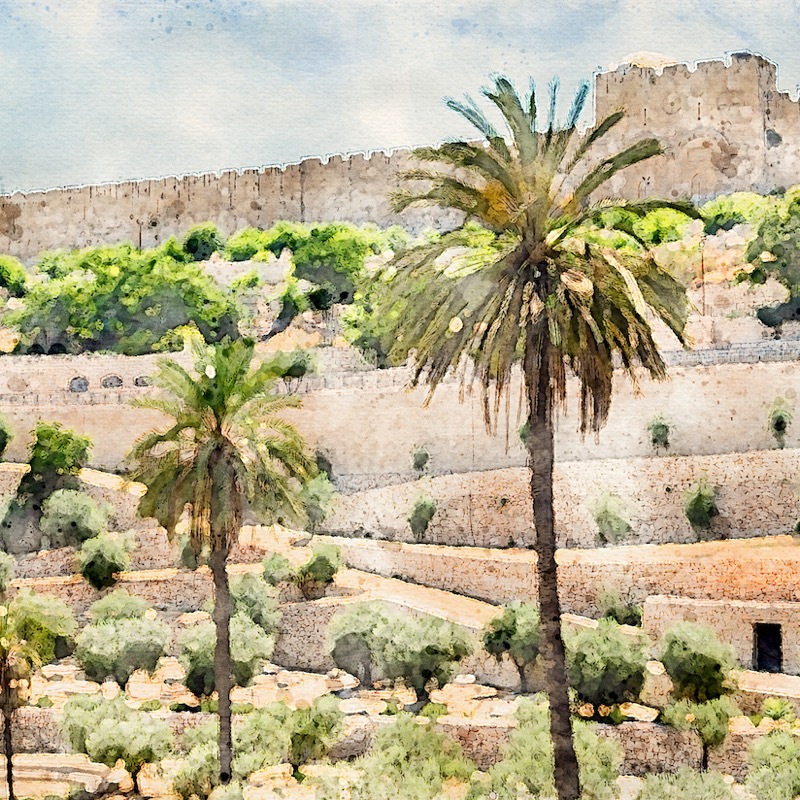
Thank you for bringing us to meet with you in your celebration of the Lord's Supper. For that reason, I would like to take us back for a few brief moments to the original occasion on which our Lord instituted the Lord's Supper that has brought us together here this morning. We shall base our remarks on two passages from the Gospel by Luke. The first of them is to be found in chapter nineteen. The Gospel by Luke and chapter nineteen. Verse twenty nine. When he drew near to Bethphage and Bethany at the mount that is called Olivet, he sent two of his disciples saying, go into the village in front of you, where on entering you will find a colt tied on which no one has ever yet sat. Untie it and bring it here. And if anyone asks you, why are you untying it, you shall say this, the Lord has need of it. So those who were sent went away and found it, just as he had told them. And as they were untying the colt, its owners said to them, why are you untying the colt? They said, the owner, the Lord, has need of it. And they brought it to Jesus, and throwing their cloaks on the colt, they set Jesus on it. And as he rode along, they spread their cloaks on the road. And as he was drawing near, already on the way down the Mount of Olives, the whole multitude of his disciples began to rejoice and praise God with a loud voice for all the mighty works that they had seen, saying, Blessed is the king who comes in the name of the Lord. Peace in heaven and glory in the highest. The second passage is to be found in chapter twenty two, Verse seven. Then came the day of unleavened bread on which the Passover lamb had to be sacrificed. So Jesus sent Peter and John, saying, go and prepare the Passover for us that we may eat it. They said to him, where would you have us prepare it? He said to them, behold, when you have entered the city, a man carrying a jar of water will meet you. Follow him into the house that he enters, and tell the master of that house, the teacher says to you, where is the guest room where I may eat my- may eat the Passover with my disciples, and he will show you a large upper room furnished. Prepare it there. And they went and found it just as he had told them, and they prepared the Passover. According to Luke then, in the last week of our lives, our Lord's life here on earth, before he was crucified, he made not one, but two very carefully prepared entries into the city. Of course, during the week, each night he went from the temple to the Mount of Olives and came back in the morning. That was necessary because during daylight in the temple, the crowds hung on his every word, and the chief priests who wanted to arrest Christ were afraid to arrest him while the crowd was present. When at nightfall the crowd went away, our Lord went to the shadows of the Mount of Olive in order to prevent premature arrest. But I speak now of two entries that were very carefully prepared. The first one we read of when our Lord was finally approaching the city and coming down the Mount of Olives. He sent two of his disciples to the nearby village with instructions that they would there find a colt, they were to untie it and bring it to him. And the two disciples found, says Luke, exactly as he said. If the owners asked them, why are you losing the colt, they were to say the Lord has need of him. Only, of course, in Greek, the word for owner and the word for lord are here the same. When the owners asked, the lords of the donkey, so to speak, why are you losing it? They replied, the owner has need of him. Humble though his guise, he was the lord of heaven and earth, owner of everything. And at this point, the owner had need of a donkey. What for? Because this was to be his final and official entry into the city. At his baptism earlier, John had announced him officially at the beginning of his ministry, and the Lord had been on times to Jerusalem, but in humble guise, but not this occasion. The prophet Zechariah had prophesied of a public coming of Zion's king to his capital city. He would come lowly, riding on a donkey, but he was to be king. Because, you see, in the ancient world, true kings didn't ride spectacular horses like the Gentiles did. They showed their true character as monarchs by the humble steed upon which they rode. But don't mistake the, the, the mount the Donkey. For he who sat on it, as he entered Jerusalem, was deliberately himself fulfilling the prophecy that Zechariah had made in his chapter nine verse nine. Behold, your king cometh, lowly, riding upon Anas, the fall of Anas. What moments they were for Jerusalem. Can you picture it? For anybody standing in the Golden Gate and looking over the valley of the Kidron and up the Mount of Olives, the other side. Suddenly, after the centuries when the prophets had been still and silent, no further prophet had appeared. What tingling of the ears and pulsating of the heart, whence they saw, coming down in great cavalcade down the mountain of olives, the king of Zion himself, and the crowd of his disciples saying, blessed is he, the king that comes in the name of the Lord. The king, therefore, coming to his capital city. And I may turn aside for a moment, but I can't resist it to say you'll see another spectacle. You shall one day see him. Oh, I shall see him descending the clouds. He shall not come on a donkey then. He shall come in the glory of his Father and with his holy angels, and his feet shall stand on the Mount of Olives in that day. This first of the two entries, very carefully prepared by sending two disciples to arrange the necessary transport. We know that at the end of that week, Jerusalem officially, in the persons of its high priest and the leaders of the Sanhedrin, rejected their king and eventually slung him out of the vineyard and murdered him. But you don't get rid of the king of Jerusalem just as easily as that. For at the end of the week, though Jerusalem was now officially hostile to him, he staged another entry, and just as carefully prepared as the first one had been. For he sent two disciples again with instructions, and like the first two that had gone after the donkey, these two found, when they got there, exactly as he had told them. It would seem that our Lord had made a prior secret arrangement with a certain householder, and Luke does not mention his name. For when Luke wrote, it might still have been dangerous for that name to have been published in Jerusalem City. This was a secret coming, but it was going to be in Jerusalem. Let us remind ourselves that when our blessed Lord instituted, uh, the remembrance feast, he didn't do it out on the Mount of Olives or even in Martha's home in Bethany. He did it in his capital city. Let the authorities there be planning his murder and crucifixion. They wouldn't keep him out of his city. He sent two disciples with a sign, you'll meet a man carrying a pot of water. That was unusual for a man to do that anyway, that was women's job. They were to follow him and watch the house he went into. And they were not to ask that man with his pot, they were to ask the master of that house, where is the guest chamber? And the master of that house had prepared a guest chamber for our Lord to use with his disciples to celebrate the institution of Passover, and then to celebrate the institution of the Lord's Supper. Visualize it. In the dark of a Jerusalem night, the city hostile. We didn't know what guard was around the next corner, ready to arrest any of Jesus' followers and Jesus himself if they could lay hands on him. He comes to the upper room by s- arrangement with this householder, and And there there instituted instituted the Lord's Supper. What was its significance? You say he gave them the bread, symbol of the body that he was about to give for them at Calvary. True. He gave them a cup, symbol of the blood that he was about to shed for them at Calvary. Gracious, blessed Lord, choosing that thus we should remember him. The symbols were very carefully chosen, of course. It is to be noticed that when our Lord chose means by which we might remember him, he did not ask that someone should stand up and read the Sermon on the Mount. That is a very good sermon and very necessary for our admonition. But had he requested that at this, uh, memorial session we should read the Sermon on the Mount, we should have remembered him as a moral teacher. He didn't choose that. He could have ordained that somebody got up and recited or read stories of his great miracles. How profitable it would have been. But had he chosen that method, we should have remembered him as a miracle worker. He didn't choose that. The ceremony that he chose for us to remember him by, were the symbols of his body given and his blood outpoured. This was the prime purpose of his coming, announced by John the Baptist as the Lamb of God who takes away the sin of the world. This was the prime purpose of his coming. And it is the prime hold that he has on the heart and affection and loyalty of all who claim to have been forgiven by his blood and the sacrifice of his body. But there was more than that. He had come to Jerusalem as king, and the authorities had throw- were to throw him out of his capital city. But before they did that, he would establish his kingdom in that house, in Jerusalem. For as he took the cup, he said, this cup is the new covenant in my blood, which is shed for many, for the forgiveness of sins. It requires us, of course, to remember what the terms of the new covenant are. For we cannot dispute our Lord's words. This cup is the new covenant in my blood. The terms of the new covenant begin like this. Says the Lord, I will write my laws on your heart, and on your mind will I inscribe them. This is the king talking, and he has laws. You will perceive at once the superiority of the New Covenant over the old. The laws of the Old Covenant, given by God to Israel, were written on tables of stone. I am no mason. Well, I suppose if you've got a chisel sharp enough, and you know your stuff, you can inscribe laws on bits of stone. It's a very different thing trying to inscribe laws on hearts of flesh, those moving, unstable bits of us. That is the miracle of God's salvation, isn't it? As ministered through Christ. Paul, talking to the Corinthians, explains to them what was involved in their conversion. He says, you are our letter, in fact, of recommendation, if anybody should want one. I am an apostle, after all. But he said, what happens at your conversion is this, that the living Lord, our blessed Lord Jesus, took me as a pen. And the equivalent i- i- of the ink would be the Holy Spirit. And at your conversion, I wrote in the name of Christ, or rather Christ wrote his laws on your heart. That, my brothers and sisters, is what mean- it means to be born again, regenerate, not merely with a life that will last forever and will get me to heaven, but a life of a certain quality, engendered within us by the Holy Spirit. That life carries all the potential necessary for keeping the holy laws of God. So now here is the king in Jerusalem. The world at large is going to throw him out, and the authorities of Jerusalem city will have him crucified. You don't get rid of him, the king, just like that. For in that city, breathing hostility, the Blessed Lord announced the formation of his kingly rule. Wouldn't you have liked to have been that unnamed householder? And you could have told all the other tourist visitors Jerusalem, if they were believers. My house, you know. My best room in the house. It was a risky thing that I did. If the authorities had discovered me, I could have been crucified along with him. But I couldn't have him rejected and thrown out, but what I made him in Jerusalem city, a place where he could set up his kingly kingdom. The world is still hostile, more or less, isn't it? What a magnificent opportunity has been ours by the grace of Christ in this little part of the world, to invite the Lord Jesus in again, that we might celebrate the memorial feast that he commanded, and remember how he gave his body for us and gave his blood for us, that we might be forgiven. But we remember too, even as we keep it, what our response should be. The final terms of the New Covenant we know very well, don't we? And have rejoiced in them thousands of times. Uh, I will be merciful to their iniquities, and their sins and transgressions I will remember no more. Thank God for the marvel of forgiveness, and not only forgiveness, but forgiveness of this kind, so absolute that no other offering is necessary for us to offer in order to give, to get forgiveness of sins. We have forgiveness through his blood. But that's the last term. The initial term is, I will write my laws on their hearts, and on their minds will I write them. All who take the bread and the wine ought first of all to have known Christ as Savior and been born again. Otherwise, the ceremony is of no significance. But for those that have been born again by the Holy Spirit, and know that in their hearts God has begun to work a changed life, a different nature. The law's begun to be written on their hearts. Isn't that so? But even as we take the cup, we realize the work is not yet complete, don't we? And if I take the cup of the New Covenant, and its terms are these, the gracious promise of the Lord, I will write my law on their hearts, and on their minds will I inscribe them. Even as I take the cup, I should be saying to the Lord, yes, Lord, please. I'm short of what I should be a long, long way. Sometimes I don't think straight as a Christian. But Lord, thou who has died for me and given me the very life of God that is eternal life, continue, Lord, please, to write your laws on my heart. Paul reminds us that were we to come to the Lord's Supper carelessly, having strayed and sinned in the week, we come without confessing it, without prepared hearts, just take the symbols. Oh, Christ died for us a long time ago, but not concerned for the writing of his laws on our hearts. Then, says Paul, if we do that without examining ourselves, then the blessed Lord, because he has covenanted to make us holy, will take steps to make us holy, even if those steps have to be painful, under his gracious discipline. Whereas with all our faults and failings, we come examining ourselves, not only aware that we have done a lot of things wrong, but some of our attitudes are still wrong. We come confessing it to the Lord. Oh, what a lovely time it is to celebrate the Lord's Supper. For the last of the s- terms is this: their sins and iniquities I will remember. No more. In that room in Jerusalem, the king now in rejection set up his kingdom in the hearts of his disciples. There is a city in England called Chester, originally built by the Romans. It has walls round it, and it used to be that when you went round it, the guide might well show you a part of the wall where the soldiers in ancient time had their room, and there they would show you a flat board with a confused array of colors on it, apparently meaning nothing in particular. But the guard, the guide would then show you that when they took a tankard with bright shiny sides, like gas, and they put it on the board, and then you looked at the side of the tanker, the colors would come together in the side of the tanker and form the face of a king. That particular king was in exile. The authorities at the time were against him, but these soldiers were on his side. As far as they were concerned, he was their king, and they drank to his majesty's health. No one knew that when they put the tankard down, the majesty whose health they were drinking to was the king in exile. And we have taken the cup today in this godless, hostile world. There's a bit on earth today in a schoolroom in this town that is a bit of the kingdom of our blessed risen Lord Jesus Christ. What is his kingdom like, if you're in it? What kind of a king is he? Kind of almighty dictator? Luke tells us that to the shame of the apostles, on that sacred occasion, there rose a dispute among the apostles as to who was the greatest. Oh dear, dear, dear. How the old poison works still, doesn't it? And our Lord, being aware of it, gently rebuked them and said, now gentlemen, look at this this way. In the world outside, the great authorities like the monarchs and the emperors and whatnot, you'll see, they lord it over people. Because that's their job. But then they give themselves titles. The Greeks had the fashion of doing it, some of the Greek big, big, uh, monarchs and emperors, tyrants, and they called themselves by the title eurgates, which means benefactor. In days gone by in my youth, we used to get income tax demands from Her Majesty's income tax inspectors, and they would sign their letters, your obedient servant. Wow. And yet our Lord, in rebuking their desire to be first, said it's not like that in my kingdom. The one who is first is the one who serves the most people. And you know who that is, don't you? I am among you, says he, as one that serves. You sit at the table, gentlemen. I'm among you to serve you. And look at that cup on the table, and look at that bread on the table. Oh, how he served them. The one that serves the most people is the highest in the accounting system of this new kingdom. And then he charged them how that they must go to preach for him. Gentlemen, he said, when I sent you out at first to evangelize Ca- uh, Palestine, did you lack anything? When I sent you without staff or scrip or things like that, did you lack anything? They said, no, Lord. Because he had sent them out as Messiah, and he had a right to expect that the Jews, the Israelites, would maintain the Messiah's servants. The right to it. Now I send you forth, he says. You'll have to pay your own way, gentlemen. You must take your purse, and you may take a staff, and you'll have to fight your own way. He didn't mean, of course, with literal violence, though some of them misunderstood him and have misunderstood him ever since. But you have to fight your own way. In fact, if you haven't got a sword, you better sell your shirt and get a sword. Not a literal sword to fight with, of course. But for a believer and a follower of Christ, there's no hiding of the fact, as we rise from the Lord's Supper once more, we go out into a world for his sake, and we shall have to fight. Why is that? Why the change? Our Lord explains, for that which is written must be fulfilled in me. He was reckoned among the outlaws. The authorities crucified him as an outlaw and put him to a tree. You can't expect the world to maintain your Christian missions. We have to pay our own way and fight the good fight of the faith. And anticipating the persecution and the pressure that would be upon them. He warned them, all you shall be offended in me this night, but I have prayed for you, gentlemen, because Satan has desired to have you that he might sift you as wheat, sifting the genuine from the false, of course, the wheat from the chaff. I have prayed for you. Then turning to Peter individually, he said, Peter, before this night is out, you shall deny me three times. But I have prayed for you, that your faith shouldn't fail. Notice the accuracy with which he prayed. He didn't pray that Peter's courage shouldn't fail, that failed terribly. He didn't pray that his testimony shouldn't fail, that was blown sky high. He prayed that his faith should not fail. And Peter's faith didn't fail. You say, surely it did. He s- he told, he said he wasn't a believer, so he said. It was all lies, you know. It was true. And our Lord had so secured it, not only by his gracious intercession, but by his promise. For Peter, when told you'll deny me, said, not I, Lord. Now really, Lord, this time you've mistaken your man, you know. These others, well, but me? You, you've got it wrong, Lord. I would never deny you. Our Lord had to tell him straight, before the clock close quite thrice, you shall deny me. Peter went out into the court, and in a sudden attack of panic, denied the Lord. And when he had denied the third time, the cock crew. And our Lord turned and looked upon Peter. In that moment, Peter believed Christ more than he'd ever done before. He ha- he couldn't, he had no choice, did he? When the Lord said, you'll deny me, he had, Peter said, no, Lord, you've got it wrong. Our Lord said, you're going to deny me. Deny me three times, and then the cock shall crow. What Peter wouldn't believe before it happened, now he believes. Oh, how merciful is Christ. Interceding for our faith. For whatever else goes wrong, our faith shall not fail. And in those moments, there would come flooding into Peter's mind what our Lord had said. When, not if, when you are restored, strengthen your brothers. Christ pay- prayed for Peter. He has no favorites. He prays for us as we rise from his supper to go out into a world for him, to witness for him, to fight for him, and face all the temptation and the barrages that come against us. Thank God for a king who now exalted intercedes for us. And because he intercedes for us, he is able to save to the uttermost all that come unto God by him. Praise God for such a king, and grant, may God grant that we shall be ever more loyal to him for his name's sake.