Gooding, David: 3 - The Incense Altar and Veil
ID mfh_1087316788Date unavailableBefore 3.32Restored 4.44
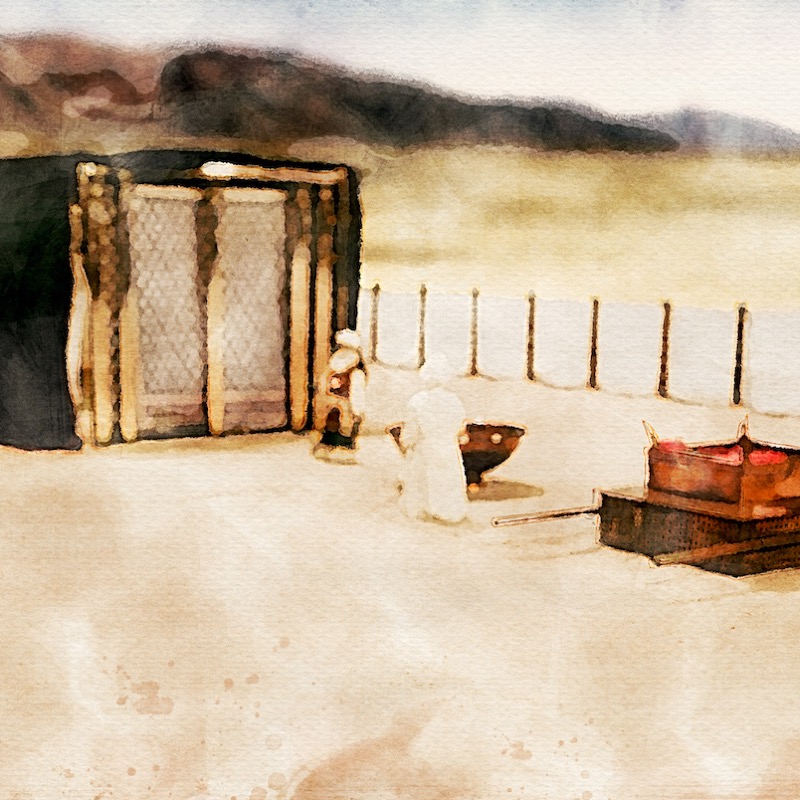
Very good welcome to you. Tonight we is our third study of the ancient tabernacle. Hitherto we have been concentrating on the objects to be seen in the outer court of the tabernacle. Tonight we begin to move inside, and necessarily the things that we shall consider will become more detailed and somewhat more intricate. So that tonight I propose to begin our study by reading some parts of the ancient text that describes this tabernacle of God. I shall be reading, for those of you who want the reference, from the book of Exodus, and first of all in chapter twenty six. uh Exodus twenty six, and we shall begin there at verse thirty one. Exodus twenty six and verse thirty one. And thou shalt make a veil of blue and purple and scarlet and fine twined linen. With cherubim, the work of the cunning workman shall it be made. And thou shalt hang it upon four pillars of acacia, overlaid with gold. Their hooks shall be of gold, upon four sockets of silver. And thou shalt hang up the veil under the clasps, and shalt bring in thither within the veil the ark of the testimony, and the veil shall divide unto you between the holy place and the most holy. And thou shalt put the mercy seat upon the ark of the testimony in the most holy place. And the second, uh, text I read comes from this same book of Exodus and chapter thirty, beginning at verse one. And thou shalt make an altar to burn incense upon. Of acacia wood shalt thou make it. A cubit shall be the length thereof, and a cubit the breadth thereof, for square shall it be. And two cubits shall be the height thereof. The horns thereof shall be of one piece with it. And thou shalt overlay it with pure gold, the top thereof and the sides thereof round about, and the horns thereof. And thou shalt make unto it a crown of gold round about. And two golden rings thou shalt make for it under the crown thereof, upon the two ribs thereof, upon the two sides of it shalt thou make them. And they shall be for places for staves to bear it withal. And thou shalt make the staves of acacia wood and overlay them with gold. And thou shalt put it before the veil that is by the ark of the testimony, before the mercy seat that is over the testimony, where I will meet with thee. And Aaron shall burn thereon incense of sweet spices every morning when he dresseth the lamps, he shall burn it. And when Aaron lighteth the lamps at even, he shall burn it. A perpetual incense before the Lord throughout your generations. You shall offer no strange incense thereon, nor burnt offering, nor meal offering, and you shall pour no drink offering thereon. And Aaron shall make atonement upon the horns of it once in the year. With the blood of the sin offering of atonement, once in the year shall he make atonement for it throughout your generations. It is most holy unto the Lord. They then are the main text upon which our study this evening is based. And this, as I say, is now our third study, and those of you who have been able to be present at the earlier two will now have become familiar with the approach that we are taking towards this ancient tabernacle. This tabernacle was a portable shrine or temple built at God's command by the Israelites when they were traveling through the Sinai Peninsula from Egypt to their promised land in Canaan. And it was built so that God himself might come and dwell among them and walk with them, to use his, his, uh, very humble and interesting term, to walk with them all the way home to their promised land. So we began by looking first at the ground plan of the building. We'll do that once more this evening, please. The ground plan of the building. And there you see it. The thing that has interested us in particular has been the fact that if you start at the entrance gate that in the model you see there and in the film there, if you start at the entrance gate and you move in towards the presence of God, you'll find that the way in is marked by four major pieces of tabernacle furniture. There is the big altar there at the beginning, then going upwards in the second place is the laver, and then going into the building itself, neglecting the lampstand on the right and the table, uh, uh, on the left and the table on the right, you'll come to the third piece of furniture on the direct road in to the presence of God, and that is the golden altar of incense. Then comes the veil, and finally the fourth major piece of furniture, that is the symbolic throne of God, the ark and the mercy seat. And as we have thought about those things, we have seen that they carry a double significance. First of all, we have thought about what they mean or meant to the ancient Israelites at the time. God provided these pieces of symbolic furniture that man might learn what is the way to God. How can God be approached? How can God be found? Not only did these four vessels mark the road, but each one of them represented a positive, moral, and spiritual experience. Come to the altar, and you were here standing by something that was part of God's self-revelation to men. As you stood by that altar and watched what happened there, it was as though God was speaking to you and telling you the first things you needed to know if you were to find God and know him and sense your welcome by him personally. And what that altar stood for, just let's look at it again, was the sacrifice, the place of sacrifice that could take away the guilt of sin. As we thought of that provision for Israel at the time, then we saw, with the encouragement of scripture itself, that it had another function. It not only acted for the Israelites as a place where they might come and find forgiveness from the guilt of sin, but it was a shadow of coming good things. It was, in God's wisdom and foreknowledge, a model, a pointer, a picture, a parable that was pointing on all the way down the centuries until the time when God should send his only son into the world to be the sacrifice, the Lamb of God who should take away the sin of the world. So it had this double function, and as we have studied it, of course, as we studied that altar, we thought in detail of the great sacrifice of Christ and the wonderful forgiveness that they find who come in true repentance and faith to the Lord Jesus. Then we moved on to the second piece of furniture, that is the laver. Like the altar, it offered cleansing. Both the vessels in the court offered cleansing. The altar offered cleansing by blood, cleansing from the guilt of sin. The laver contained water that offered cleansing from the defilement of sin. And we notice, therefore, again, thinking of these things as a fore picture of our Lord Jesus, we notice that our New Testament talks in similar terms. It offers us a double cleansing. The blood of Jesus Christ, God's son, says Scripture, cleanses us from all sin. It purges the conscience and removes the stain of guilt. But in addition to that, there is the washing of regeneration by God's Holy Spirit, of being born from above by the water and the word, as our Lord put it to Nicodemus. A double cleansing to meet our double need. Not only the guilt of sin, which is a legal matter, but the defilement and disfigurement and uncleanliness of sin, which is a moral and spiritual matter. And we've found it conveniently summed up in the words of our famous English hymn. Let the water and the blood from thy riven side which flowed be of sin the double cure. Cleanse me from his guilt, that is through the blood of Christ, and power through the regenerating cleansing work of the Holy Spirit. But now tonight we move on, and we're to pass through the door of the building. Now here in the model, for your convenience, so that you can see in, we have taken the door down, and Moses will grant us his pardon, uh, uh, and indulgence just for tonight, you'll see, so that you can now see in. Normally, this, uh, large linen curtain hung here on these five pillars. They are the door, as distinct from those curtains at the gate, similarly with blue, purple, and scarlet. They are the gate, this is the door. We're going to enter into through the door and come to this little object of furniture here, which is the, uh, uh, golden altar of incense. So there we are, if you, in our imagination, coming in through the door, and you will notice what a beautiful place it was, because the sides were not solid planks, they were ladder-like frames that had a result, you see, that when the curtains were spread over them and you entered in through that door, all on both sides and on the roof as well, would be the resplendent colors of those lovely curtains, the blue and the purple and the scarlet, and with cherubim embroidered upon them. So let's go in further and take our bearings inside. And there you will see they cut away so that on the left hand side is the lampstand, on the right hand side the table of showbread. But the object we're interested in is standing immediately in front of the veil there. For the curtain there is the veil, the most important curtain in the whole place, therefore called the second veil sometimes, but more often than not simply the veil, which divided the most holy place from the holy place. Standing immediately in front of it was that little, uh, piece of furniture, the golden altar of incense. It was different, as you see, from the big altar that was outside, nowhere near so large. It was made of wood, as that altar was, but whereas that big altar was covered with, with bronze, this little altar made of wood was covered with gold. And whereas on that big altar sacrifices galore were offered, no sacrifice was ever to be offered on that little altar. The altar was there simply for the burning of incense at certain times throughout the day. So what was its sign- its significance for Israel? First of all, it had a practical function. We're told that when the high priest came of a morning time to trim the lamps on the lampstand, then he was to burn incense. And I doubt not it was for a very practical, down to earth reason. If you've got oil lamps and you start twimi- trimming them with the old oily wicks, you know, they're liable to send out an unfortunate smell. God doesn't like bad smells of any kind, either literal or the other kind. And therefore Aaron was to burn incense. And at night, when he lit the lamps, and some of you are old enough to remember what happens to a, an oil lamp when you first light it. So very often, until it really gets hold, it issues up a lot of smoky flame, and again, it smells unpleasantly. When Aaron lit the lamps, he was to burn incense before the Lord. But of course, it had a far deeper function. It became the place where the priests prayed on behalf of the people. And you will remember a famous occasion in the New Testament in Luke chapter one when the father of John the Baptist was burning incense at the golden altar in the temple, in Herod's temple. It wasn't usually always the high priest that burned the incense at the hour of prayer? Uh, any priest might do it, and they had it by lot, and this particular day, a certain priest by the name of Zacharias, he had been chosen to burn incense upon the altar at the hour of prayer. And the people were all waiting out in the court of the temple at the hour of prayer, and there was Zacharias inside offering the incense and offering the prayers on the part, on the behalf of his people. And we're told an angel appeared to him and said, Zacharias, thy prayer is heard and answered, and you and your wife are to have a son. But when we think as Christians of that altar, and we think how this too is designed to be a picture, a fore-picture, a parable of our blessed Lord's work. Then it is easy, isn't it, to see what it points us to. Let me go over the order in which these vessels are found with you. That altar there and its sacrifice of lambs and and goats and bullocks as sacrifices to put away sin points us unmistakably to the cross of our Lord Jesus died and to the basis of our Christian gospel. For the gospel is that Christ died for our sins according to the scriptures, according to these ancient scriptures. He died for our sins according to the scripture, and it is this ancient, uh, scripture that helps us to see the significance of Christ's death, is it not? If we ask ourselves, why did Christ die? Did he die as our example? Well, some scriptures say yes, in some sense. Did he die simply as a protest against sin? Did he die a bewailed victim of man's cruelty? What was the significance of his death? And the New Testament says he died, this is the gospel, he died for our sins according to the scripture. And if we watch how that was done, when a man brought his sin offering, he laid his hands upon the head of his offering, and then it was killed. The lamb wasn't killed at that moment as an example to the man. The lamb was killed as a substitute for the man. That is exceedingly important. In Russia, many of their leading thinkers will tell you, such as Dostoevsky in his novels, that the way of salvation is as follows, that Christ came to suffer so as to show us the way how to suffer, and it is by our suffering, as he suffered, that our sins are forgiven and cleansed. And that is not so, my dear friend. The gospel is not that Christ showed us how we can suffer and by our suffering gain forgiveness with God. The gospel is that Christ died according to the scripture, according to the pattern here laid down. He died as our substitute to bear the penalty of sin on our behalf. So that altar points, uh, unmistakably to the cross of our Lord Jesus. Then this vessel with its water, as we saw last evening, pointing us to the washing of regeneration by the Holy Spirit of God, points us, of course, to our Lord ascended. For on the day of Pentecost, in fulfillment of the ancient scripture written in Joel, he pulled out the Holy Spirit. That Holy Spirit is, is the God's divine agent in the regeneration of the human heart and life. And now we go on further. Now we're going into the holy place, to this third piece of furniture, the little gold. And you know, if these are in, in that sense as a picture, they are in historical order. You can see what this one is going to represent, can't you? If that represents Calvary and this represents Pentecost, this altar, the altar of prayer, is going to speak to us about our Lord's present ministry in the presence of the Father. As Hebrews chapter seven puts it, he ever lives now to make intercession for us. What a gloriously rich gospel God has given us, has he not? And a marvelously adequate salvation. It, this fact that Christ now is interceding for his people as their great high priest is the basis of Christian assurance, is it not? Listen again to the verse I just quoted. Wherefore, because he abides ever and has an unchangeable priesthood, he is able to save to the uttermost. I love the abundance of God's assurance. Nothing niggardly with God. None of this business you have to wait until you die to know what quite what will happen to you. Nothing like that. The God of heaven, in all his infinite magnificence and generosity, has a salvation of this kind. We are to know it, that because our blessed Lord ever lives and lives to intercede for us, he's able to save to the uttermost them that come unto God by him. And if you found it in your heart to say a subdued hallelujah, well, I don't think even the most sophisticated would blame you. And then there's that other scripture, isn't there, you'll see. Listen to the Apostle Paul waxing eloquent with the joys of God's salvation. Who is he that condemns, says he, when it is Christ that died, yeah, rather that he's risen, who is at the right hand of God, who also maketh intercession for us. Does it matter who shall condemn? If it's Christ that intercedes for us on the basis of his death and his resurrection, and now his exaltation to the right hand of God. So you'll perceive that the, uh, order of things in this model were designed by God. Wouldn't have made any difference to Moses, you might think, if that laver had been down here by the door so that the priests could wash their hands at it. What would it matter where it was for its simple practical purpose of washing your hands and feet? But in the type, in the picture, in the parable, in the prophecy that it was, that laver had to be there in that order, first that big altar, then the laver, and then the altar of incense, tracking in advance the pathway of our Lord and his ministry for our salvation. So let us think of our Lord now and what he does for us as our great high priest at the right hand of the Father. These are familiar verses, are they not? But good to remember them. Hebrews chapter two says, because he he is our high priest and was tempted in all things like as we are, apart from sin. Because he has suffered, being tempted, he is able to succor them that are tempted, that is to come to their help. Our Lord says the Old Testament and the New likewise is a priest not after Aaron's order, but after the order of Melchizedek. Psalm one hundred and ten verse four: the Lord has sworn and will not repent. Thou art a priest forever after the order of Melchizedek. It will repay us just to recall the historical event in which we have Melchizedek described in the Old Testament. The king of Sodom and sundry other kings had suffered a raid by some invaders who had carted off a lot of the inhabitants and their wealth. And Abraham formed a young army of his retainers, marched against the invaders, conquered them, and brought back the people and his Lot, his nephew, uh, called Lot, and the goods and the women folk. And now he was coming back tired as a result of his exertions. And unbeknown to him, the king of Sodom was about to come out and pose before him an exceedingly tempting offer. What the king of Sodom eventually said to him was this, Abram, you give me the persons, and you can have all the goods. And rich as he was, I suppose Abram could have done with an extra dollar or two. Take all the goods. All I have to do is surrender the lives, as Hebrews puts it. A big decision. Which is the more important thing in life? Goods or life? It's a, a decision that we have to make in our youth sometimes, and very often in our middle life. What are we living for? For goods, for wealth, for the latest designer kitchen and a fabulous bathroom, and all the rest of the fashion clothes, nothing wrong in them by themselves. But if the cost of them is that we have to starve our very souls, or neglect the children, or lack spiritual pastoral concern for the members of the church, and lose the vivid interest in the evangelization of the world because we have put goods first. Then our decision would be a hapless one indeed, would it not? For goods are but temporary. People last somewhere eternally. And God, seeing that Abram was about to be faced with this temptation, in his merciful kindness, sent the great priest Melchizedek out to meet Abram, right in the hour of his need. And just before the temptation came, and he blessed Abram by God Most High, the possessor of heaven and earth. You'll see. And as Abram stood there, tired though he was, after the night's exertions, to hear the great priest pronounce the blessing of Almighty God, founder and possessor of heaven and earth. I think I see Abram's chest puff out a bit, even at this distance. Was that his God? Well, the result was that the dear priest had so filled Abram's vision and heart with a sense of the wealth of Almighty God, that when King of Sodom came out and made his offer, give me the lives and you take the goods. Abram said, goods? I wouldn't take as much as a shoelace from you, old boy. Yes. Do you see the function of the priest Melchizedek? To come alongside, to succor a man when he is about to be tempted. And our blessed Lord is a high priest after the order of Melchizedek. Oh, be persuaded, my dear Christian friend, no temptation shall ever, uh, uh, co- come upon you, but what is common to man. But before it comes, the blessed high priest, Jesus Christ our Lord, is there waiting to minister to us and to strengthen our souls, that we prevail against the temptation. The great priest Melchizedek brought out to Abram bread and wine, doubtless a form of physical sustenance, but surely more than that, for bread and wine would have been a little thin for a tired warrior if that was all his breakfast was going to be. It was presumably symbolic. And our great high priest, how does he meet us? By his own design and invitation, as we come aside from the battlefield of life and come to his table and to his supper, and hands us bread and hands us wine that bespeak the vast resources that he has made available to us when he gave his body and poured out his blood. And then, says John, one John chapter 2, our great high priest, he has this function as well. Only here I must moderate my voice in case the theologians hear me, you'll see, because the exact theologians, uh, will not agree with me that the verse I am about to quote has anything to do with our high priest, our blessed Lord Jesus. And the reason why they don't agree is simply this. One John chapter two, John says to he b- the believers, these things I write to you so that you don't carry on sinning. But, if anyone sins, what happens then? Well, we're not sinlessly perfect, are we? And though our intention is that we shall live to please the Lord and not sin against him. Now and then, and from time to time, all of us sin, do we not? What happens if a believer sins? Listen to what John says. If we s- if we sin, if anyone sin, we have an advocate with the Father, Jesus Christ, the righteous, and he is the propitiation for our sins, and not for ours only, but for the whole world. And there you have the word that the theologians, uh, uh, pick upon a little. They say there John says advocate, you know, uh, not high priest. Our Lord as high priest succors those that are tempted, but if it's a question of interceding for us when we sin, he acts not as our high priest, but as our advocate. And I imagine our Lord as an advocate of the kind that you would find down in the law courts in the middle of Belfast, you know, with wig and gown, kind of an advocate, not a priestly figure, but a, a, a lawyer. Well, I'm no one to be able to, to, to dispute with the theologians, but, uh, I take refuge in this, that the blessed Lord is the same, it's the same Lord. Uh, and when he intercedes for us, I don't really think that he gets halfway through his intercession and then remembers that, uh, we have sinned a thing, so he said, now I- I'm not going to act as their priest for the moment, I'm acting as their advocate. Perhaps he does, but I have no authority to say so. Do you see? We have an advocate with the Father. Jesus Christ the righteous. He doesn't try to plead that we were so weak and our sin wasn't so bad after all, and try to brush it under the carpet and do a put a bit of spin upon it. Indeed not. It's Jesus Christ the righteous. He dares confess it before the Father in all its ugliness. Not minimizing it. But then listen to what it says, and he is the propitiation for our sins. It is an interesting thing, isn't it? Let's look at that, uh, picture again up there with the, uh, with the altar. You might be able to see it from where you sit, but if not, you'll have to take my word for it. At the four corners of that little vessel, there were four horns made like animals' horns, protruding from each corner, one c- horn from each corner. They were symbolic, of course, for in Hebrew poetry, horn is a symbol of power. When the angel got talking to the aforesaid Zechariah, he informed him that God has raised up in the house of David a horn of salvation, meaning a powerful savior. The horns on that altar bespoke the power of that. Now here is an interesting thing. We are told that on the Day of Atonement, the high priest coming out from the presence of God with the blood of atonement, put the blood of atonement with his finger onto each one of those horns. It was the blood of propitiation. It speaks volumes to us as a picture of our Lord's ministry. We have an advocate with the Father, Jesus Christ the righteous. Wherein lies the power of his intercession for us? It is this, he is the propitiation for our sins. That technical word is used with precision. For propitiation has to do with the satisfying of the wrath of God. So that the wrath of God is withheld. I suspect that all of us know that there are times when we sin without even realizing it. Maybe it's a while before we are brought to realize it, and then a bit longer, perhaps, before we confess it. But in the meantime, our blessed Lord acts as a propitiation for our sins before God, holding back his discipline until such time as by his spirit we have been brought to conviction and to repentance. But there is a third ministry that our Lord, uh, uh, has as great high priest, and we can illustrate that one by what he said to Peter at the Last Supper a few hours before he was crucified. And that is recorded in Luke chapter twenty two, for those of you who like to take the references. Luke 22, beginning at verse 31. When our Lord said, Simon, Simon, behold, Satan asked to have you that he might sift you as wheat. And the word you, as you see, is in the plural. Satan has asked and has gained permission, so the word implies, to have all twelve of you, that he might sift you as wheat. Here is our Lord knowing before it happened of the severe trial that was about to come upon the twelve apostles. It's a comfort to our hearts to know, is it not, that Satan can't just attack and tempt believers just when he thinks he'd like to. He must ask permission. Like he had to ask permission of God before he attacked Job. But permission had been given, and our blessed Lord, truly human, yet truly God incarnate, knew in advance that permission had been given by the Godhead, that Satan should sift those twelve men as wheat, trying to demonstrate how many of them were mere chaff and not true believers at all. One of them was found out to be not a believer, wasn't he? And that was Judas. Never had been a believer, of course. As our Lord had earlier intimated, one of you is a demon. But then our Lord turned and addressed Peter personally. Says he, but I have prayed for thee. That's singular. Not for what he prayed for all the others. Doubtless he had. But our Lord now foresaw that the trial coming upon Peter would be especially severe. I prayed for thee, says he, by name. And what for? That thy faith fail not. We should notice the exact expression. Our Lord didn't pray that Peter's testimony might be, uh, upheld, and it wasn't, of course. It was blown to smithereens. Our Lord did not pray that his courage wouldn't fail. His courage failed abominably. Our Lord did pray that his faith shouldn't fail, and as the sequel shows, his faith didn't fail. You say, but what are you saying? Peter denied the Lord, didn't he? He did indeed, sadly enough. And is not that serious? It's exceedingly serious. Our Lord is on record as having said, he who denies me before men, him will I deny before my Father and the holy angels. That is exceedingly serious. And Peter denied the Lord. It's a good job he didn't continue denying him for the rest of his life, isn't it? He fell. But notice one or two things. First, our Lord told him he was going to fall. Before the cock crow twice, thou shalt deny me thrice, Peter. And had Peter been a wise man, he would have said, Lord, this comes as a terrible shock to me. I didn't realize I was a man like that. Are you sure? Because... Well, if you say so, I must believe it, and I do believe it. Well, Lord, show me how I can be saved from denying you. No, no. Peter, like I am on times, foolish. And he told the Lord he was wrong. Oh, you've misread me completely, said he. I would never deny you, Lord. I'd go to prison and to death for you. Oh no, I'm not that kind of man. Failed to realize, even as the Lord was pointing out, that there was a weakness in his psychological makeup, that when it was put under pressure, would cause him to panic and deny the Lord. But he wouldn't listen to the Lord. Over that part of what our Lord said, he didn't believe. I pray for you, says our Lord, that your faith fail not. His courage failed. Three times he denied the Lord. The third time, the words were scarce out of his mouth, but what the cock crew. And in an instant, Peter remembered the word of the Lord. And now, mark you this, now he believed it. Now he believed Christ more than he'd ever done before. Had no option, had he? Though he wouldn't believe it at first, now it had come true. What the Lord had said. That before the cock crow thrice shall d- twice shall deny me thrice. It had happened. And Peter had no option but to believe. Marvelous that, isn't it? And our Lord turned and looked upon him. And Peter went out, breaking his heart into the darkness. But doubtless now, with the next word of Christ ringing in his ear, thou shalt deny me thrice. And when, not if, not if, not if ever you are turned again. No, no. When? As soon as you're turned again, strengthen your brethren. Magnificent example of the ministry of the high priest to pray for us in our battles of life, for what is fundamental. That is our faith. Salvation depends upon faith, doesn't it? He that believeth. What would happen if the devil could break our faith so that we cease to be believers? Praise God, we have our great high priest who prays for us, surely, as he prayed for Peter because he has no favorites. Prays for us that our faith shall not fail. I have known from time to time extraordinary examples of the mercy and ministry of our Lord in this respect. If I've told you it before, and now I tell you again, it's because I'm a getting an old man, and I'm practicing being an old man, and old men reminisce, don't they, ad nauseam. You must have mercy, to see. But I was in Peebles some years ago in Scotland, that well-heeled town in Scotland, to see. That was a Christian convention, and when it was all over of a Sunday evening, my host took me out to breathe the fresh air of Peebles and walked me round the leafy suburbs of the town. And there joined us a man, I suppose, in his early forties. A bright spark, he seemed to be, and he accompanied us for a while, and then, uh, he had to go somewhere or other to to his wife, I suppose. And when he was gone, my host said to me, let me tell you about this good man. He said, you know, he's no- not long been saved, do you see? And now he, now though he rejoices in salvation, it distresses him that he's wasted so much of his life and not got saved until he was forty plus. Now he was trying to think, how shall I make up for that? How can I live for the Lord? What can I do for the Lord? And being forty and not used to these things, he couldn't think how to do it. He was no preacher, no pastor, nor anything. So he thought. Suddenly he conceived an idea, uh, it will sound to you a very strange idea. He had some records. This was some years ago, of uh, uh, Christians hymn singing, do you see, which he enjoyed. So he decided he would go around the locality, knock on the door, and when somebody came to the door, he would say, excuse my interruption, you see, but um, I- I- I- I- I have these records and uh, of- of hymn singing, and I've enjoyed them so much, I wondered if you'd care to borrow them. I have to confess, it wouldn't have been the thing I should have knocked on the doors about in that leafy, well-heeled, uh, district of peoples. However, said my host, you see that house over there? I said, I do. He said, you see, that was the first one he called at. Went to the door, man came to the door, and he said, excuse my in- uh, interrupting you, sir, he said, um, um, um, but you see, uh, I have these, uh, records of Christian hymns, and I so enjoy them. I wonder whether you'd like to borrow them. And the man looked at him. He said, you'd better come in. Sat him down in the parlor, called his wife. He said, we'd like to tell you something. We are believers, but we were away from the Lord for forty years. And last night in this room, we came back to the Lord. Only our doubt was, would he accept us after forty years of wasted life? So we asked the Lord in his mercy to give us a sign. If he had accepted us back, would he tomorrow, this Sunday, give us some sign? We didn't know what kind of a sign it would be, but we asked for some sign that the Lord had accepted us, and we waited, and we watched the hours go by. And now, late in the evening, had almost decided, no, the Lord hasn't accepted us. When you knock on the door and bring us these Christian hymns. The magnificence of God's timing, the exercise of the high priest that had followed that couple through those long years and prayed for them that their faith should not fail, so that they might be restored and in turn strengthen their brethren. Blessed Blessed high High priest. Priest. What a salvation and a savior we have. And now finally, just for a few moments, let us move on to consider the position where that, uh, golden altar stood. It was standing, as you see, in front of the veil, the veil, that is. The second veil, sometimes so called. The veil that separated from the ho- most holy place from the holy place. The function of that veil, according to Hebrews chapter nine, was this? The writer there gives a description of the two divisions of the tabernacle, the most holy place, and then the holy place, separated and therefore made into two divisions by the veil, do you see? And he says, the Holy Ghost, this signifying. That is, when the Holy Spirit, the great architect of the tabernacle, designed that there should be a veil separating the most holy from the holy, he had a lesson to teach. He was signifying something, and he was signifying this, that the way into the most holy place was not yet made manifest while as the first tabernacle stood. That is, the veil was God explicitly saying, you may not enter. The way is not open. You must not come into the holiest of all. Only err and once of a year, and that one single day in the year emphasized the fact that all the other days he couldn't come, nor could anybody else. The way into the holiest, not made manifest. Why not? Because their sacrifices were inadequate. They could not make the conscience, uh, perfect. They could not make the worshipper perfect. They could not give him complete awareness of complete forgiveness of sins. They offered their sacrifices of lambs and goats. They heard the words of forgiveness pronounced, but it was forgiveness for the time being, as far as they knew. So in the next year, they sinned again, so they had to repeat the sacrifice. They never felt, even if you'd asked them, they never felt free in conscience to come right into the holy presence of God, the holiest of all. God put a bar there anyway, the veil with its cherubim on it, reminiscence of the cher- reminiscent of the cherubim with their flaming sword that kept the way of the tree of life from Adam and Eve when they had fallen and had been cast out. So there it was, the veil. Now there is a little problem. You may, if you care to and are interested in these things, take it home and study it. But in chapter ten, referring to the veil, the writer says as follows, talking of the veil, it says, the new and living way through the veil, that is to say, his Christ's flesh. The veil represents Christ's flesh, that is his manhood. When Hebrews talks of Christ in the days of his flesh, it means the days when he was here bodily on earth. The fre- the the the veil, therefore, represents the body of Christ. Now, the problem is this, that many, uh, gray theologians have said that cannot be what Hebrews is saying. You must be misinterpreting it. You must be mistranslating it. For the veil was to stop people coming into the holy presence of God. Surely you're not saying that Christ on earth acted as a veil to stop people coming to God. Well, no, I'm not saying that at all. I don't think the writer to the Hebrews is saying it either. Let me therefore point out to you the other res- effect of that veil. Because people's sacrifices weren't adequate, they couldn't come into the most holy place. If that veil, therefore, hadn't been there, then when you entered the first division, the first bit, the holy place, the way would have been right open into the presence of God. If the veil hadn't have been there, not even the priest would have dared come in the first bit. In that sense, that veil was a merciful provision. It made it possible for the priests at least to come in through the door, and they could come as far as this. Whereas if that veil had not been there, I repeat, the whole thing been open to the throne of God, the priests would never have dared come in the front door here. The veil, therefore, was a merciful provision for those days that people could come as near to God as was possible in the days before Calvary. And I have no doubt myself that when our Lord Jesus was here on earth, he acted just like that, as that veil that made it possible for men and women to come near to God. Just you imagine it, can you? There he was with the mother standing around, and he took the little babe in his arms. I wonder whether they, whether they twisted his beard or whatnot. Yes. And the fallen woman touched the hem of his garment, and God was on the inside. All the fullness of the Godhead dwelled in him bodily. Oh, the mercy of God is beyond description that fallen sinful men and women could come and touch the very body of our incarnate Lord. Oh, God was on the inside. How God wants people to come. And says the Bible, in a sense, he acts like it still. One Timothy two, there is one God and one mediator between God and men, himself a man with a body still. And now it adds, who gave himself a ransom for our sins. Would you notice those, those four veiled pillars? Can you see from where you sit? If not, come and look at these ones afterwards. Those four pillars were made of wood, and they were overlaid with gold, but they stood, each one, in a socket of silver. That silver was taken from the ransom money that the Israelites paid as a ransom for their souls. What a lovely picture it is. The veil that is his flesh, one mediator between God and men. For as the priests, ordinary priests came to pray at this altar, they were addressing themselves to the God who presents himself upon that throne. They had to have a mediator between the veil that is his flesh, who gave himself a ransom. Look at those silver sockets. For our sins. Ah, but you say there's a better part of the gospel than even that, isn't there? There is indeed. Because, as you will remember, when at last our blessed Lord was hung upon a tree, and they pierced his side with a spear, and there came out blood and water. Then there came an earthquake quake, and the veil in Herod's temple was rent from the top to the bottom. Let's see it on the picture. The veil rent. What did that signify? Well, in the first place, it signified that that was the end of Judaism, or at least of Judaism's temple. Because if God tore down the veil, then the temple was unworkable without that veil, unless somebody went and stitched it up together again. It was saying that the old symbols were now, they'd had their day, and that system was about to go into eclipse. We were saying more than that. Whereas in that earthly tabernacle, the way into the holiest was not made open, in the glorious heavenly tabernacle, which the Lord pitched and not man, that heavenly tabernacle in which our blessed Lord is presently the minister. There for the believer, there is no impediment. Listen to the words of Holy Scripture. Let us draw near by that new and living way which he has consecrated for us through the veil, that is to say his flesh. Draw near where? Draw near to the very throne of God. Stand in the august presence of a thrice holy God. Stand unafraid, overawed, but unafraid, because we come, our hearts sprinkled from an evil conscience with the blood of Christ, our bodies bathed in pure water, and having a high priest over the house of God. What shall prevent us? Let us draw near with a full heart in full assurance of faith. It's no wonder that Christians on time sound a little bit excessive in their joy and say, hallelujah, what a savior. Shall we just make our response to God in prayer? Our Father, we thank thee from our hearts for the magnificence of thy glorious Son and thy abundant salvation. We thank thee, Lord, for going to the pains of having this tabernacle of Moses built, that it might help even us in this age, by its vivid illustrations and parables, to enter more deeply into the great realities that Christ has achieved for us by his death and resurrection, by his ascension, and by his present ministry. And therefore, with humble but full hearts, we praise thee and come to enter in through the veil into the holiest of all, and praise thee for the sense we have in our hearts of thy divine welcome. So we pray that thou wilt keep us, blessed Lord Jesus, from sinning. But for thine advocacy we praise thee. Do still for us as thou didst for Peter. Pray for us that even in life's severest trials and temptations, our faith shall not fail. And to thee shall be the gratitude and all the glory, both now and forever. Amen.