Gooding, David: 1 - The Altar: Cleansing by Blood
ID mfh_1087364821Date unavailableBefore 3.89Restored 4.55
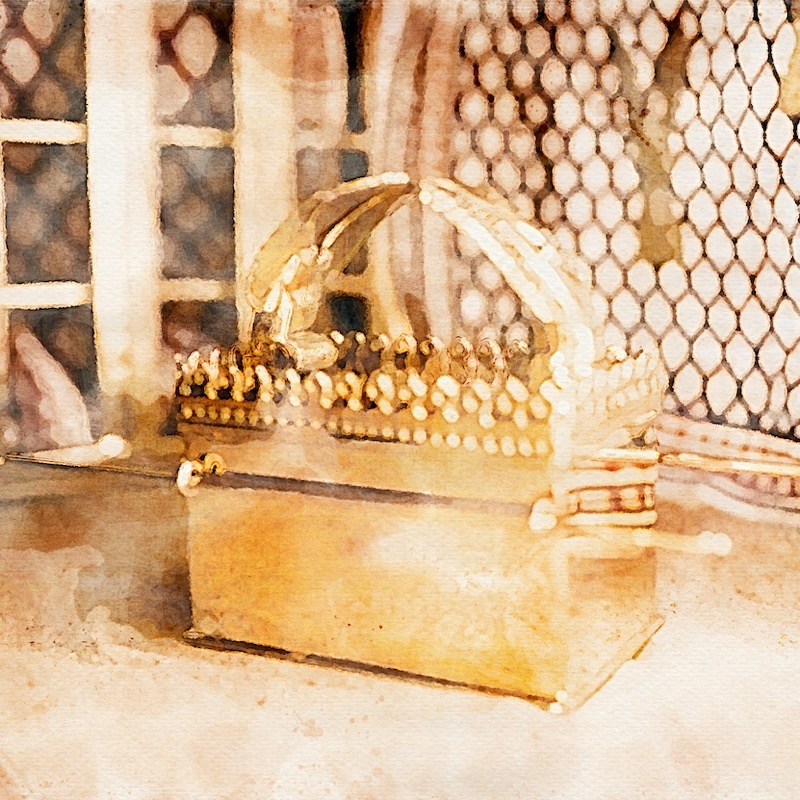
It is a very great pleasure for me to be with you here in Ockham once more. I remember being here before you were in this excellent building and had another temporary building the other side of the road. I remember then the warm welcome you gave me, and I thank you, uh, for your presence here this evening. My first pleasant duty is to thank very sincerely the elders and members of this assembly for their gracious and very generous invitation to come and lecture for two weeks on the tabernacle, a topic that lies very near my heart. And my second pleasant duty is to acknowledge those who were responsible for the making of this great model that you see before you. The chief, uh, model maker was a certain Stanley Marshall of the city of Armagh. For the curtains, particularly the curtains that are embroidered, and I'm sure you ladies present will admire them, they were made by the late Mrs. Cargill of Belfast, who took a lot of trouble to go to Amsterdam to see the model there and read up on E- Egyptian methods of treating linen and embroidering linen, so that the design should at least be somewhere near the kind of thing that people in Egypt were capable of doing. And my third pleasant duty is to thank that young army of people that were here present the other day to bring and erect the model. It may look simple, but it took them some hours to do, and I thank them very gratefully for their manful, uh, efforts. While the model is here, let me press upon you the open invitation after each session, uh, and particularly if you have not seen a model before, that you come up and investigate the thing at close quarters. I shall be stationed here, and if I can help you with any inquiries you have, I should be delighted to do so. In particular, those of you who may belong to this assembly but have food with you friends from other locations, uh, do bring them up, and don't feel that you have to rely upon me to explain all things. Uh, you are perfectly at liberty to explain them to your friends so that your friends may benefit from the presence of the model and the word of God. That said, we come at once to our study of the tabernacle. It was built, the original, uh, uh, tabernacle, for instance, was built some three thousand years ago. Built by Moses at God's command, and by the prototype that God gave him when Moses was with the Lord, eh, on the mountain top. He was charged, see that thou make everything according to the... Now the Greek and the Hebrew are a little difficult to be precise about what they mean, but a model, an architect's model, or something of the kind that God showed Moses on the mount, and he was to make everything according to that model shown him. Now, some scholars have suggested that the tabernacle as described in the book of Exodus and elsewhere in the Old Testament never really existed. Sometimes children are taught this in their schools, in rather old fashioned books on the topic. And they, uh, tell us that the, uh, uh, tabernacle, had it been built like this, would have collapsed in no time, particularly when the curtains were fully spread over the top, and the dust of the weather- desert would settle in the middle, and it would force the sides in, and the whole thing would collapse, and therefore it never did really exist. It was only a scheme thought up by whoever wrote Exodus. That is a very old-fashioned view. Because we know from the remains in Egypt that a thousand years and more before Moses lived, the monarchs, uh, the pharaohs and their lady loves in Egypt used portable, uh, pavilions made in a similar fashion to this model of the tabernacle. Now God, uh, Moses got his directions from God, but when it came to practical things, of course he was born and brought up in Egypt, and therefore it is quite, uh, scientific, let alone anything else, to accept that the tabernacle that the Old Testament describes was an actual historical reality. And I have brought along some books that will su- su- supply you with the necessary archaeological information, if you care to come and look at them, uh, uh, when, uh, the session is over. And for those of you who are wanting to study the Old Testament academically or at school, then the book that I have brought along here, I would strongly recommend to you. It is entitled On the Reliability of the Old Testament by Professor K. A. Kitchum, who was professor for many years of Egyptology and many other such a- a- ancient things in the University of Liverpool. But as I say, the building that we are about to, uh, consider this two weeks by the aid of this model. Was itself built over three thousand years ago, which raises in many people's minds, well, why on earth should we bother to study that if it is an ancient thing from long ago. The New Testament, as we shall many times observe, tells us that this tabernacle was designed by God, uh, to be, among other things, a shadow of the good things to come. And those good things to come were, of course, the good things brought us by our blessed Lord Jesus Christ, God's Son. So that the tabernacle and all its affairs were designed of God, among other things, to be a shadow of these good things to come. And the thoughtful amongst us will perhaps say, but my good sir, we now have the reality. Why should we bother our heads about the shadows when we have now the reality? That's a very good question. I hope in the course of the talks to answer that question. But let me use a few analogies. Um, first of all, there is the obvious one. How do we know that Jesus is the Christ, the Son of the living God? How do we know the story of the redemption he has provided by his death at Calvary and his resurrection and ascension into heaven? How do we know? What evidence is there? Among the evidence is this shadow, because you can then read the New Testament and what it says about our blessed Lord, and you can compare him with the shadow. And you can see if he fits. And where he and his ministry fit the shadow. Here is evidence that Jesus is indeed the Son of God, and God prepared for his coming into our world by this elaborate shadow in advance. Let's take an analogy, shall we? If you, uh, found yourself in Red Square in Moscow, and you were determined to see and photograph, uh, St. Basil's or St. Mark's Cathedral, or one of the particular churches that there are in that square. And suppose you arrived in the late evening, and there were no guides about, nor anybody to tell you which was which. And you wanted to know which was which, of course. What you could do is to get out your guidebook, for you'd scarcely go there, wouldn't you, would you, without a guidebook, and you would thumb it over until you came across a photograph that says underneath St. Mark's or St. Basil's Cathedral, you see. Now you would know, of course, at once that that thing on that page, bit of paper really with some colors on it, wasn't actually St. Mark's Cathedral, but it was a shadow of it, of course. In the old days when people used cameras of the older sort, do you see, they let the sun shine on the object, and the rays came on a film and made a shadow, do you see? So what you have in your guidebook was a shadow of what you were going to see, and that would be very helpful, for among the many church spires, uh, that you would see from standing in the Red Square, um, this would help you to sh- to recognize which was the cathedral that you were particularly interested in. So does this tabernacle. For us who lived in this Christian age, help us by being a shadow to see and identify and thus enjoy not only our Lord himself and the work he has done, but those glorious parts of salvation that are described in the New Testament, but illustrated in the old. And there's another thing that the shadow can do. You see, if you stood in, uh, the Red Square in Moscow with your guidebook, and you'd found the cathedral that you wanted particularly to, to photograph, then the guidebook would tell you, well, look here down to the right, for instance, you'll find there Lenin's tomb. Oh, you mightn't have remembered that, and so you would have failed to look for Lenin's tomb. But the book told you to look for it. We shall, I suspect, in the course of these two weeks, come across that kind of situation with the study of the tabernacle. For instance, we shall find tonight, we shall in fact concentrate upon this first major vessel that stood first in the court. That offered cleansing by blood from the guilt of sin. When eventually we come to the second major object in the court, we shall find that that too offered cleansing, but this time not by blood, but by water. And you might well say, but why should there be need of two types of cleansing? And then the tabernacle will poke you in the ribs and say, but hadn't you, w- w- wouldn't you be wise to ask whether the Christian gospel talks of two kinds of cleansing? Well, yes, it does, of course. You know the famous verse, the blood of Jesus Christ, God's son, cleanses us from all sin. And perhaps you say to yourself, and I'm happy to rest my soul for all eternity on that. I was a guilty sinner, but Jesus died for me. His precious blood has bought my redemption and cleansed me from the guilt of my sin. So you don't need any other cleansing? Well, I think you do. Because the New Testament, and now we're being prompted by our, our tabernacle to think, you see, uh, uh, the New Testament talks of both kinds of cleansing, doesn't it? The blood of Jesus Christ, God's son, cleanses us from all sin. But then it is written in Ephesians and chapter five that Christ loved the church and gave himself for her, that he might redeem her to himself, having cleansed her by the washing of water. So does the old in the old institutions of the tabernacle offering two types of cleansing. Point us to the New Testament that likewise talks of two kinds of cleansing. And we'll start us thinking, why do we need two types of cleansing? If the blood of Christ has cleansed us from all sin, why should we need, in addition, this cleansing by water, whatever it is? It's good to be made to think, is it not? Why should we study it? Because there were thousands of temples and shrines and high places around in the world when this tabernacle was first made. Why should we study this one? Well, one short answer is because this tabernacle, when it was made, was unique in all the Middle East, as far as we know, in the world. Because the other temples and shrines would have in them or in front of them an image of the god or goddess to which they were dedicated. In this, there was no image of the God whose earthly dwelling place it was. That was no accident. For in the ark, which is a vessel that we shall come across in the most holy place, it was an elaborate chest and much adorned. In it were the two tables of the law. And they proclaimed, thou shalt not make an image of anything in heaven or in earth for the purposes of bowing down to it. God God was was image imageless. less. In this, of course, Israel was unique. From the time of Abraham onward, the nations in that part of the world had long since, many of them, lost their grip on the reality of the one true God of heaven. And when men lose faith in the God of heaven, they don't start believing in nothing, you know. That's virtually impossible. I don't know if you've tried it, to believe in nothing. It's very difficult. And it's difficult for these obvious reason that we as human beings realize that we exist, but we didn't make ourselves. We were born of our parents, but they didn't make themselves. It raises the whole question of where we human beings come from. The Bible declares that, of course, we are created by God. The ancient polytheist didn't like that. And having lost his grip on the, uh, reality of the one true unseen God, he substituted his idea and deified the forces of nature. You say, what does that mean? Well, they started to worship the sun up in the sky, the sun god, and offer sacrifices to him, or the moon god, or the storm god, or the god of fertility, or the goddess of love. They turned those physical powers in the universe, the mere emotional powers of the human heart, and they deified them. And Abram, the first Hebrew, was raised up by God to be a protest to that kind of thing, and to be a witness to the one true God. And then those tablets of the law that were housed in the ark in the tabernacle stated that the authority behind the moral law is Almighty God himself. That is very important. Nowadays, in many schools, ethics is taught as a topic. Ethics is not a description of what people normally do. It is a prescription. This is what people ought to do. But if a school teacher or a parent is going to say to a teenager, you shouldn't do that, you should do this, the teenager is liable to reply, and who said Said so? so. What is the authority behind ethics? The tabernacle made it very clear. The Ten Commandments, so-called, explicitly say that God is the authority behind the moral and the spiritual law. That is vastly impos- uh, uh, uh, important, is it not? Because if I read or write the heart of many of my fellow men and women, the reason why they find atheism attractive is because if there's no God, then there's not going to be a final judgment after death. The Bible says, doesn't it? It is appointed unto men once to die, and after that, the judgment. The atheist says that's a lot of nonsense. That's all imagination. There is no God. Why does he want that to be so? Well, I think Professor Dawkins, Richard Dawkins, you may have heard of him. If not, don't go out of your way to hear him. But he says, as a famous atheist, and plastered it on the London buses, probably there's no God, so don't worry, go and enjoy yourself. Which is a somewhat comical concept, isn't it? Why would he find, um, the existence of God a worry? Why did he get into his head that if there's a God, you couldn't enjoy yourself? Funny that, isn't it? But it's innate in the human heart. Because we are aware that we have often broken the moral law. And if the authority for the moral law is God Almighty, then the moral law is almightily significant. And moral behavior, or the breaking of the moral law, has consequences far beyond our little lifetime, because after death, we must meet God, who laid down the moral law, and there will be a final judgment. These are therefore important things. But we have called the ti- the title, given the title to this series of lectures, The Approach to God. For in these ancient times, God was pleased to presence himself in the original tabernacle, in the center of Israel as a nation, and God marked out for them the way to approach him in those far off days. Let's look at the, uh, uh, plan there as you'll see it. The way was marked out. First you came in the gate, and there you would find the large altar called the bronze altar, uh, of sacrifice, where the animals were killed and their blood was shed. Then coming on straight in towards the presence of God, you would find this vessel here, the laver, and that offered cleansing by water. If you entered then by this door, and that linen curtain normally hung there, and followed this direct road in, you would come eventually to this little object called the Golden Altar of Incense. It is true that on the right hand side there was a table called the table of showbread, or the table of the bread of presents, and on the left side there was a delightful piece of furniture called the lampstand. It was made to look like an almond tree with roots at the bottom and the central s- trunk and, uh, six branches coming out of the side, with the almond motif, uh, put into the um, branches, and the lamps themselves were made like almonds. But they stood on the sides. The immediate road in was first in that big bronze altar, then in the laver, then in, uh, this, uh, by this golden altar of incense, then stood the veil. The counterpart to that in Herod's temple, you will remember that when Jesus died at Calvary and said, it is finished, the counterpart of this veil in the temple of Herod in Jerusalem was split by God from top to bottom. Inside there was the symbolic throne of God. A chest made of wood overlaid with gold, and then on top, as a kind of a lid, a solid lump of pure gold, no wood in that, and cherubim from each end of one piece with that slab of gold, and they raised their wings, shadowing the mercy seat. That was the symbolic throne of God. God said he, he would come and sit enthroned, so to speak, above the cherubim. So that you see the road into God's presence, marked out by these pieces, special pieces of, uh, sacred vessels, the direct road in, and finally into the very presence of God himself. But it was not only marked by the, uh, vessels as, uh, a signpost might mark a road. The next thing we have to observe is that each of those vessels represented an experience. An experience of God. A personal entering into the provision that God had made, whereby mortal man and woman, sinful as we all are, could, uh, find the way to God through the provision that he had made. And we are to use the rest of this lecture, considering that first provision that God made for Israel. And so I'm going to read to you a passage of scripture. If you have a Bible with you, you may care to read it with me, but if not, pray listen as I read it. This comes from the New Testament, and it is in the Epistle to the Hebrews and chapter ten. And we shall begin the read there at verse one. You will notice that verse one of Hebrews ten says that the law had a shadow of the good things to come. That is the second purpose and significance that the tabernacle had. If one goes back over the page slightly to chapter eight and verse five, we have there a description of the tabernacle. It is said to be a copy and shadow of heavenly things. So the tabernacle had two functions. It served as a copy and shadow of heavenly things, heavenly realities, eternal realities. In addition to serving Israel as a copy and shadow of heavenly things, it also served for centuries as a shadow of the good things that were about to come through the advent of our blessed Lord Jesus Christ to our world. It had two functions, a copy and shadow of the heavenly things. A shadow of the good things to come. God was very kind in manhood's childhood stage. When I was a boy, Queen Victoria was dead, you see, just about. It's a long time ago. And school teachers who had our good at heart, as all school teachers do, when they came to teach us arithmetic, started off with colored bricks, do you see? You had a blue brick and a pink brick and a red brick, do you see? And gradually they got it across that there was one brick and two bricks and three bricks. And do you know what? By their artfulness, they got it across to our infant mind that one plus one plus one equals three. do you see? I profited much by that. I don't use, uh, pink bricks nor blue bricks either nowadays when I'm counting up my bills. You'd need a lot of bricks to count up the bill, wouldn't you? But you see, they got the thing across by solid objects, where, of course, arithmetic is an abstract science. There's the wisdom of the school teacher. And God was like that. For Israel, in the days of its spiritual childhood, God had the great eternal realities brought down to them in solid objects that they could see and handle and begin to get the spiritual ideas that lay behind them. And then, as our verse says, God used those, um, uh, objects and that experience to lead Jews and others and us Gentiles as well, through Christ, to the great spiritual realities. They were shadows of the good things to come. So we read in Hebrews chapter ten verse one, the law having a shadow of the good things to come, and not the very image of the things, not the reality itself. They can never, with the same sacrifices year by year, which they offer continually, make perfect them that draw nigh. Else would they not have ceased to be offered, because the worshippers, having been once cleansed, would have had no more conscience of sins. But in those sacrifices, there is a remembrance made of sins year by year. So God was dealing with Israel in the sacrifices of animals, and they had constantly to repeat the sacrifice. And so the writer says, while they came diligently, many of them, convicted of their sins before God and seeking his forgiveness, and they brought the prescribed animal sacrifice, laid their hands on its head and confessed their sinfulness, and killed the lamb or bullock, whatever it was. And then the priest took it, dismembered it, and put some of its parts or all of them on the altar. While they did it, and they felt, um, happy about it now, they'd been forgiven. And the priest maybe quoted to them that part of God's word that said they would be forgiven. But next year, they felt the burden of sinfulness again and had to bring another sacrifice. That's what the Bible means when it says those animal sacrifices could not make them perfect according to the conscience. Because in those sacrifices, there is a remembrance of sins every year, particularly on the great day of atonement. So, those sacrifices were done away with. You say, why did God invent them in the first place then? Well, because as the verse says, they were shadows of the good things to come. They were illustrations of what Christ would do when he came. But of course, God has done away with them now. Why so? Because they could not give the worshipper complete forgiveness. You say, well, can Christ give us complete forgiveness? Oh yes, go, if you have to ask a question about that, well, do give heed to what this paragraph is saying and what the tabernacle will teach us. That is the most glorious thing that Christ can do. When we come to Christ as sinful human beings, confess our sins to him and take him as our personal savior, then he not only gives us fo- forgives us for the time being, but God will guarantee, in the terms that we are about to read, that he'll never rake up our sins again in front of our face and impose the penalty on us. Because he has supplied his dear son as savior to die for those sins, and he has put away the guilt of all who trust him permanently and forever. That is a wonderful thing when one grasps it. It, of course, is number one on the road into the presence of God. Let me stress it again. If we would come and find access in this life into the presence of God, what the New Testament calls access, into this grace wherein we stand. Then, of course, we come by Christ, and the first thing that God will expect us to do is to confess our sinfulness, that we could not save ourselves, nor pay the price of sin ourselves. But then to thank God that God has provided the sacrifice for our sins. That can be the basis of God's complete forgiveness, both for now and forever. That is so wonderful a thing that it's worth even studying the tabernacle to be reminded of it, or if we've never seen it before, to illustrate what the gospel is saying and how we could have thus peace with God, both now and forever, and a sense of acceptance with God, and peace with God, and certainty of welcome in the home of his heaven. And so the writer in this chapter, as we shall now read, is pointing out the enormous, uh, superiority of the sacrifice of Christ. Do you see? Verse four, it is impossible that the blood of bulls and goats should take away sins. And we can all see a reason behind that, can't we? Why is it impossible for the blood of bulls and goats to take away sins? Well, poor dear things, they are nice, aren't they? Do you see? But there's one thing about animals, they don't go to bed with a bad conscience. I don't know if you've talked to them at all. Sometimes when I'm up the mountains, I talk to them, do you see? Uh, I get the sheep to come, and I then say, what do you think of the Prime Minister? Apparently they don't think anything. Mm-hmm. Poor dears, they, they don't have a conscience, a guilty conscience, do they? It is the glory of a human being, and yet the tremendous burden that we humans have a conscience. The Bible says that inside us all, we know there's a God, even if we say we don't believe in him. And we're conscious that we have broken the moral law, and if God stands behind it, and one day we must meet God. How can we be sure that he will accept us? It is impossible then that the b- the blood of bulls and goats should take away sin. Wherefore, when he, that is the Messiah, comes into the world, he says, it's said, he says this prophetically in a psalm in the Old Testament. Sacrifice and offering thou wouldest not, but a body thou didst prepare for me. In whole burnt offerings and sacrifices for sin thou hast had no pleasure. Then said I, lo, I am come. In the role of the book it is written of me, to do thy will, O God, saying above, sacrifices and offerings and whole burnt offerings and sacrifices for sin thou wouldest not, neither has pleasure therein, which are offered according to the law. It is in that context in the Psalm that it expressed the inadequacy of those sacrifices that the Messiah says, then he said, lo, I'm come to do thy will. He takes away the first, the animal sacrifices, that he may establish the second, that is his own sacrifice. And because he did that will perfectly, by the which will we have been sanctified through the offering of the body of Jesus Christ once for all. We are told, are we not, that in the Garden of Gethsemane, Christ prayed to his Father. According to Mark's account, that is the account in the gospel by Mark, he said, Abba Father, using the Aramaic word Abba, which then Mark translates for us into Greek, Abba, which means father, as a child would use of its father. And then Mark translates it into Greek, and we into English. Abba Father, let this cup pass from me. In other words, he appealed to God by the very love of the Father for his Son. You love me. Let this cup pass from me. Nevertheless, not my will, but thine be done. He added another plea. All things are within your power. You not only love me, but you have the power. Let this cup pass from me. Why? As many a brave soldier, even today maybe, has laid down his life for his country. Why was this earnest prayer on the part of Christ? Because it was not merely a matter of dying, it was he had to die for my sin. He who knew no sin was made sin for us. The very thought of it made Christ sweat great drops, like drops of blood falling to the ground. The fearfulness, the awfulness of having to pay the price of the world's sin brought forth from him that plea. But each time he said, nevertheless, not my will, but thine be done. When in fulfillment, he hung upon a cross, and God made to meet upon him the iniquity of us all. Then that will of God was perfectly done. And for all who, in true repentance, receive Christ as Savior, by the which will we are sanctified by the offering of the body of Christ once for all. And then the chapter, the paragraph ends with a lovely thought. It points to the contrast between Christ and those Jewish, ancient Jewish priests. They had to stand daily at that altar, offering sacrifices of animals and things which in the end could not take away sins. So it says here, do you see, verse eleven, every priest, Jewish priest, indeed stands day by day ministering and often offering oftentimes the same sacrifices which can never take away sins. And you hear the drudgery of it, don't you, as I read it? Every priest stands daily offering oftentimes the same sacrifices which can never take away sins. They were only symbols pointing forward to the great sacrifice of Christ, which of course incidentally atoned for all who under the old system in sincerity came God's way. The sacrifice of Christ has value backwards as well as forwards in time. But this man, you see, after he had offered one sacrifice for sins forever, sat down. And we shout our individual hallelujahs, at least in our hearts, if not out aloud, in case we dis- disturb the audience, as you'll see. He has offered one sacrifice for sin forever and sat down. I point out and emphasize, our Lord does not sit in heaven today offering his sacrifice. He doesn't offer a sacrifice. The sacrifice he offered at Calvary, and having offered it, he rose from the grave, ascended to heaven, and sat down. He doesn't have to offer it again, you see, because under its terms, all who believe have complete forgiveness. You say, how can you prove it? Well, the Holy Ghost, the Holy Spirit, says the writer, bears witness of this very fact. For the new covenant, which God promised to make with Israel, said that I will put my laws on their heart and upon their mind also will I write them. Then it adds, and their sins and their iniquities will I remember no more. Let's get hold of it tonight. It will serve us well as we progress towards the presence of God in this tabernacle. The great assurance from God, through the Holy Spirit, that for all who trust the Savior, God has said he will not remember their sins anymore. Now we must be careful to notice what that doesn't mean. Some people hold it to be that when God says he'll not remember our sins anymore, God will forget our sins. Um, perhaps that is what you believe. And if it is, well, I'm loath to, uh, I'm loath to disturb your notion. But let me tell you what I think it means. When we hear the choirs of him, and we hear them singing, worthy is the lamb that was slain to receive the honor and the majesty, the power and dominion. Shall we nudge our fellow citizen of heaven, say, tell me, why was he slain? Will you need to be told, will you? You will know precisely why he was slain. For your sins, among other things, and for mine. And I say it reverently, as the choirs of he- heaven sing, worthy is the Lamb that was slain. God himself won't find himself saying, and why ever was he slain? Won't God know for all eternity why? Then why does it, what does it mean? To bring a sin to remembrance is using Old Testament language. In a royal court, there were various officers. There was a man in charge of the palace, there was a man in charge of the army, uh, there was a man in charge of the treasury, there was a man, uh, who was called a recorder or a remembrancer. He kept the books of people's deeds, good deeds and bad deeds. And if a king like old Ahasuerus couldn't sleep at night, and he called for the remembrance of the recorder to come and bring his book, so the recorder had to come and he had to open the book and uh, start reading. And he read how Joe Bloggs had done something wicked, and J.B. Smith had done even something more wicked, and so forth and so on. And the emperor would say, and has he been executed? Has he received, uh, suitable punishment? No, your majesty. Well, then get about it. That's what it is to remember. It is to rake up the record of the sins. And when the record is read, to punish those sins. Oh, wonderful. It's a gospel that defies human language to describe it. Wonderful it is. That is precisely what God has promised never to do. Their sins and iniquities. I will never rake up against them anymore and punish them for it. Why not? Because the punishment was borne by Christ. Sheer wonderful, isn't it? And because that is so, where you've got forgiveness like that, says the, uh, O- Old Testament, and the New Testament likewise, you, there is no more offering for sin. Let me end with a little analogy. Here's a young couple, at least they were young when it all started, newly married, and they bought a house. Well, they couldn't pay cash down, of course not, so they got a mortgage. Do you see? Okay, they thought they could afford it, but as the month went by and the date came for paying the monthly mortgage, it was a bit of a strain anyway. When it was paid, oh, they felt what a marvelous relief. But then as the month went by, a- another one, and they had to pay it. Do you know some of them were paying it like that for thirty five years? What a strain, constantly having to pay. But let's imagine now Mr. and Mrs. Smith, and uh, they paid her the last monthly mortgage, and the whole thing is paid off. Marvelous. As the next month, uh, comes to its end, Mrs. Smith says to her dear husband, now, don't you think, just to make sure, we ought to go and pay another installment? Well, no, I don't think Mrs. Smith would say anything so silly. Do you? It's been paid. Nothing more to be paid. That is the glorious fact for all who trust Christ. You don't have to offer anything to get forgiveness. If you should ever come across somebody who feels it's necessary to join in offering God something to get forgiveness, you may be sure that that one has not a conscience yet made perfect, to use the term that the Bible uses. Once we see it that Christ's death for us paid the penalty completely, there's nothing more for us to pay. We can have God's assurance. Their sins and iniquities will I remember no more, forever. Marvelous, isn't it? I trust we have all been there by the cross of Christ, like standing at that altar, and have had the experience of knowing God has forgiven us and accepted us, and our pathway to him and to his heaven is clear, open, and wide. Let's just pray and commit our studies to the Lord. We thank thee, Lord, for humbling thyself in order to teach us, thy creatures, lessons direct, simple, that we can understand. We thank thee for the note of welcome with which thou dost greet us, welcoming and assuring us there is access to thee. We bless thee for this first of all stage of coming to thy dear son, confessing our sins to him, and receiving him as our savior who died that we might be forgiven. Help us all who have long since trusted thee to rejoice in thy salvation. If any of us yet lacks that fundamental certainty, use these studies and thy word, we pray, to bring us all into the joy of thy great salvation. Through Jesus Christ our Lord. Amen.