Gooding, David: 5 - The Table of Shewbread: The Bread of Presence
ID mfh_1087364737Date unavailableBefore 3.97Restored 4.49
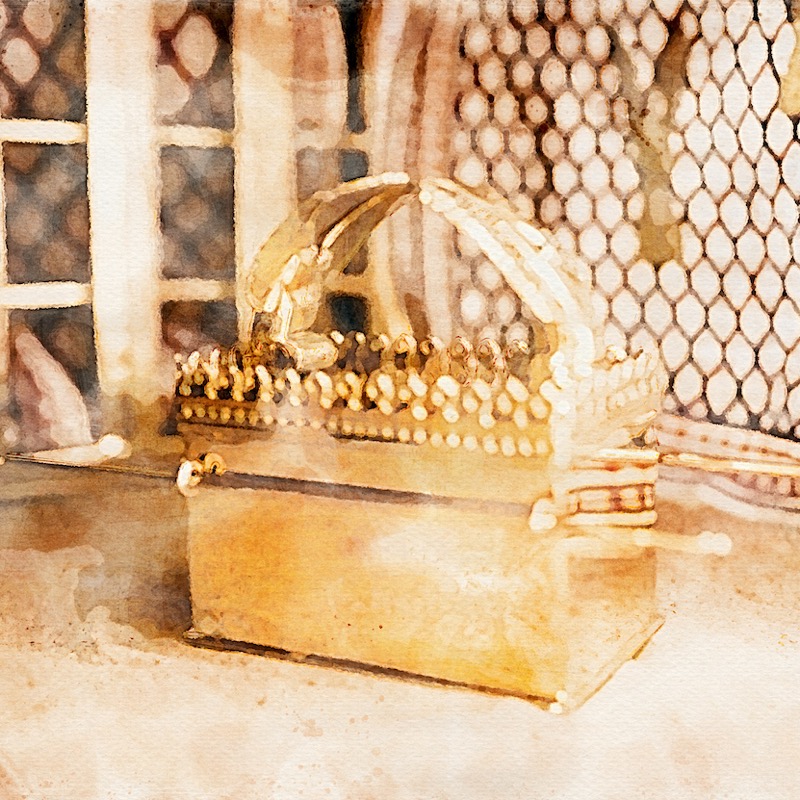
Allow me, please, once more to welcome you to this, the fifth lecture in this current series of studies on the Old Testament Jewish tabernacle. When we began this series, we concentrated first on the road that God himself had marked out for the ancient Israelites, the road by which they might approach his presence. We found that he marked it out by having some sacred vessels placed to mark the way, the direct route into the presence of God. And so we concentrated first on the big bronze altar with its sacrifice and its shedding of blood. We then moved on to the laver, which was filled with water. Like the altar, it offered cleansing, but whereas the altar offered cleansing from the guilt of sin by the blood of the sacrifice, the laver offered cleansing from the defilement of the body and the personality, and therefore prepared the priest particularly to approach the presence of God. We then moved in, again on the direct route of approach to God, and came to the golden altar of incense that stood just outside the veil, right opposite the throne of God. The ark and the mercy seat, with the cherubim coming out of each end of the mercy seat. And God, as the Old Testament put it, sat enthroned above the cherubim on the ark. Next week, God willing, we shall go through and past that veil to come to what then was the immediate presence and throne room of God Almighty. But in our last lecture, we stayed a while in the holy place, that is the first division of the tabernacle, and we considered the two vessels, the two sacred vessels that stood one on the left hand side and the other on the right hand side of the holy place. The one on the left side was the beautiful lampstand. In our last lecture, we considered it in great detail. Now we move across to the other side of the holy place to study in the present talk the table, called generally in the older translations the table of showbread, but more accurately in the more modern translations, the table of the bread of presence. Both those vessels, the lampstand and the table, were vessels of presentation. The lampstand's function was to present seven lamps, seven oil lamps, to burn before the Lord continually. I repeat, therefore, the lampstand's function was to be a vessel of presentation, to cause the lamps, to present the lamps, that they might shine before the Lord continually. I suspect that if I came to your house, you have electricity, of course. But not in your best room, at any rate. You don't have just a bulb on the end of a bit of wire, do you see, do you? You have a bulb, but then you have it in a beautiful article, oh, colorful and artistic, that presents the light to all who are in the room. That was the function of the beautiful, delightful lampstand. The table on the other side was likewise a vessel of presentation. And what it presented before God, we shall now presently discover. But first we read the directions for the making of the table, and by the time we're finished, I'm sure you will agree with me, it was some table. It was indeed. We shall find the first, uh, uh, uh, detail of its, uh, structure in Exodus chapter twenty five. Exodus chapter twenty five, Beginning in verse twenty three. And thou shalt make a table of acacia wood, two cubits shall be the length thereof, and a cubit the height thereof, and a cubit the breadth thereof, and a cubit and a half the height thereof. And thou shalt overlay it with pure gold, and make thereto a crown or a molding of gold round about. And thou shalt make unto it a border of an hand breadth round about, and thou shalt make a golden crown to the border thereof round about. And thou shalt make for it four rings of gold, and put the rings in the four corners that are on the four feet thereof. Close by the border shall the rings be, for places for the staves to bear the table. And thou shalt make the staves of acacia wood, and overlay them with gold, that the table may be borne with them. And thou shalt make the dishes thereof, and the spoons thereof, and the flagons thereof, and the bowls thereof, to pour out withal. Of pure gold shalt thou make them. And thou shalt set upon the table bread of presents before me always. Let's just ponder that so that we can digest some of those details. I say again, it was some table, wasn't it? Made of the very precious and costly acacia wood that is nearly incorruptible. And then, if you please, it was overlaid with gold. Not just any old gold that you might get at Mrs. Samuel's. It was pure gold, you see. The highest carat. Pure gold. And then you had to make a molding round the top of it. That was, if you please, of gold as well. Then there was a border. We are not sure whether it was horizontally out from the table, perhaps as a ledge to put the vessels of service on them, or whether it was for strengthening the table and went vertically between the legs, it doesn't matter. It too had a molding, and if you please, that was of gold. Then, because this was a portable shrine and had to be taken through the desert by the Israelites when they were on the march, the table had to be transported. So it had four rings, two on the long side, each by the leg of the table, and the other one the leg of the table, and then two more on the long side, the other side, one ring on the one leg and one on the other. Do you know what? The rings had to be of gold. And the rings were for putting staves through, do you see, from one end to the other, and then the other side, that the table was then carried on the shoulders of the appropriate Levites. The staves were of wood, of course. Oh yes, but not just wood, not with this table. It was overlaid with gold, if you please. And then there were vessels of various sorts, you see, to service the table. And they were of pure gold. Some table that. If you had a table like that in your home, I think it wouldn't be in the kitchen. What would you choose to eat on it? I mean, a table like that. You wouldn't have a, a, a, a beans on toast, would you not, on that table like that to present your, your guests with a table, uh, presentation with beans on toast. Now, surely it would be the most elaborate meal that anybody ever saw. If the table was so elegant, because of the gold, it is often called the pure table, pure U-R-E table. table. Whatever was placed on that, it must have been glorious, don't you think? On a table like that. So let us look now to Leviticus and chapter twenty four to read what was placed on the table, that the table might present it before God continually. This is Leviticus chapter twenty four verse five. And thou shalt take fine flour and bake twelve cakes thereof. Two tenth parts of an ephah shall be in one cake. And thou shalt set them in two rows, six on a row. Or the Hebrew might be translated, you shall set them in two piles, six on a pile, upon the pure table before the Lord. And thou shalt put frankincense upon each row, that it may be to the bread for a memorial, even an offering made by fire unto the Lord. Every Sabbath day he shall set it in order before the Lord continually. It is on behalf of the children of Israel, an everlasting covenant. And it shall be for Aaron and his sons, and they shall eat it in a holy place, for it is most holy unto him of the offerings of the Lord made by fire, by a perpetual s- uh, statute. What was on the table then, were these twelve loaves of bread put in two rows, and then there was frankincense. At the end of each week, the priests were to come, they were to take the old bread that had been there for a week, take it off the table, and immediately put new bread, twelve loaves, on the table. They were to take the frankincense outside to the big altar and burn it as a sacrifice made by fire unto the Lord. And we need to get the connection between these two things. Those twelve loaves were for God's benefit primarily. They had to be presented before the Lord regularly and continuously. And when they were taken down, then the frankincense had to be burned as an offering, as a memorial, as a token part of that, uh, those, that, that bread, as a s- sacrifice to God. It was primarily for God's benefit that the table held up those loaves before the eye of God. Now, some people have found a difficulty with that. They have said, surely the loaves weren't there for God's benefit. Are you saying, they would tell me, that the Israelites were a lot of old pagans, and they thought their God had to be fed on loaves of bread? Well, pagans did think like that, do they? But no, in answer to your question, I'm not a pagan. I'm just going by the text. The bread was there, called the bread of presence. Before the very presence of God, continually there, for his satisfaction. And then the frankincense, burned as a sacrifice on the altar. Then we are told that at the end of the week, when the priest came and took away the bread that had been there for seven days and put new bread in the place, then the priests were allowed to eat the old loaves, but they had to eat them in a holy place. They weren't just ordinary breakfast food. This was a very sacred meal. They had to eat it in a holy place. But now we begin to see what is happening. Here was a table. It presented these twelve loaves. They were for God's satisfaction, but of course, he didn't eat them. And Israel never imagined that he ate them. The loaves were still there seven days later. But they were there presented. Did we not listen to the text? They shall be there before the Lord continually, as the eye of God looked down on that table with its loaves and was satisfied in his heart. But from that table, from that very same table, the priests could come at the end of the week, and taking the old loaves and putting new in their place, the priests were allowed to eat those twelve loaves as a sacred meal. And the stupendous wonder is this, that even in those far off ancient days, God and man ate, so to speak, at the same table. And thus did the table become a symbol of fellowship between God and man. That is was for Israel in those far off days. But we in this series are more interested in the tabernacle as a shadow of the good things to come. And as such, it speaks to us of that glorious fellowship that has been instituted between God and his redeemed people. So let us turn now to that passage in the New Testament that talks in some detail of this fellowship that believers in Christ enjoy with the Father, and indeed with his Son, and with his apostles, and with all other fellow believers. I begin in First John and chapter one, and I read thus, that which was from the beginning, that which we have heard, that which we have seen with our eyes, that which we beheld and our hands handled, concerning the word of life. And the life was manifested, and we have seen and bear witness and declare unto you the life, that eternal life that was with the Father and was manifested unto us. That which we have seen and heard, declare we unto you also, that you also may have fellowship with us. Yea, and our fellowship is with the Father and with his Son, Jesus Christ. And these things we write that our joy may be fulfilled. Marvelous words from the pen of the aged Apostle John. He's talking about fellowship. So let's begin by thinking through what fellowship means. It doesn't necessarily mean a sort of a humming in my heart, you'll say, or a communion with my spirit. When the Greek uses the term fellowship between what two people, or more than two, it implies that person number one and person number two have something in common. They share something between the two of them. That is the meaning of fellowship. And as we see here, that is John's implication. What is it that you as a Christian have in common with God. For John informs us, and truly our fellowship is with the Father and with his Son. How shall I bear such unutterable concepts that I, poor human being, have something in common with Almighty God and his glorious Son. So that, uh, we are fellows with this thing in common. What is this that we have in common? John spells it out. It is the life, you see, says John, that eternal life that was with the Father. And we pause to try and let our imaginations ca- catch up with the fact. That eternal life, that long before there were any humans on this planet or a planet Earth to start with, that was with the Father, to his infinite delight and satisfaction, that eternal life is, of course, our blessed Lord himself. Do we not remember what first John in the gospel tells us? In the beginning was the Word, and the Word was with God. The particular preposition in Greek that he uses for the word with, is a preposition that is used when people, persons have fellowship in common. In the beginning was the Word, and the Word was with God in glorious personal eternal satisfaction. That the God infinite heart of God might be infinitely filled with the pleasure of his dear Son. That eternal life then, that was with the Father. And now John takes up his pen to write to the likes of us, who like him have come to believe in the Lord Jesus. And he says, you know, that life was manifested. And he gets a little bit excited, so his pen, the ink flows very freely down the nib. He says, you see, the life was manifested unto us, and that which we have seen. This is an apostle speaking, telling us of that indescribable experience when they were looking upon Jesus as he walked And and perceived perceived. that this was none other than the Son of God. That eternal life now manifested in the person of Jesus Christ. The one who, for the long week of eternity, had ever been before God. Now manifest to us, says the Apostle John. We saw him, and we declare unto you also that w- you may have fellowship with the Father and with his Son. We have seen then, says he in verse two, and bear witness and declare unto you the life, the eternal life, which was with the Father and was manifest unto us. In verse one, he goes so far as to say, not only have we seen it with our eyes and beheld it and contemplated it, but our hands handled it. I try to imagine sometimes what must have been the experience of those fishermen rowing their boat, waking up to the fact that the man who was asleep on the pillow cushion at the end of the boat was God's own son, who could rise and still the storm, to whom the very winds were obedient. Wonder, they were allowed to touch him. When the ark was taken captive by the Philistines in the Old Testament. And the Philistines sent the ark back. The Israelites didn't put it in the tabernacle again. They put it in somebody's house. When David became king, eventually he decided to bring the ark out of that house into his capital city, Jerusalem. And he made some curtains as a tent for it. And so he sent his servants, and they got a cart, very well intentioned, and uh, uh, uh, took the ark out of the house of this good man, put it on the cart, and two men went to accompany it back to Israel, you see, to Jerusalem. At one point, the ark, uh, the the oxen stumbled. And one of the men that was to accompany it, his name was Uzzah. He saw what he thought was the ark, the very throne of God, toppling, you know, and he put out his hand to touch it. Wouldn't do for the throne of God to fall over, would it? And in that moment, he fell dead. That was the sacredness of that ark upon the wings of the cherubim on the mercy seat. God sat enthroned. Let me give you some advice. If one of these days, when you get to heaven, you see, or you think you see, the throne of God beginning to totter, whatever you do, don't try and hold it up. Run as hard as you could run. For if the throne of God totters, the universe will collapse. But such is the holiness of God. Now see the wonder. Says John, that eternal life that was with the Father was manifested. We saw him. We contemplated it. And if you believe it, we actually touched him. What a magnificent story this is. This is that eternal life. And I'm writing, John, says John, to you, that you may have fellowship with us, the apostles, though you have never seen him. You may have fellowship with him as we did. And truly our fellowship is with the Father and with his Son, Jesus Christ. Oh, how wonderful. And I shall ask you to think presently on what the table represents. We have thought up till now of the loaves upon the table. But I leave that for the moment, because we must follow John now, as he lays down the condition that must be fulfilled. If we are to have this kind of fellowship with the Father and with his Son. There are certain conditions to be fulfilled if we would enjoy this fellowship. We read on for ver- from verse five: and this is the message which we have heard from him and announced to you, that God is light, and in him is no darkness at all. If we say that we have fellowship with him and walk in darkness, we lie and do not the truth. But if we walk in the light as he is in the light, we have fellowship one with another, and the blood of Jesus his son cleanses us from all sin. Here then is the first absolute condition. God is light. In him is no darkness at all. If we claim to have fellowship with him and walk in darkness, that's a contradiction in terms. We lie and do not the truth. For the big one condition necessary for this fellowship is stated in verse seven, but if we walk in the light as he is in the light, we have fellowship one with another. Here are tabernacle pictures shall help us. Let us observe the three vessels that stood in the holy place. There is the altar of incense there in the middle, right up against the veil. And on the left side stands the lampstand with its seven lights. On the right hand side stands the table with its seven loaves. Do you observe that the table stands directly over against the light? And the direction for the lamps on the lampstand are this, that when they are lit, the spout with the wick should be so placed on the lamps, uh, on the lampstand, and the lamp so placed that the wick should be pointing across the tabernacle. Suppose then a priest wants to come and take the bread from that, uh, golden table. Where must he walk? Well, obviously. He has to walk in the light, doesn't he? If he would have fellowship with God at that table. Suppose he keeps outside, in the dark, for instance, but he couldn't come to that table outside, could he? That ancient priest had to come and walk in the light, as God is in the light. What does it mean? There are some good Christians that think the verse means as follows: that if we would enjoy the eternal life that Christ gives to everyone who believes in him, we must be careful to walk in the light, that is, to lead holy lives. And if we were to do a sin or make a mistake, that would be walking in darkness, and we would lose the fellowship. Well, that may be practically true. I don't think it's what this verse is saying. Because what is the fellowship? The fellowship is nothing less than sharing the very life of God. That's what having eternal life means. Sharing the very life of God. As manifest in his son, our Lord. What is the condition for it? We have to come and not merely just come to the light, did you notice that? We have not only to come, but to walk in it. To walk in the light as he is in the light. Now I can guarantee you one thing, that if you come and walk in the light, you won't be there five minutes perhaps, but what the light will expose you. And you'll see your faults as perhaps you've never seen them before. Ah, but listen. If we walk in the light, as he is in the light, we have fellowship one with another. But you say, what about my sins and my shortcomings? Listen. If we walk in the light as he is in the light, then we're told that, uh, we have fellowship, and the blood of Jesus, his son, cleanses from all sin. You should say a hallelujah to God at the very moment. We can come to the light. As he is, our blessed Lord is in the light, and God himself is light. We poor broken men and women can come to the light. And if it exposes us, we have this assurance that the blood of Jesus Christ, God's son, cleanses us from all sin. But notice again that it says not simply if we come to the light, but if we walk in it. John himself in his gospel records that our Lord, and this is his chapter eight— claimed, I am the light of the world. He that followeth me shall not walk in darkness, but have the light of life. And so John says there were many Jews, when they heard that, believed on him. Or at least so they said. Then Christ said to those Jews which, uh, had believed on him, or so they said, if you continue in my word, then are you my disciples? That is to say, the mark of a genuine disciple is this, he not merely comes to the light, he continues in Christ's word. And said our Lord, if you, uh, uh, uh, if you continue in my word, then you are my disciples indeed, and you shall know the truth, and the truth shall make you free. They said, did you say free? Yes, free. Free from what? He said, from sin, of course. For he that practices sin is a slave of sin. And the slave can't abide in the house forever. But you see, if the Son shall make you free, then you shall be free indeed, members of the very family of God. At which point, these so-called disciples began to get angry. He dared to suggest they were sinners. It wasn't long after that they picked up stones to stone him. And we come back to our verse, don't we? It's not a matter of simply coming to Christ. It's a matter of walking in the light, not just coming to the light, walking in the light. And I repeat, if we do it, it will eventually expose us. And I doesn't, I do not say it doesn't matter if we sin. But what scripture says is that as we're walking in the light, and the light exposes this or that wrong thing about us, or something we've done, or some attitude of heart. We are to confess our sins, but not run away from the light. We're to confess our sins, and the blood of Jesus Christ, God's son, cleanses us from all sin. Wonderful, isn't it? God's realistic provision that we might walk in the light and have fellowship with him. Now, just in case you think I am taking a lightsome view of sin in a believer's life, I'm not doing anything of the sort. For I have noticed that in chapter two and verse six, John adds, he that says he abides in him that is in Christ, ought himself, has a bound and duty himself to walk even as he, as Christ walked. So we have two concepts. In our earlier verse, it was a question of where we walk. Do you walk in the light or in the darkness? It's where you walk that is all important. But when we've learned that lesson and come down to verse six of chapter two, it's not here where we walk, but how we walk. Yes? He that says he abides in him has abandoned duty to walk even as Christ walked. That is our duty. We come short. Oh, but thank God. When a believer sins, he doesn't lose his eternal life, does he? May not be enjoying it at the present moment, he doesn't lose it. The one condition is this. If we come to the light, yes, but if we walk in the light, we have fellowship with the Father, and the blood of Jesus Christ, his son, cleanses us from all. I sometimes man, uh, imagine in my mind a young priest. And he has begin, uh, been given the duty to come to the table and, uh, to remove the loaves and put the new loaves in place, you see. He's not done it before. And as he comes in, he's all fingers and thumbs, you see. How shouldn't he be? And, uh, he comes towards the table, and with his nervousness, his big toe catches in the hem of his garment, and he falls head over heel in front. Too bad that, isn't it? He's a fallen priest now. May I ask you to, to, to perceive where he's fallen? He's fallen in the light. You say he shouldn't have fallen over like that. Well, no, of course he shouldn't. But thank God he's fallen in the light. And in many things we all fall. More than that, we still come short, don't we? Oh, thank God. If we're walking in the light, that is as here in the light, we've not only come to him, we're walking with Christ, and we fall. It's in the light we fall. It will expose us, but not throw us out. Unless you should think I am, uh, uh, putting a wrong emphasis on these verses, let me come to the great secret. Verse one of chapter two of this epistle by John says, these things I write unto you that you may not sin. This is not to encourage us to sin, what John has just said. In fact, if we say that we don't have sin, we make him a liar, and his word is not in us. But if any man sin, we have an advocate with the Father, Jesus Christ the righteous, and he is the propitiation for our sins, and not for ours only, but also for the whole world. And we come back at this point to a topic that we discussed, uh, uh, two sessions ago. Would you see that there are three vessels in the holy place? There is the lampstand on the left, there is the table on the right, and the lampstand is shedding its light on that table, so much that if a priest comes near, inevitably he walks in the light. He's not prepared to walk in the light, he can't come to the table. What happens if the priest in that very moment commits some, uh, uh, uh, defect, has a sinful thought or something. Oh, look at that altar. The Trinity of fellowship, the lamp, the table, and the altar. And there we are do- told, you'll see, that we have an advocate with the Father, Jesus Christ the righteous. On the horns of that incense altar, the blood of atonement was smeared. And thus gave the confidence to the priest. If he failed. What a lovely thing it is, isn't it? God's provision to share with us that eternal life that was with the Father. Why, I say, why did he bother to make a universe? Why did he bother to make a planet so wonderfully tuned that human life is possible? Why, when we were sinners of a sinful race, did God send his son to the point of dying for us at Calvary? Because this is the very heart of God. He would not keep his son to himself, but shared him with us, that we might share his eternal life. You say, hmm, all right, Mr. Preacher, but you still haven't explained a thing. You carefully avoided the fact that there were twelve loaves on the table, haven't you now? And you've not told us the obvious meaning of those twelve loaves. Why were there twelve loaves? Well, you have the answer then, don't you? They represent the twelve tribes of Israel. Absolutely right. Yes. And for centuries, that table presented those twelve loaves before God. For his satisfaction. Deuteronomy tells us, the Lord's portion is his people. He redeemed them out of Egypt. Though Israel were in many generations false to him. God told Jeremiah to tell the people and remind them. Says God through Jeremiah, I remember the time, the days of my betrothal, when I came down in the wilderness to court Israel, like a young man courts his bride. Oh, I remember the joy of it, says God through Jeremiah. But since Israel's day, something more wonderful has happened. God has sent his son. This very son, who was with him for all eternity, now become human. Israel's fairest son, human as well as divine, have walked our world thirty three years for the infinite satisfaction of God. He's now gone back to heaven, sits at the right hand of God. Yes, but before he went, he died for us. And we who trust him, though we be the biggest Gentiles that ever were Gentiles, so to speak. Now in Christ, Jew and Gentile, formed into one body, presented before the Father. It is said in Ephesians chapter two that of course we were once enemies in our mind by our evil works, prodded on our way by the malevolent Satan himself, dead in trespasses and in sins. But a God according being rich in mercy for his great love wherewith he loved us, even when we were dead through our trespasses, gave us life together with Christ. For by grace you have been saved, and raised us up with him, and made us to sit with him in the heavenly places in Christ Jesus. Let me ask you how much of that you believe. I think you believe the first bit, don't you? That Christ is now raised up by the Father and sits at the very right hand of God. He sat down on his Father's throne for the Father's eternal satisfaction. You believe that, yes. But listen to what the rest of the verse says. In Christ, God has not only given us new life, but has raised us up and seated us in Christ in the heavenly places. Believe that bit too? And at the very moment, we are seated with Christ in the heavenly places, and for his sake accepted with the Father. I can tell you something more. I've read in the last verses of the epistle by Jude, these magnificent words. Jude twenty four, now unto him that is able to guard you from stumbling and to set you before the presence of his glory without blemish in exceeding joy. Able to set you. The Greek word means able to present you. And just like that table, that gorgeous table in the tabernacle was built to present those twelve loaves before God continually for his satisfaction, and then ultimately for the priest to share that joy with God himself at that table. So now we have the reality. To him that is able to keep you from falling and to present you before the presence of his glory. Oh God, help us to, to use our imagination, if nothing else, to begin to see what a wonderful thing that will be. When you and the believers of all time, Christ takes us, and like that table held up the showbread before God, will take the redeemed people, and you, and even I among them, and present us to the Father before the presence of his glory. That will have to be some table to present us, won't it? In such magnificent situation, to present us before the presence of his glory with exceeding joy. That one day will be a fact. Already are we seated in the heavenly places in Christ, welcomed there for his sake, welcomed by the Father, who scrutinizes every day that he might find more and more pleasure in us, as Christ himself is developed in us, and we become more conformed to the image of God's son. One day the process shall be perfect, my dear brethren and sisters. And as surely as we have sat on these seats tonight, so will the blessed Lord Jesus take us and present us before the presence of God's glory with exceeding joy. You see, I- I'm a little bit worried. Mm. I- I'm still a little bit uncertain of your interpretation, Mr. Preacher. Uh, do you see, hmm? Um, you said the loaves were there for God's satisfaction? How can that be? Surely the loaves were simply there as God's provision for his people. Not his people being for his, I nearly said for feeding him. Well, I better withdraw that, that statement, lest you think I'm a pagan. So I'll quote you another one. Says our risen Lord, in all his glory, as he stands outside the door of the church at Laodicea, apparently shut against him, knocks upon the door and says as follows: If anyone hears my voice and opens the door, he's talking to the church at Laodicea. I will come in, and I will dine with him and her. Really? Do I get that right? I can understand the next bit, and he and she will dine with me. Marvelous, Lord. You're proposing to dine with me? Well, he dined in Mary and Martha's house, didn't he? Many times. I wonder what he'll say to Mary and Martha when he gets them home to glory and they see his father's house. Remember Martha? Remember Mary? When I sat at your table and that lovely meal you prepared for me? I so enjoyed eating it. Dined with them then. Our blessed Lord Jesus will dine with us hereafter. He says in one place he'll make us sit down at the table and he'll come forth and serve us like a waiter at a table. You can't get over nor to the end of the grace of God in Christ. God strengthens our heart. And I leave you with once more the promise of that lovely verse. Now unto him that is able to keep you from stumbling. Ah, Ah. pray remember, shall present you faultless before the presence of God's glory with exceeding joy. Let's just bow our hearts in praise and worshipful adoration of our God. Our Father, now we come to confess before thee. There is a loveliness about thy word, and yet we find it a little hard to take in. It is so glorious. And thy grace is so magnificent and immeasurable. Strengthen our hearts now, we do beseech thee. We thank thee, Lord, for coming as the light of the world. We thank thee for drawing us to thyself, that we may walk in thy light. We thank thee, Lord, that though often we fail and come short, nonetheless thy blood, Lord Jesus, cleanses us from all sin. We lay hold on thy promise that if we confess our sins, thou art faithful and just to forgive us our sins and to cleanse us from all unrighteousness. Blessed Lord Jesus, help us to hear thy voice, that we may bid thee ever and again to come in and dine with us, and we with thee, as we look forward to that day when thou shalt present us to the Father before the presence of his glory with exceeding joy. So bless thy word to our hearts, we pray, as now in these moments we give thee our thanksgiving and our worship, through Jesus Christ our Lord. Amen.