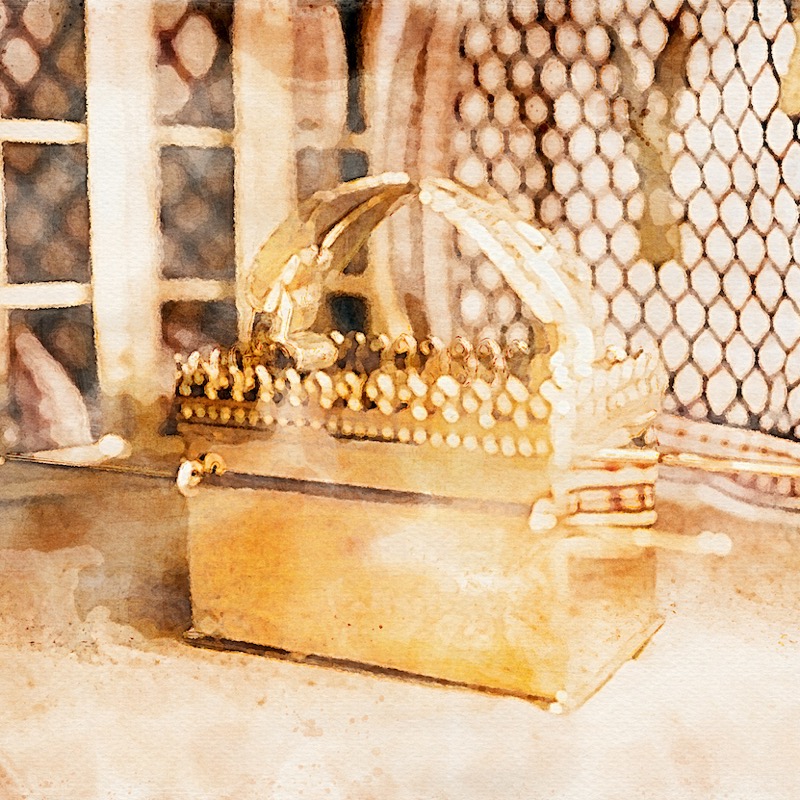
Gooding, David: 6 - The Veil and the Most Holy Place
ID mfh_1087364728Date unavailableBefore 4.04Restored 4.54
Allow me to repeat the warm welcome that we offer you to this sixth lecture in the series of talks on the tabernacle. Tonight we are to resume the journey that we began at the beginning of the series. We noticed early on that when God instructed Moses to build the tabernacle, God himself laid down the road by which his people might approach him as he deigned to come and presence himself in the most holy place in this building. He marked out the road by stationing certain sacred vessels that should a- act as guideposts from the outside inwards. So we began to study the first sacred vessel, that was the bronze altar at which sacrifices were offered and the atoning blood was shed. Then we moved on to consider the second of the vessels, that is the laver that offered to the priests cleansing. Cleansing overall, the bathing once and for all that they received when they were inducted into their priesthood. And then water to rinse and wash their feet and hands whenever they came to perform some service for God and the people in this sacred building. Then we moved on again into the first division of the tabernacle and came to the little altar of incense, the golden altar, so called, that stood just in front of the veil. That was the altar at which the priests burned incense morning and night, and came to be associated with the prayers of the people as the high priest prayed for them. Then we interrupted our journey because we were interested to study the two other vessels, sacred vessels, that stood in the holy place. The one on the left was the lampstand, the gorgeous lampstand, and the one on the right was the table. We noticed that both those vessels were vessels of presentation. The lampstand made to look like a living tree, an almond tree, with the various stages of growth in its trunk and branches. The lampstand was a vessel to present seven olive oil lamps to shine before the Lord. Note that their primary, uh, duty was to shine before the Lord, and the lampstand presented them for that purpose. At the other side was the table of what was called in the ancient translations the showbread, meaning in Hebrew the bread of the presence. For that table supported twelve loaves of bread, but supported them and presented them before the Lord continually. They remained on that table for a week, along with frankincense, which was the most costly of all the offerings made by fire unto the Lord. At the end of the week, the priests were allowed to come, remove the bread, put new bread in its place, and then themselves to eat the old loaves, but that was a sacred meal. They had to eat them in a holy place. Now, tonight, we resume our journey with expectant hearts, for we are now invited to do what the people of Israel were never able to do, and the high priest among them was able to do only once in a year. We are to pass through into the immediate presence of God and of his throne. But as we attempt that, we find across our path a barrier called the veil. And we are perhaps, uh, uh, wise just to read the directions for the making of that veil. They come in, uh, Exodus chapter twenty six. Exodus twenty six and verse thirty one. And thou shalt make a veil of blue and purple and scarlet and fine twined linen with cherubim, the work of the cunning workman shall it be made. And thou shalt hang it upon four pillars of acacia overlaid with gold. Their hooks shall be of gold upon four sockets of silver. And thou shalt hang up the veil under the clasps and shalt bring in thither within the veil the ark of the testimony, and the veil shall divide unto you between the holy place and the most holy. So as we begin to resume our journey in toward the presence of God, we find now in front of us a barrier. It is called the veil. In some chapters of scripture called the second veil, because there was a kind of a veil at the very door through which you had to enter. That, however, was distinguished very carefully from this second veil. A special word is used for that veil that barred the way into the immediate presence of God. We have to ask first what that veil signified to Israel in those far off days. Then we shall presently inquire what it means to us. Because the tabernacle was built, first of all, for the Israelites as a copy and shadow of the heavenly things. But for our benefit who live in this age, the tabernacle was also designed as a shadow of the good things to come, which good things came actually with the birth into our world of our blessed Lord Jesus, the Son of God, in his life and ministry, in his death and ascension into heaven. First of all, then, the veil as it meant to the Israelites at the time. It represented that physical barrier, whatever it is and whatever it's made of, who can tell us, that hides the presence of God and his heaven from us who live here on earth. I would like to point out, so that we don't get confused later on, that the veil in this sense is not rent. It was not rent at Calvary. The veil, in the sense of the barrier that hides the immediate presence of God from our eyes, is still there, is it not? You can't see the Lord Jesus, can you? You can't see the throne of God. The veil remains to this very present day. Let me quote you a scripture that will show us that is so, from the Epistle to the Hebrews and chapter six. uh Hebrews chapter six. Verse seventeen onwards, wherein God being minded to show more abundantly unto the heirs of the promise the immutability of his counsel, interposed with an oath, that by two immutable things in which it is impossible for God to lie, we may have a strong encouragement who have fled for refuge to take, to lay hold of the hope set before us, which hope we have as an anchor of the soul, a hope both sure and steadfast, and entering into that which is within the veil, whether as a forerunner Jesus entered for us, having become a high priest forever after the order of Melchizedek. You will see that these verses say that our blessed Lord passed through this veil. What veil? The veil that hides God and his throne from our visible sight. It is a glorious thing to remember that our blessed Lord did pass through that veil. And as we said the other night, but it bears repetition, Luke in his Acts of the Apostles, has described it very deliberately. Forty days after he was raised from the dead, our Lord took the disciples to the Mount of Olives. As he blessed them, he was taken up from them. And as they watched him going into heaven, we're not told by what exact process then he entered heaven, because Luke tells us that a cloud, doubtless the Shekinah glory of God, enveloped him and hid him from their eyes as he passed from our visible world of earth and space into what for us is the invisible world of the immediate presence of God. Our blessed Savior is there. One day we shall join him, of course. But in this sense, I do remind you of what Peter says. You have never seen the Lord, have you? You can't see him still. And this is a veritable miracle. Because, as Peter points out, not having seen him, you have never seen him, you love him. It's an extraordinary thing, isn't it? I put it to you, all you who here are believers in the Lord Jesus. You've never seen him, and yet, is it not a fact? You love him. You don't merely believe in him as an historical fact. You, you love him. He's real to you, isn't he? And though you still don't see him, says Peter, yet believing you rejoice with joy unspeakable and already full of glory, hasting towards the day when the blessed Lord will come again from heaven and receive his believing people to himself and conduct them into the Father's house. The veil in this sense, then, still stands. There have been occasions, of course, when the heavens have been opened. We are told, for instance, that when Stephen had finished his testimony before the Sanhedrin, and they had condemned him to death and were about to stone him. He said, I see heaven opened and the Son of God standing by the side of God. So, of course, the Revelation six describes a time that shall surely come, when, as the climax of the judgments of God that God shall send on earth at this time, the heaven shall be removed like a scroll that is rolled up. And the great men and the small men of earth, unconverted, rebel sinners still shall see to their horror the very throne of God and the Lamb of God. As the heaven, to use the scriptural term, is then rolled aside and opened, and men are allowed to see into heaven. They were exceptions, of course, and in this sense, I repeat, the veil is still there. But now let's move on and study the veil according to what the New Testament says. It was also a shadow of the good things to come. Those good things came with the birth and life and ministry, death and resurrection of our blessed Lord Jesus Christ. And so I, I, I apologize in advance. I must make you work hard over technical details, do you see? But then this is Holy Scripture, so I mustn't apologize. But we do need to get the technical terms right in this particular context, else we shall get ourselves sorely confused. So if you care to look at the building or the, uh, uh, the films of it, you will see that the building was divided into two. There was at this, uh, front a screen, sometimes called the first veil. Here there was the second veil. The veil. Hebrew paroketh. So the building was in two parts. This was the holy place. The second part was the most holy place. Now, this first part is sometimes called the first tabernacle. That is so in Hebrews chapter nine. This is called the first tabernacle. That doesn't mean the first tabernacle that was ever made, what Moses made, for Moses made the other bit as well. This is the first tabernacle. Beyond the veil, this second part is the second tabernacle. Or, to use another term, the most holy place. So the holy place and then the most holy place, separated by the veil. Or to use the other term, the first tabernacle and the second tabernacle, divided, of course, by that veil. So we are to read now from Hebrews chapter nine and see how its argument goes. Hebrews chapter nine. Now even the first covenant had ordinances of divine service, and its sanctuary, a sanctuary of this world. For there was a tabernacle pre- prepared, the first, notice that, that's the first tabernacle, wherein, uh, uh, were the lampstand and the table and the showbread, which is called the holy place. And after the second veil, the paroketh, the veil, the tabernacle, which is called the holy of holies, having a golden altar and the ark of the covenant overlaid round about with gold, wherein was a golden pot holding the manna and Aaron's rod that budded, and the tables of the covenant. Above it, cherubim of glory, overshadowing the mercy seat, of which things we cannot now speak individually. Now, these things having been thus prepared, the priests go in continually into the first tabernacle, accomplishing the services, but into the second, the high priest alone, once in the year, not without blood, which he offers for himself and for the errors of the people, the Holy Spirit signifying this, that the way into the holy place has not yet been made manifest, while as the first tabernacle is yet standing. It's my job to try and explain what that verse means. The way into the most holy place is not openly visible, while as yet the first tabernacle has separate status. Who care to look at any picture or the model itself? This is the first tabernacle. It had separate status. It had standing, to quote the Greek. It had separate status from the second tabernacle, and what gave it its separate status was this veil that hung right across from side to side of the building and made this a separate compartment, and that a second compartment. And now you will see how clear it is what the Holy Spirit is saying, that as long as this first tabernacle had separate status from the second, the way into the second, the way into the most holy place was obviously not open and manifest, for the veil was there that stopped even the priests from looking in or entering the second tabernacle, the most holy place. The veil then as a barrier. And... we are given the reason why God had the barrier there. Let's read verse nine. Which is a parable for the time now present, according to which are offered both gifts and sacrifices that cannot, as touching the conscience, make the worshippers perfect. Being only with meats and drinks and divers washings, carnal ordinances imposed until a time of reformation. Significant words, but sad in their way. The writer is observing that all those sacrifices, the blood of those animals, the water in that laver, the bread on the table, the oil lamps in the holy place, were only physical things, emblems, symbols, useful for teaching Israel in its day, divers washings in water, and so forth. And the trouble was their inadequacy. They could never, with those sacrifices which they offered continually, make the worshipper perfect as pertaining to the conscience. We have to ask, therefore, surely we do, what does Holy Scripture mean by using this word perfect of a person's conscience? To bring it home to us, might I ask if your conscience is perfect in this sense? And mine, for that part. What does it mean to have a conscience made perfect? Well, the same thing is said, for instance, in chapter ten, verse one. Let's read that as well. For the law, having the shadow of the good things to come, and not the very image of the things, they can never, with the same sacrifices year by year, which they offer continually, make perfect them that draw nigh. Else would they not have ceased to be offered, because the worshippers, having been once cleansed, would have had no more conscience of sins. But in those sacrifices there is a remembrance made of sins year by year. So the Israelite came with his sacrifices individually. The nation came on the great day of atonement and confessed their sins before God, and the sacrifices were brought and slain, and their blood brought into the most holy place. That was good. When they went away, not many days thereafter, they sinned again, and they sinned again, and developed a bad conscience. And what will happen to me now? And will God be angry with me? And so forth and so on. And if this day were my last, what would happen to me? A conscience not made perfect. The writer observes that if a person had his conscience made perfect, he wouldn't have offered anything else. He would cease offering the sacrifices. If the one sacrifice could have purged his conscience clean. What those animals couldn't do, that this passage tells us Christ can do. Do you see verse fourteen of chapter ten of Hebrews? For by one offering he have perfected forever them that are sanctified. Oh, they are most glorious words, and it's worth our taking t- uh, uh, time to study the technical terms of the model, because it is the model that's going to, um, model for us our own ex- time to study the technical terms of the model, because it is the model that's going to, um, model for us our own acceptance with God. The Israelite, even the high priest himself, was not allowed to come into the most holy place. The high priest, yes, on one day in the year, but only one day, and by himself. The rest of the priests not, and the people certainly not. Ever lurking in their mind was the presence of God and the throne and the tables of the law. And what should happen to them? And when life was done, what then? Oh, the wonder that Jesus Christ our Lord has done for us. Those sacrifices were mere animals, carnal things, mere s- physical, material things. They could never put away sin. They were only symbols. But our blessed Lord, in his sacrifice once and for all, has put away sin by the sacrifice of himself. And for the believer, the blood of Christ cleanses us. It cleanses our conscience. This doesn't mean that if we tell a lie as believers or act disgracefully, we don't get a bad conscience. We jolly well ought to get a bad conscience. It is talking about preparedness to meet God's throne. Presently, we must look at that throne. It will remind us that one day we shall all stand before that throne. How can we be prepared for it? How could we have peace of mind now, knowing that one day we shall be called to stand before that throne? And here is the glorious answer. By one sacrifice, he has perfected forever those that are sanctified, because his sacrifice paid the penalty of our sins, not merely some of them, but all of them. And the moment we put our faith in Jesus Christ as our Lord, Redeemer, our substitute and Savior, that moment our conscience is cleansed, and we may know that we are ready to stand in the very presence of God. The veil then, and the contrast between those sacrifices that were ineffectual, and therefore people couldn't be allowed into the most holy place, and the sacrifice of Christ, which has cleansed us and permits us now in spirit to come into the very holiest of all and stand before God at his throne. But now, in this sense, the Epistle to the Hebrews tells us of a further significance of this veil. Let's look at this same chapter ten, verse nineteen onwards. Having therefore, brethren, boldness to enter into the holiest of all by the blood of Jesus, by the way which he dedicated for us, a new and living way through the veil, that is to say his flesh, and having a great high, a great priest over the house of God, let us draw near with a true heart in fullness of faith. Wonderful words. We take our time over them. Here it is said that that veil was intended as a shadow of the good things to come, to represent Christ, God's Son, in his humanity. The veil, that is to say, his flesh. When he came on earth, he acted like a veil. Now, some of you may be, uh, conspiring against me at this juncture because you shall have ha- you will have read Bishop Westcott and his, uh, comment on this verse. And Bishop We- Westcott refused adamantly to accept that this verse meant that the humanity of Christ was a veil. Because he thought the veil was there to hide God from people. So he wouldn't have that. He wanted to retranslate the verse. Having boldness, you see, to enter into the holy place by the way which he dedicated for us, a new and living way, the way through the veil. Far be it from me to say so, but then the dear bishop hadn't quite understood it, had he? Because he rightly thought of the veil as a barrier. But even in those far off days, though the veil was a barrier of ki- of a kind, the priests could come right up against it, touch it if need be, and it was a beautiful thing. It was made of fine twined linen and blue and purple and scarlet, delightful it was, and it had cherubim on it. And the people, the priests at least, could come up to it and scrutinize, look at the beautiful colors of those symbolic cherubim and begin to understand something of the glory of the God that presents himself behind that veil. I'm arguing now that the veil, though a barrier into the presence of God, was nonetheless a merciful provision even in Israel's day. For if there had been no veil there, no priest could have entered into the holy place to start with. Because if there were no veil there, then as soon as you walked in the door here, you would be in the presence, the immediate presence of the throne and the presence of God. And that was impossible. What permitted the priests to come at this far, at any rate, to the golden altar, the lampstand, and the table was the presence of that veil there. A merciful provision from which the priests could learn something of the majesty and the glory of God. And says Hebrews chapter ten, in that sense, the veil was a forepicture of Christ, a foreshadowing of Christ. Delightful to think of it, isn't it? He was truly human, yet divine. In him, all the fullness of the Godhead dwelled, bodily. And yet sinners could come up and touch him. Little children could nestle on his knee and pull his beard. And in him was all the fullness of the Godhead. Oh, what a lovely God we have. In the sending of his son, what a merciful provision. The down and out sinners and proud hypocrites and innocent children could come and look at him. He that has seen me, said Christ, has seen the Father. Oh, what a wonderful thing it was. Do I get the feeling that some of you are saying, oh, I wish I had been with him then? You say, now he's gone, you see. It must have been marvelous to have been with Christ when he was actually walking here and you could go up to him and touch him and hear him speak. You'd feel very near God like that, wouldn't you? Oh, but you have something better. Surely you have. For we know what happened to our blessed Lord in his flesh. There's There's that that veil. there. They hounded him to Calvary, where he bore our sins in his body on the tree. And rude and wicked men not only nailed hands and feet to a cross, but took a spear and with it pierced his side. Forthwith they came out blood and water. And in that moment, when that lovely veil of our Lord's humanity was pierced and rent, there opened up a vision of the heart of God. What God is really like. Or the wonder of the cross of Christ, that perfect humanity, he crowned with thorns, nailed hand and foot, his side rent, opening up to our vision what God is really like. For God so loved the world that he gave his only begotten son. And God commends his love towards us, in that while we were yet sinners, Christ died for us. It is a remarkable word that he commends his love to us. I'm old enough to have remembered the hunger strikers, the hunger marchers, who in the late twenties and early thirties marched down from, uh, uh, the north. Some of them had not worked for ten years because of that terrible, uh, depression. In those days, men who could have been accountants or lawyers couldn't get work. They would come round to the houses and knock on the door because the labor employment place had sent them, because if they were going to get unemployment benefit, they had to take what work was offered to them. And they came round, perhaps with a few brushes and dusters and things, knocked on the door. And of course, the housewives didn't really need them. But the men were anxious to get a living, and so when the doors opened, they put the foot in the door. At least to get a hearing. To advertise the goods they had to sell. And God. In this hard-bitten world. He put his foot in the door, didn't he? All the wonder that God did at Calvary. He commends his love to us. And that while we were yet sinners, Christ died for us. And if there's a non-believer here tonight, may I ask you, will you not let God put his foot in your door and tell you how much he loves you. Commend his love to you, in that while you and we were yet sinners, Christ died for us. Now that blessed Lord, with a body still, carrying the marks of his crucifixion, has ascended into heaven. You say, half a minute, you said just now that he he he represented the veil, so to speak. I did, yes. For a believer now, there isn't any veil. For the veil has gone into heaven, to the very presence of God, and we are told that we have right to enter in. So let me quote you that verse again. This is Hebrews ten verse nineteen: Having therefore, brethren, boldness to enter into the holiest of all by the blood of Jesus, by the way which he dedicated for us a new and living way through the veil, that is to say his flesh, and having a great priest over the house of God, let us draw near with a true heart in fullness of faith, having our hearts sprinkled from an evil conscience and our bodies bathed with pure. Let us draw near, and not cringingly either, but boldly. Boldness for the entrance or for the entering in. Let me pause to explain what the word means. I have friends, they come from Scandinavia, or thereabouts, and they try to tell me that when Hebrews, uh, uh, 19 says, we have bre- boldness to enter the holy place by the blood of Jesus, we should translate the Greek word there, happens to be isodos, to mean the door. Do you see? Just like, for instance, uh, uh, somebody came to you when you were outside and said, what's the way into this building? You would have said, there's the entrance, meaning the door through which you come. That is the entrance. That's one sense. And the Greek word isodos can mean entrance in that sense, the door, do you see? But it also can mean the actual practical entering in through the door, entrance into the hall, do you see. What does it mean here? My friends aforesaid tell me that I should take it to mean that as we go through life, and with the increase of years we get nearer, so to speak, to eternity, we can have confidence that there, over there somewhere, is the door into heaven, and as we approach the door, we may have confidence that when we die, the Lord will let us in to his heaven. No, thank God, it doesn't mean that simply. Well, it doesn't mean that to part with, but it doesn't mean that in the actual intention of the writer. It means that just as Christ has entered into the very presence of God and has made a way for us to enter in, we can actually enter into the holiest of all of God's immediate presence now, not bodily, of course, but in spirit. A believer can lift his or her heart in the home, in the street, in the church, doesn't matter where, and be sensed that in spirit she or he has entered the very throne room of God, and God has accepted her. Glorious, isn't it? I have enough wickedness in me to provoke some people. And when they say to me, you say you're sure of heaven. No one can be sure of heaven. You can't be sure of heaven. I might even reply, what do you mean I can't be sure of going to heaven? I've been there today. What do you mean by you've been there today? Don't talk so silly, don't. But I mean what this verse is saying. Boldness to enter, to come to the throne of grace, to enter along the way that our Lord has pioneered for us, and come to the very presence and throne of God. Ah, what a thing it is. And worth a hallelujah from our hearts, even now. But as we come in, we must now begin to study, for time's sake, the great noble piece of furniture that will, we shall meet when we step inside the veil. So I'm going to ask somebody to come and remove the veil. And to bring the ark so that I can handle it and demonstrate it to you. The ark was a chest made of wood, overlaid with gold, with a crown of gold around it. And in that ark were a number of things, particularly the two tables of stone on which the law had been written by the finger of God. They were put into the ark, for that ark was a symbolic throne of God. On the top of it, it had a slab of pure gold, no wood in this, pure gold that sat on top, and from the ends of that slab of gold, there were cherubim, and they arched their wings over this, and their eyes were down towards that slab of gold. Now I'm aware I shall need to justify my claim that this ark and mercy seat were the, uh, throne of God, a symbolic throne of God. So I read you from one Chronicles chapter thirteen, simply to observe the th- the phrase that is used there. This is talking about subsequent history, when David became king, and he went to bring the ark of God that had long since been taken out of the tabernacle and was now in the private house of a certain gentleman. And David went to take the ark and bring it to Jerusalem. And it is said in verse six, David went up and all Israel to Baalah, that is to Kiriath Arim, which belonged to Judah, to bring up from thence the ark of God, the Lord that sits enthroned upon the cherubim. The Hebrew word that is used for sitting is not just sitting on a seat, it's the word you would use of a king sitting on his throne. And so the historian says here, the ark of of God, the Lord who sits, in that sense, sits enthroned upon the cherubim. It was, uh, his symbolic throne. How then can we approach him? In the chest, in the ark, as I have just said, were the tables of stone and the law inscribed on them, written with the finger of God. How can I possibly come and stand before God in the face of that law. The Bible reminds us of the seriousness of God's law. I read to you some very well-known verses, but we need to listen to them. This comes from Paul's letter to the Romans, chapter three. Now we know that what things soever the law says, it speaketh to them that are under the law, that every mouth may be stopped, and all the world may be brought under the judgment of God. Because by the works of the law shall no flesh be justified in his sight. For through the law cometh the knowledge of sin. We do well to underline those words, not only in our Bibles, but in our minds. The purpose of the law. Here it is clearly stated. God has not given his law so that by keeping it, we may, uh, earn a place in his heaven. Or that by keeping it, we may earn our salvation. The very opposite. We know that what things the law says, it says to them that are under the law, that every mouth may be stopped, and the whole world become guilty, subject to the judgment of God. That is why the law was given. Because by the works of the law shall no flesh be justified in his sight for the simple reason that through the law cometh the knowledge of sin. That is the prime purpose of the law, to show us how sinful we are in the sight of God. It is not given, says Paul, that we might earn sufficient righteousness to deserve to be admitted into God's heaven. These are solemn things, but let me impress it on you by a very simple analogy. Thermometers can show you how ill you are, if you're really ill. They can't cure you. Suppose you hear one of these days that Gooding is ill in bed with the flu or something, and your Christian heart leads you to think it would be a good thing to visit poor old Gooding in his illness, you see. So you come and you enter my bedroom, and there's me sitting up in bed with my nightcap on and sucking a thermometer for all I am worth. And you say, Gooding, what's wrong with you? I'm ill. Well, yes, I can see you're ill. But why are you sucking that thermometer? Well, I said, don't be silly. The doctor came and he he he he got out the thermometer and put it in my mouth, and when he looked at it, he said it was dangerously high. If it went much higher than that, I could die. He said, we must get it down if ever you're to be well, and I'm doing my best to get it down by sucking it. What would you say? You would say, Gooding, yes, you are ill. You're more ill than you think you are. Thermometers shouldn't show us how ill we are. They can't save us. God's law was given to show us how sinful we are. When we've done our best, the law will say, but you still come short. We cannot find salvation by the works of the law. It's good to do what the law says, but salvation doesn't come that way. How then does it come? But now, apart from the law, a righteousness of God has been manifested, being witnessed by the law and the prophets, even the righteousness of God through faith in Jesus Christ unto all them that believe. For there is no distinction, for all have sinned and still fall short of the glory of God, but they can be justified freely by his grace through the redemption that is in Christ Jesus, whom God set forth to be a propitiation through faith by his blood. Let me stop at that point. In the ark with the tables of the law. With them uncovered, none would dare to come. But God in his mercy had made a covering, a slab of pure gold, with the cherubim coming, arching their wings above it. And on the great day of atonement, that one time in the year that the high priest was allowed to come in representing the people of Israel. Then the high priest outside took a goat. The people confessed their sins. The goat was killed, its blood was shed. And the high priest came in. He stripped himself of his colorful robes and put on white robes simply. And pulling aside the veil, he entered into the immediate presence of God and took of that blood, sprinkled it on this slab of gold and before it. There's no record that he said anything. What he did was saying everything. That he and his nation had sinned, had broken God's law, deserved eternally to be banished. But by God's mercy, God himself had allowed him, the high priest, on behalf of his people, to s- kill a sacrifice, take its blood, and sprinkle it on that slab of gold, saying, implying that yes, we have broken the law. Yes, we deserve its penalty. But God, according to your mercy, you provide us a substitute whose blood you're pleased to regard as covering our sin. So, in our English translation, whom God has set forth to be a propitiation. And that may mean simply that, and propitiation means the sacrifice that meets the indignation of God. Not a question of how bad I feel about sin, it's a question of how bad God feels about sin. That's what has to be dealt with. God can never and will never say that sin doesn't matter. If through drunk driving I carelessly kill your daughter, God will never say it didn't matter. And if I never repent, God will hold it against me for all eternity. Why? Because he's a cruel God? No. Because he loves your daughter. Never say that it didn't matter, that my carelessness killed your daughter. We stand before God guilty. We're told that the blood of Christ, far superior to that of animals, has met the righteous demand of God and his indignation against our sin, so that he can accept us. It is an interesting word, that word, propitiation. In Greek it's hilasterion. But when in the book of Exodus and elsewhere, the word occurs for this, it is the Hebrew kaporeth. The ancient Greek translators who translated the Hebrew into Greek, faced with this Hebrew word kaporeth, used two words, uh, to refer to it. They used the word epithēma, which in Greek means something put on top, a lid, if you like, and that's what this slab of gold was. It was a lid covering it, but it was more than a lid. So the Greek translated it epithēma hilasterion, meaning the lid which is the place where propitiation is made. You'll see. Now listen to Hebrews again, to to Romans again. The law in this ark, the law was given that we might learn how sinful we are, do you see, and shut our mouths and leave us liable to God's judgment. Oh, but on the ark there was a, what Luther called a mercy seat, that slab of gold where the blood of propitiation was put that covered the guilt of all who believe. That God might accept them. And not only accept them, but not excuse them, might accept them righteously. To show, as verse twenty six puts it, the righteousness at this present season, that he might himself be just and the justifier of him that have faith in Jesus. Glorious, liberating words, these. It is not that God has chosen to ignore our sins or cover them up. At Calvary, in front of the whole world, God advertises what he thinks of our sin and the penalty they deserve. And his son paid the penalty so that God can be just, absolutely just, and yet justify those that have faith in Jesus. Finally, I want to teach you a little parable from the ceremonies of the Jewish high priest on the Day of Atonement, the high priest in his official duties made three appearances. He came out of the tabernacle, and he appeared in the presence of the people in the court of the tabernacle. They brought him two goats. The one was killed, its blood was shed. And then the high priest took that blood in a bowl, and leaving the people, he went into the tabernacle, past the first curtain, past the veil this time, and into the very presence of God, and sprinkled the blood upon the, uh, mercy seat upon the ark. He appeared, then he appeared first in the presence of the people out there in the court. He took the blood, and then he appeared in the presence of God for the people and put the blood upon the mercy seat. Then turning round, he came out, and after sundry duties, he came and appeared the second time before the people. And when he appeared that second time, he had to take the second goat, and the elders confessed their sins over it, and it was driven away into a land of forgetfulness. That was the ceremony. Three appearances of the high priest. And in this final verses of chapter nine of Hebrews, the writer draws the parallel between those three appearances of Jews, Jewish high priests, and the three appearances of Christ. Once in the end of the ages he has appeared, says the writer, to put away sin by the sacrifice of himself. This thing wasn't done in a corner. He appeared in our world, came out of his heaven, and at Calvary was crucified. He appeared to put away sin by the sacrifice of himself. Where is he now? He's now appearing in the presence of God for us. And that I want to inscribe on your hearts before you go ho- home, if I may. Do you see the implications? Christ appears in the presence of God for us. There's a legend among the Jews that when the Jewish high priest went into the holy place to appear in the presence of God on behalf of the people, and it's only a legend this, but they tied a rope around his waist and left the rest of it dangling outside, right through and outside into the court. Why ever? Because if God didn't accept him, he would die there and then, and the people would be able to draw him out. A dead corpse. The legend arises because of the Jewish sense of the seriousness of what was doing. The high priest appearing for them? Suppose God didn't accept the high priest. Well, then he didn't accept them either. Oh, tell me. It is said that Chri- at the once in the end of the age, Christ appeared at Calvary, and he did so in order to put away sin by the sacrifice of himself. And now he appears in the presence of God for us. Now I have a vested interest in this, and what I want to know is this. Christ appears in the presence of God. Of course God has made him welcome. How not? Bidden him sit at his own right hand. Ah yes, I say to myself, but God, does God really know that his son appearing in his presence now is appearing not simply for himself, he's appearing for David Gooding. Perhaps he's kept that bit secret. In case if David Gooding... Well, if God knew that he was appearing for David Gooding, that would be another story. Huh? No, excuse my childish mind. Then these things are personal in their application, aren't they? Christ. You trust the Savior? And Christ appears in the presence of God for you? And God knows that he's appearing for you? And God has accepted him? Oh, what, what an immense assurance and comfort it brings. Christ appears for his people in the presence of God, and God knows he is so appearing for his people, and God has accepted him, and with him, his people as well. Then the Jewish high priest, he had to appear the third time, and when he did, out in the court, he had to offer another sacrifice. Well, Christ will appear the second time, but this time, unlike the high priest, he will not have to offer another sacrifice. He shall appear the second time without a sacrifice for sin. Well, then why will he appear? Well, he'll appear for salvation, because when he comes the next time, it will be to take his redeemed and blood cleansed people home to the Father's house, there to be bodily with him, even as now they are there in spirit. I'm not ashamed of the gospel of Christ, said Paul, and I lisp it out myself. As I think of these things, I'm not ashamed of the gospel either, for it bears every mark of the countless wealth and riches of God's love and God's mercy. Shall we pray? Father, we have stayed long in our study. Count it, Lord, it is the desire of our heart to know what thine inspired word says, and to take to our hearts its glorious assurance. We bless thee now for the Savior, and we bless thee that he appears in thy presence for us who trust him. Has appeared there for this last two thousand years. Has never been asked to move an inch. Thou hast accepted him, and with him all who trust him. We do look forward to his coming. Come, Lord Jesus, we say. Come quickly.