Gooding, David: 6 - The Laver
ID mfh_1087390729Date unavailableBefore 1.96Restored 4.59
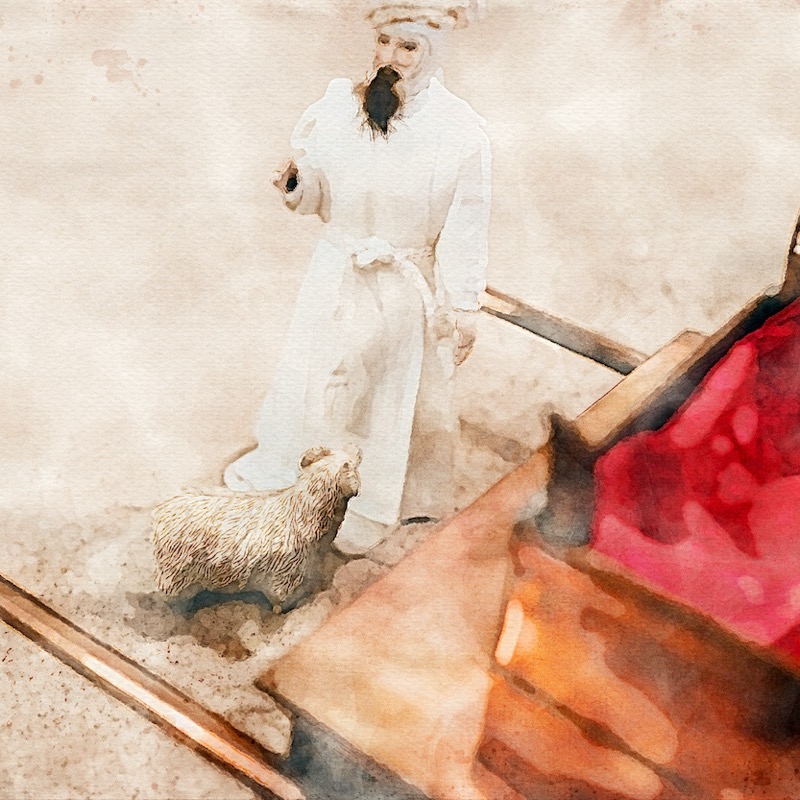
The book of Exodus and chapter thirty, beginning at verse seventeen. And the Lord spake unto Moses, saying, Thou shalt also make a laver of copper, and the base thereof of copper, to wash withal. And thou shalt put it between the tent of meeting and the altar, and thou shalt put water therein. And Aaron and his sons shall wash their hands and their feet thereat. When they go into the tent of meeting, they shall wash with water that they die not. Or when they come near to the altar to minister, to burn an offering made by fire unto the Lord, so they shall wash their hands and their feet that they die not. And it shall be a statute forever to them, even to him and to his seed throughout their generation. Then from chapter uh thirty eight, please. Chapter thirty eight, verse eight. Thirty-eight And he made the laver of copper, and the base thereof of copper, of the mirrors of the serving women which served at the door of the tent of meeting. May God himself explain his holy word to us. On Sunday evenings, we have been using this model and the tabernacle which it represents as a parable of our way into the holiest of all and the presence of God. And thus far we have come by way of this door, this gateway here, a picture of our Lord Jesus Christ, by whom we have access into God's grace, the door by which, if any man enter in, he shall be saved. And last week we studied this copper altar here, again finding it a picture of our Lord Jesus Christ, who gave himself for our sins, a sacrifice whose blood was shed that we might be brought nigh to God and our sins be forgiven. We could perhaps, perhaps best begin our study this evening by concentrating our attention just for a moment upon the model and upon the forecourt here that stands in front of the house. I wonder whether you would fix it in your eye so that you ever remember it, that there are two pieces of furniture in this court, not just one. Though this is by far the bigger, the copper altar, it isn't the only vessel here in the forecourt. There are two vessels, and the second of them is this laver. And you'll notice they come in that order. There is first the copper altar, and there is second the laver. Not one vessel, but two on the road of our approach in towards the presence of God. For if we can get that firmly in our minds, that there are two things provided for us, it may well help to clear for us what is with many people an exceedingly great difficulty. There are many people who, though interested in God and wishing to show all respect to our Lord, dare not for the life of them claim to be Christians. In fact, when they hear their friends claiming to be Christians, claiming to be saved, to be sure they are saved, it sounds to them a little odd, a little overconfident, a little presumptuous. And their reasoning is simply this. Surely they say to themselves, to be a Christian means that you must behave as a Christian, that your character must be Christian, that your actions must be Christian. They look at themselves and they say, well, now, honestly, I couldn't say that all my life is Christian like that, and my character isn't perfectly Christian. On times my tongue is sharp, my spirit is mean or proud, my thoughts on times unworthy. So they say, until I can improve somewhat, until at least I can improve myself as a Christian in behavior, I will not dare to claim to be a Christian. When they look at their friends who claim that they are saved and dare claim that they will never be lost and shall certainly be in heaven, whether they say so or not, they naturally look at the way they behave, and they see these self-same people so confident of salvation, according to them. They see them on times acting in an unchristian fashion, and it puzzles them. They think they must be either overproud or overconfident, or perhaps it is that they don't realize that their actions are not Christian, they are in fact sinful. And the problem is, how could you be a Christian? How dare you call yourself a Christian? How could you be sure of heaven? Unless you lived absolutely one hundred percent, or near enough, say seventy five percent, in the Christian fashion. Now that difficulty, if by any chance it should be, uh, the difficulty of us here this evening, that difficulty will be in great part solved if we are prepared to think a moment with God and to observe that he has put two vessels on the way into his presence, not just one. Both of them have this in common, that they were provided for the cleansing of the sinner. At this altar, which we studied last week, there was cleansing made by blood. At this laver, there was cleansing made by water. And we can at once remember, I hope, that the New Testament, interpreting these parables, talks to us of this double provision that God has made. As we come in all our wretchedness to him, he has made cleansing for us by blood, and he makes cleansing for us by water. Let me quote you two parts of the New Testament. In the first epistle of John, in chapter one we read that the blood of Jesus Christ, mark you, the blood of Jesus Christ, his son, cleanseth us from all sin. There for us, in New Testament language, is cleansing by blood. Then, uh, to quote another passage, in the Epistle to the Ephesians in chapter five, Paul writes these words: How that Christ also loved the church and gave himself up for her, that he might sanctify her, having cleansed her by the washing of water through the word. So here in the New Testament, there is a double cleansing. There is a cleansing by blood. The blood of Jesus Christ, God's Son, cleanseth us from all sin. There is cleansing by water. Christ loved the church and gave himself for her, that he might cleanse her by the washing of water through the Word. Now that oughtn't to strike us strange, at least those of us who have been, uh, uh, accustomed to singing the glorious old Christian hymns. We sang last Sunday, and by God's goodness, we shall sing again presently. That glorious hymn, Rock of Ages, cleft for me. And you will remember how one of its verses expresses this beautiful truth. Let the water and the blood from thy riven side which flowed be of sin the double cure. Cleanse me from its guilt and power. So say these two vessels in their parable language. Cleanse me from its guilt by the blood of Christ's cross. Cleanse me from its power by the washing of regeneration. Nor is it only our Christian hymns that speak like this. The writer to the Hebrews, in the course of interpreting this parable in some detail, speaks at length of the grounds of our approach to God, and he uses these terms. He says, let us draw near with a true heart in full assurance of faith, having our hearts sprinkled from an evil conscience. Our conscience with its load of guilt is sprinkled, notice the term, is sprinkled, that is with the blood of Christ. For the blood of Christ cleanses the guilt of sin. But then not only that, says he, we draw near with full assurance of faith, having our hearts sprinkled from an evil conscience and our bodies bathed with pure. And you'll see he is still using the parable terms, and we ought now to try and think more deeply what they mean. How does then the blood of Christ cleanse a man? And what do the Christian hymns w- mean when they are ta- they talk about being washed in the blood or cleansed by the blood? We should try and get it clear in our minds that when Bi- the Bible so speaks, it doesn't envisage Christ's blood as some detergent. Blood cleanses in this way, that when a man sins, his conscience within him witnesses to God's law that he has sinned and incurred the penalty of that law. The penalty? Why, says Holy Writ, the wages of sin is death. And however much a man struggles, until his conscience be absolutely dead, he will never be able to get away from the sense of his guilt whenever he thinks about God and God's holy law. If the man be a sinner, then conscience witnesses within that all is not well, that the law of God has been broken and its penalty deserved. How does blood cleanse an evil conscience? It cleanses this way. Blood is the evidence that death has been completed. When this, uh, bullock died or this heifer died and its blood was shed, the shed blood was the symbol, the evidence that the lights had been laid down in the sinner's place. So is it with the blood of Christ. It is a token to us, as it is a token to God, that the penalty of God's law has been exacted. The penalty that my sin deserved, the death I should have died, has been died, has been died, for Christ has died the just for us the unjust, that he might bring us to God. And his blood is the token to my heart and to God's sight that the penalty has been paid. And the poet has put it this way, that God will not payment twice demand, first from my bleeding short his hand, and then again at mine. And as I look therefore at the blood of Christ, and I see that the penalty of the law has been exacted to the full, and payment has been made in the death of Christ. It cleanses my conscience. It removes its burden of guilt, and I can know myself forgiven. My conscience be at rest, and I have peace with God. It isn't anything especially mysterious. It is by the logic of God's righteousness. My sins deserved eternal death, but Jesus died for me. Would regard that all Irishmen could inscribe above their mantelpiece the verse of which I have just quoted a couplet, in which he expressed his hope for time and eternity. Lord, who was it? Or sir, who was it? I can't remember. But had it printed neatly on a card above his mentorship, wherein he staked his hope, it was this: In peace let me resign my breath and thy salvation see. My sins deserved eternal death, but Jesus died for me. Blood then cleanses from the guilt of sin. But it's one thing to be cleansed from the guilt of sin, and it's another thing to be delivered from the habit and power of sin. Hence there is not merely an altar with its blood shedding, there is a laver with its water. Let me try and illustrate the difference. Here is a man, a tramp. Born of a good home, but something went wrong and he drifted away from home and into sin and bad company. In the end, he becomes a drunken sot of a man. And one night, in a drunken brawl, he kills somebody. The courts condemn him to death. Now suppose news of this comes to Her Majesty the Queen, and in her graciousness, she decides to pardon him. She pardons the man then, as far as the law of the land is concerned, she pardons that man of the guilt of his sin, so that if she gives him her pardon as the head of the realm, as far as she is concerned, the sovereign of the realm, that man may have peace with her. He has the written pardon. He can trust the queen's word, and as far as Her Majesty is concerned, and as far as his sin is concerned, he has peace with her because of her pardon. Very nice. We see him come out of the cell and go out a free man, pardoned by the Queen. He has peace with her. Yet would you say that that man is, uh, now fit to come and, uh, live with Her Majesty? And enter into social fellowship and intercourse with the royal family? Well, you say hardly. For being pardoned his sin is one thing, but see, the man still is the same old sinner he was. Still held in the grip of the same old habits that he has twined around him over the years. Still dirty, still filthy, still self-indulgent, and not like that fit to come and have fellowship with Her Majesty the Queen. Unless something more can be done, unless she can not only pardon the guilt of his sin, but in addition, somehow or other, change his very character, a man will never be fit for Her Majesty's presence, never learn to behave as a member of Her royal household. So is it with us? Through the blood of Christ, we have forgiveness of our sin, a removal of its guilt. But is there not more needed? Do we need not, uh, to be broken of our pride and delivered from our envy and set free from our self-centeredness and narrow-mindedness? Do we not need to be changed from negative to positive courage and positive good work? And is not God's salvation concerned every bit as much with the second as with the first? Therefore, let us take courage, as we see God's wisdom in this, uh, ancient tabernacle to provide cleansing by water. And let us give us ourselves now to understand how this cleansing in reality takes place. For we shall at once see that these things were only symbols. The water that filled this laver and was used to wash the hands and feet and the persons of the priest was only water. It never washed away one single bad habit. It never removed the slightest bit of pride. It never went a centimeter deeper than the skin. And for all the thousands of priests that were bathed in the water of that labor, never one did that water regenerate. We must mark that well. For alas, it is true, down the Christian centuries, people have been deceived by a similar Christian ceremony. When a man or woman trusts Christ, the New Testament commands them. I repeat, the New Testament commands them to be baptized in water in the name of the Lord Jesus. Unfortunately, the idea got early around and has maintained itself to this very present, that somehow in the water of Christian baptism there is a virtue that does something to people. It somehow regenerates them. But alas, it isn't true. An honest look around us on every hand in present life and down the centuries would surely be sufficient to tell us that no, uh, effusion or sprinkling or baptism in cold tap water can do a thing to change a man's character and make him fit for God. No, Christian baptism is only a ceremony and is only a symbol. It is nothing more than this was a symbol. Let us, uh, be sure that we do not, uh, attach any faith or confidence in some mysterious virtue of a Christian symbol. Let us rather now try and get hold of the reality of which this is a picture, for it is the reality and the reality alone that can possibly fit a man for the presence of God. Let me therefore read to you what the New Testament says on this score. And first, I quote to you the words of Paul himself writing to a junior missionary and telling the story of his own conversion. The reference is the epistle to Titus in chapter three. And talking to them of the difficult characters that these Cretan people had, says Paul to Titus, he says, but then Titus, you know, we also were aforetime foolish, disobedient, deceived, serving divers lusts and pleasures, living in malice and envy, hateful, hating one another. It spells out an ugly character. And here, by God's grace, is the great Apostle Paul, speaking quietly and confidently to Titus, a good Christian missionary. A man taught of God to see himself as God saw him. How there's been a change here, we notice at once. Had you gone to Paul, Saul rather, of Tarsus the Pharisee, and charged him with being deceitful and foolish and disobedient and serving divers lusts and pleasures. Why? You wouldn't have got near him for his insufferable pride. He would have counted it an insult if you had told him. Our days were when Saul of Tarsus would have resented to the very full any suggestion that he, with all his Jewish ritual and religion behind him, needed still to be born again before he could be acceptable with God. But days have changed. And Saul of Tarsus, the proud, self-confident Pharisee, has met with the risen Christ of God and seen himself as God sees him, a wretched man coming short, eaten through with sin and held captive in bondage to evil habit. And now he talks. He's going to tell us how he got saved, and unashamedly he used the word, so thank God for men who wouldn't, um, grow ashamed of the glorious experience of salvation. Says he, Titus, you will remember how we got saved, won't you? And we listen carefully. And here it comes. But when the kindness of God our Savior and his love toward men appeared, not by works done in righteousness, which we did ourselves. And we pause. For even in this night's congregation, these words may sound strange to some. It is so ingrained in our hearts, is it not, that if ever we're going to be fit for God's presence, we shall have to discipline in ourselves to doing a lot of works of righteousness, to building up a Christian character. And how many honest people there are busily engaged therein, trying to discipline themselves and live after the Christian fashion, hoping one day to weave a character that at least is good enough for God. Oh, let us listen again. How did Paul get saved, and how was it that his sinful character got changed? Hear it in God's own word. Not, not by righteousness as which we did ourselves. Not by self-effort. Not by trying to live as Christians should live. Not that way. Well, then what way was it? If it was not by re- works of righteousness which we did ourselves, how was it? It was this way, says Paul. But according to his mercy, he saved us through the washing of regeneration. Regeneration. Not so much of a reform, as it was a complete beginning again. Not a matter so much of a discipline, but the receiving of a new life. In the literal sense of the word, a regeneration, a giving of a new life. That is what the Bible means when so repeatedly it says to this effect, that except a man be born again, he cannot enter the kingdom of God. Did not our Lord say to Nicodemus, except a man be born of water and of the Spirit, he cannot see or enter the kingdom of God. Let us try and grasp this first thing then, that being made fit for God's presence, one, having the guilt of our sin removed, two, being regenerated, receiving a new life. But then let's notice the term. It is the washing of regeneration. Why washing? Washing because when we receive this new life, it's a double process. First of all, there is the washing away of the old thing. How done? Well, certainly not, as I say, by some Christian ceremony of effusion of literal water. That won't get at the root of our pride and jealousies and fears and selfishnesses. How then? Well, to put it as, uh, Peter puts it in his passage, we are born again of incorruptible seed through the word of God. That word comes to us all in the first place, calling upon us to repent, and then to believe. Repent? What does it mean? Well, it can mean, of course, to repent of individual sins. To believe that murder is wrong and adultery is wrong, and to admit that if we have stolen, we have sinned. But my good friend, it me- it means far more than that, far more than that. It seems to me that there are many people still outside, still waiting in the shadows, still unsaved, because they have never yet understood what God means when he says that we must repent. What does it mean? It means that we have got to change our minds, basically. To change our minds about ourselves and about God. This is not an emotional experience, this is a logical, deliberate agreement with God. About ourselves first. God says that there is no soundness in us. God says that we are from the sole of the foot to the crown of the head, but wounds and bruises and putrefying sores. God says we are spiritual wrecks. God says we are spiritual bankrupts. God says that suppose we worked with all the most honest intentions and efforts we could contrive, when at last we had finished, we should still be hopelessly corrupt and unfit for his presence. God says in a word that we are so bad, so far gone from original righteousness, that we cannot, by our own efforts, change ourselves and fit ourselves for his presence. There are many people who do not believe God on this score, and I want to say this with all kindliness. They tend to be the respectable among men, the religiously minded among men. They find it very difficult to agree with God about this. You will remember what our Lord said, will you perhaps, about the Pharisees that came to the baptism of John. John the Baptist, you know that famous preacher. His mission was to go to men and call upon them to repent that they might get ready for the coming of Christ. And as an outward expression of their repentance, they were asked to be baptized. The publicans and the harlots, we read, they did repent, and they were baptized. But you see, they were new- they knew they were sinners. They knew they were helpless sinners. They realized that unless some power outside of themselves could save them, there was no chance of their reforming. They found it not so hard to agree with God. But your Pharisee, please. Why, he was a man that from his youth upward had striven to keep the Ten Commandments. He had disciplined himself with a life of fasting twice a week, of giving alms. He read his Bible diligently. He went to the temple and engaged in all its services, and he felt that though he wasn't perfect by a long way, he felt he had made considerable ground by way of getting nearer to God. One of them went up into a temple, so the parable said, telling God, uh, how pleased he was with himself, what confidence he found rising in his breast that he had improved himself above the mass of men anyway, and he certainly was better than this, uh, tax collector over here. A life of religious discipline he surely felt was fitting himself for God's presence. He wouldn't be absolutely sure, but he did hope that given another few years, he would qualify for entrance to God's heaven. And all the crashing thunder it was. And John Baptist came along and in the name of God looked him in the face and said, my dear Pharisee friend, your efforts are useless. I call on you in the name of God to repent, to face the awkward, cold, hard fact that God says, when you've done your very best, you have sinned, and you do constantly come short of the glory of God. They wouldn't be baptized, you know. Hundreds of those Pharisees wouldn't have it. They turned a deaf ear to John and tried to go on there in the temple improving themselves. They would not repent. May I ask, how is it with us? I know it seems such a devastating thing, such an extreme thing. If that is what the Bible teaches, that, uh, when I've done my best, I am utterly helpless, a sinner, corrupt, fit only for hell. It so undermines one confidence. And to be told when I would grad- gladly strive with religious exercises to improve myself, that, um, they won't improve me a bit. I'm still corrupt, still unfit for God. Ah, how bitter a thing it is. But my dear friends, we shall never know God's salvation until we come there. Till as spiritual bankrupts, in all realism, we dare listen to God and own that God is right. Oh, my friend, come if you've not come before. Will you not be realist? Think of the highest spiritual moment you've ever known in your life, and be honest, my friend. Weren't you still a sinner? Weren't you still coming short? Some of us have forty years experience behind us, and is perfection anywhere near within your reach? And some of you are within ten years of the grave. Oh, what a mighty chasm it is between you and spiritual perfection. Can't you see it? You'll never get there of your own effort. Will you not be realist with God and own to the unpleasant fact that you are a broken, spiritual, bankrupt? That's what God's word says. This is not meant to be spiritual fireworks. This is the cold realism of the situation. But if only we will repent, we are halfway to finding God's great provision. Have we agreed with God that we are helpless, we cannot change ourselves, that it will not be by works done in righteousness which we do ourselves, then listen. Then we too, like Paul the Apostle and Titus and the great army of Christians, we can find out what it means by God's sublime grace and supernatural power to be born again, to be cleansed by the washing of regeneration. It means what it says. A regeneration is a receiving of a new life. Are you motorists? You have car batteries, do you not? And they get low. And what do you do then? Why, you set the thing on the floor, don't you, and you say, battery? Now look here, you've run low. Now please, get about improving yourself, battery. Of course you don't. You say to yourself, if ever that battery is going to improve, the power will have to come from the outside and be put in it. If we come where we see that we have no power in ourselves, then Christ draws near, the one who gives us new life, new power, gives us his Holy Spirit, and can regenerate us and give us a life we never had before. These things are literal. When the Bible says that to as many as receive Christ, he gives them the power to become children of God, it means literally what it says. They become children because they never were children of God before. And becoming children of God is not just a nice little phrase, it is a description of that experience by which Christ does give, literally, a new life and a new power. It is to be born again of God's Holy Spirit, saved by the washing of regeneration. Let us be content with nothing less. It has been my experience to meet with many who have been toiling, toiling to live a Christian way and finding it defeat them. The reason being, and they were trying to be Christians without having first received the life of God within them. I call to mind at this moment a friend of mine when I was a student in the University of Durham, and he was in one of the ordinand training colleges, training for the Church of England ministry. A delightful man he was, and a lovely believer in our Lord Jesus Christ. God bless him this very moment. I asked him once, taking the liberty of friendship, I said, so and so, how long have you been saved? The answer came back, only a few months, really. He said, you know, in fact, I was already training for the ministry before I was saved. I said, really? Yes, he said, I- I'd come up here to- to Durham, and I was training for the ministry, and I was not yet saved. I wasn't a regenerate man. I had gone into it as a career. I said, and tell me, how did you find out that you weren't saved? Well, he said there were one or two things, and chiefly this, he said, some Christian students in the university were in the habit of meeting of a Saturday night in the Christian Union to read the Bible and study it, he said. It was a mystery to me. I could understand people reading the Bible, uh, um, out of duty, like myself, who was preparing for his vocation. But for scientists and historians and other people who didn't have to read the Bible, for them to come together on a Saturday night in their own free time and read the Bible, that absolutely bewildered me, he said. And worse than that, he said, the the thing that really beat me was they seemed to enjoy the thing. He said, and I was reading it professionally, but meant very little. He read it as a duty. Ah. You see, the man was religiously inclined, trying by duty to improve himself. You ought to read the Bible. Why? Some people read the Bible for a penance, you know, thinking it is so terribly dry and horrible that if they make themselves reading, it will count a penance towards their salvation. What an insult to God's word. Then what happened? Why, the dear man got saved. And Christ gave him the very life of God, and with that life a new nature and new tastes and new desires. And what before had been a duty at best became the delight of his soul. My friend, might be very personal. How do you find this book? Is it a thing you read out of duty because you think thereby you'll improve your soul for God? Or is it that you have the very life of Christ within you, and you read it because it's the voice of your Father and the lover of your soul? Saved then by the washing of regeneration. How does that happen, you say? It is when God's Holy Spirit takes God's Holy Word, brings it to our heart and conscience, and by his divine powers pleads with us, and our part to bow the knee, the obedience of faith, and to believe. Only believe, yes. I know it seems such a simple thing, but upon this matter of our believing hangs our everything. For in the last analysis, it is not what we do, but what we believe that counts, or rather whom we believe. The mixed up state of our present society, the turmoil of our own characters, they come, says the Bible, from the initial fault of our forefather. And what was that? God had given the man his word and said, in the day thou eatest thereof, thou shalt surely die. And the man dared to doubt God's word. The moment that man disbelieved, there split open a chasm between his soul and God. Since then, man has been at variance with God. My dear friend, you'll never live together with God in his heaven. If you don't learn to believe him. You'll never covet anything by way of holiness unless first that link is forged and you learn to do what God tells us to do, to believe on the Lord Jesus Christ. To believe him. If you like to receive him. Let us now make a practical experiment. Let us see the thing acting. I remember, in fact, having the joy of seeing it act once after preaching in a meeting like this. Two middle-aged people came up to me and they said, sir, we don't quite think you're right in being sure of salvation. I said, really? They wanted to talk, so we went and talked. They had been doing their very utmost to improve themselves for God. And we sat over God's word, and the passage that says this, that this is God's testimony, that he has given us eternal life, and that life is in his son. He that hath the son hath life. I said, now this is important, for God says that if we don't believe God, we make him a liar. There is no worse crime than to make God a liar. My friends, I said, when it comes to your eternity, on what do you stand? Will you this moment, forsaking all else, receive Christ. Yes, they say we do. Now I said, I want you to go very, very carefully here, for you have come to the very line, whether you are going to trust God or turn your back on him and make him a liar. Be careful. You say you do receive Christ and Christ only? And listen, God says, he that hath the Son hath the life. You say you have the Son. God says, he that hath the Son hath the life. My friends, I said, as you stand deciding your eternity, tell me, have you got the life? Oh, how lovely it was to see God's spirit do his work. Yes, they said. We didn't know it was possible before, but but God says it. I said, very good, we shan't even bother to pray. Perhaps you've been praying a bit too much just recently. I said, will you rest on that? Yes, they said. God says it. And that night in that simple room, there was forged that invisible yet unbreakable link as the very life of God entered the soul of those two people, joined to God, receiving his life, receiving a new nature. Such could be yours, my friend. I'm not saying that if you thus trust Christ tonight, you will be perfect hereafter and similar. That is not so. The Bible tells us this isn't so. The Bible does say that if we receive God's life like that through Christ, we are born again through receiving the Savior. The Savior comes and dwells within us. He is our life. And from then on, we are possessed with two natures. There are those old evil habits that pull one way. There is the new life of his Holy Spirit that pulls the other way. Thereafter, we must learn to cooperate with the new and constantly to say goodbye to the old. But you see, the thing that is born of God will never die. For if a man received Christ like that, there has taken place a new creation in his heart. It shall never perish. It is the very life of God. When at last the Lord comes, that old thing shall drop off from that man like the shell of a chrysalis from a rising butterfly, and what is of God shall ascend to God, a saved personality, saved eternally. I'm not saying either that when a Christian man is saved and becomes a Christian after this fashion, he can be careless how he behaves, for at this labor, to put it briefly, there were some washing ceremonies that were once and for all. When the priest was inducted, he was bathed all over at that labor. Thereafter, he needed only to wash his hands and his feet. And our Lord used that simile in the thirteenth chapter of the Gospel of John, we are told he did, how he took water and washed his disciples' feet and then explained the message. When Peter said to him, Lord, well now, wash not only my feet, but my hands and my head. No, no, look, says the Lord, let me tell you this, that in this spiritual matter of regeneration, in this spiritual washing, there are two parts. There is the first initial washing, the bathing all over, and it never needs to be repeated. Once and for all it stands, so that our Lord framed it thus: He that hath been bathed needeth not save to wash his feet, but is clean every whip. And this is the thing that we want to get clear in our minds this evening. It's that initial thing. What happens when I first come? I receive the life of God. I am washed by the labor of regeneration, and there is a work done that never needs to be repeated. We are clean every wit. And yet there is another side, as we walk through this dirty world, and our minds get smudged. God asks us to come constantly to that same labor and allow his Holy Spirit constantly to wash us as we read his word, and his Holy Spirit applies it to our conscience. Oh, God is a glorious God. My friend, only you let him. He'll save you from stem to stern. Oh, what a gospel it is. I stand here to preach salvation in the name of God and Christ. Not, I trust, as some insufferable prig who preaches to you as though he himself had attained and exhorts you to attain. I stand as your fellow in sin, a spiritual bankrupt with no hope but God. And I read that God's son gave himself, shed his blood to put away the guilt of my sin, gave his holy Spirit and Word that I might be regenerate with the very life of God. Say not he couldn't save you. Say rather that if he could save me and Saul and a million more, that you too would now be welcome. But say not it doesn't matter. When they made this, we're told that the women gave up their looking glasses to make it. The glasses in those days, the women got the women's looking glasses, you see, they weren't made of glass, they were made of polished copper, and doubtless they were treasured objects. Who of us can do without a mirror? And some less than others. Now these good women gave their valuable mirrors to make that labor. What were they doing? By the mirrors they had, like all sensible women, for looking in and making themselves beautiful outside. Good for them. But they thought themselves that nice as it is to be beautiful outside, to be beautiful inside, in the realm of the spirit, how far more important. My fellow Christians will not need me to push that lesson. Says the learned Peter, talking to the Christian women, and we men folk listen in. Whose adornment let it be not this, nor that, not the emphasis upon the temporary, but the adornment of a meek and a quiet spirit, for that in the sight of God is of a great price. This night, let us hear the word of God as it speaks to those yet unregenerate. Oh, my friend, how much time you give to your outward appearance, to the outward things of life, your home, how decorated, your person, how well groomed. Ought you not to be concerned for the eternal, for your character? All flesh is as grass, the glory is the flower of grass. Ah, you look beautiful this night. They give you fifty years. Give you fifty years. How shall you look, my friend? When eternity dawns, will you look as a redeemed soul, born again in Christ Jesus, graced by his Holy Spirit. Ah, how eternally beautiful you shall be. But shall eternity find you without Christ, unregenerate, standing as a worm of the dust, corrupt, spotted and wrinkled before Almighty God? My friend, the light of heaven would so bear on your tortured soul as to make you want to run away and hide yourself in the depths of eternity's darkness. Oh, hear God's word. For time grows short. The time when a human may change and be born again grows short. The word of God has it that it's almost too late for the change. We've almost come to the point when they who are unsaved will remain unsaved forever. And I close, if I may, with the solemn last words of Holy Writ. There is still time for change, still time to be born again, but oh, how little. Then let us hear what God says. The time is at hand. He that is unrighteous, let him do unrighteousness still, and he that is filthy, let him be made filthy still, and he that is righteous, let him do righteousness still, and he that is holy, let him be made holy still. For it's almost too late to change, but thank God we may yet change. Behold, I come quickly. Blessed are they which wash their robes, that they may have right to come to the tree of life and may enter in by the gates of the city. For without are dogs and sorcerers and fornicators and the murderers and the idolaters, everyone that loveth and maketh alive. My friend, the company outside of heaven is so indescribably filthy. Ah, sad the man who fails to wash his robes and, receiving the Savior, have right to enter to the tree of life.