Gooding, David: 3 - Questions and Comments
ID mfh_1141114783Date unavailableBefore 2.52Restored 4.59
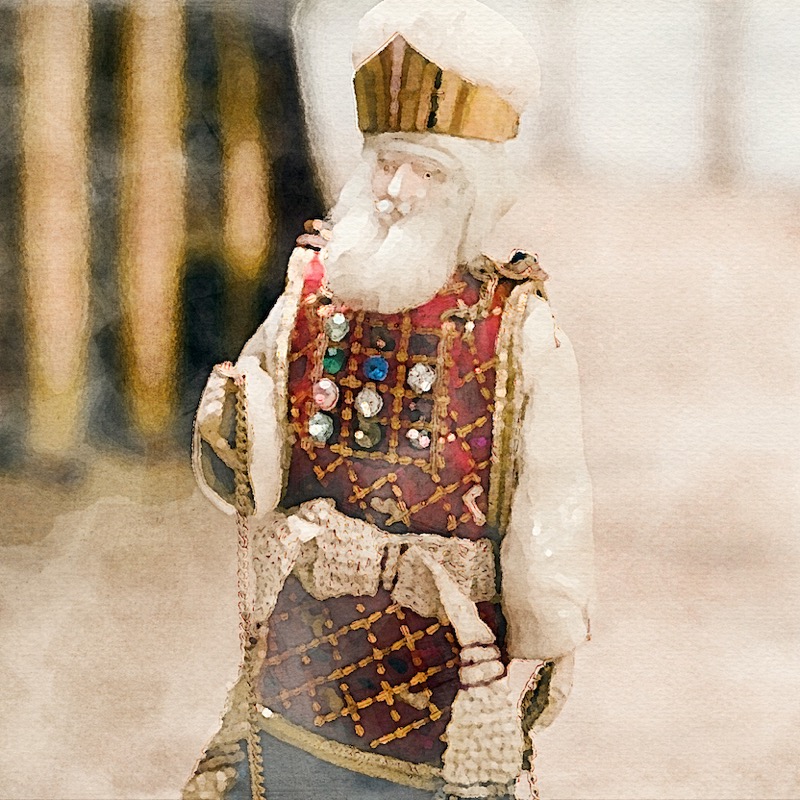
Professor Goodin, I haven't quite grasped this idea of Jesus learning obedience. Ah. Because he didn't have our flawed character. No. He couldn't sin anyway. No. So how did he learn obedience? Uh, is this, I am now going to appeal to the chair. Yeah. Right. Well, le- let's hold that. That's a question. Okay. Yes. That's a very important thing. Let's come back on it. We deal with the very first question he deals with. Any, any comments that anybody wants to make? At all? Is it too, is it too difficult or too easy or too obscure or too, uh, hot or anything like that? Would be very interested to me to find out what the priesthood of Christ means to you. Mm. Is it a something that has meant anything to you in your life? I think it will after today. Oh, good. I certainly could identify with you in the fact that, you know, we talk of the Lord as our savior, and we read about him as our great high priest, but it never really sinks in. It has with me now, and it will, you know, I've come to him now in a different manner, in prayer, and uh, for my requests. You know, as a result of today, I find it very helpful and very useful, and I think that was good. I mean, that that um, I could really identify with what you said right at the very beginning. We don't think much about him as a high priest. Yeah, we don't, do we? We don't. No, we don't. I don't. No, no. As my Lord and my savior, yes. Mm-hmm. And we can point back to the day, some of us in the army, Yeah. this sort of thing, but Yes. when it comes to a high priest, it's um... Which will bring me on to a question, which I'll keep for the question time, relative to how best should we go about, uh, if we meet a Jew, some of us know Jews, I know two or three Jews, Mm-hmm. that they may trust the Lord. What's the best method of getting a Jew to trust Christ? How should we go about it? But I'll keep that to later. I'd be interested to know that just. Mm-hmm, mm-hmm. That's what. Mm-hmm. And no doubt the high priest comes into it somewhere, but there must be a maybe better thumbnail sketch of that. Mm-hmm. I- I'm pushing to make comment, but it was really, uh, and I want you to collect me, you probably will collect me as we go along and probably answer me, but I feets think that I'm following it fully. I really am following it. I've been able to grasp it in a, in a deeper way. I think I've had this knowledge because you, you identified very much with the guy, with the pig, because there are many times and many things that I would want to bring to the Lord in sacrifice, uh, to bring to God as opposed to Jesus, to bring, and I, I have been always saying, using Jesus, and I think now I have really been using him as my high priest. There's so many things that I have, and I said, Jesus, is this the right way to think? Is this the right way to be? And I think you've clarified today that if I bring all of this, all of me, and so often when I'm, I share so much of the filth and dirt of my life that I have to bring it to the high Police for the High Police to clean it up. Exactly so, sir. Mm-hmm. And, uh, you know, I keep saying at play that, you know, the Lord is a garbage collector because all I bring him is garbage. On all I seem to be able to bring him, and every day I seem to be have to confess again, again, again. And the High Police, you know, the H- the High Police cleans it all up and presents my garbage, because that's all I have. I can't have anything else. And that's what I think came through to me this morning. Through, and I assume that you will go on to explain to us about the washing, because that's all came into me, that he, this whole business of washing Yes, yes. cleaning Ministry. and burning, and that is what the high priest does with the sacrifices that I believe. Yes. I quoted the verse, perhaps I might be allowed, this prompts me to point to it, the actual verse in chapter five of Hebrews, um, verse two, where one of the tasks of the high priest, and perhaps some of us don't always associate our Lord, uh, as a high priest with this kind of thing, is that he can bear gently with the ignorant and erring. You see. Uh, it's in the context, uh, of verse one, he's a- he was appointed for men in things pertaining to God that he may offer both gifts and sacrifices for sins, and uh, who can bear gently with the ignorant and the erring. You see, the Old Testament shows us that the priests had to be teachers, instructors. As you may imagine, in the Old Testament system, it was so complicated. When you brought a sacrifice to God, the, the rules and regulations were so vastly complicated that you, if you left to yourself, you might easily make a, a, a absolute ruination of the whole thing. So, of course, you came to the priest because he was the expert, and he could, he could explain it to you, and he was meant to be exceedingly sympathetic and kindly and bear with our ignorances and our, our, our, the fact that we're rather out of the way, so to speak, and we don't know how we should go on. That, as one of the functions of the Lord, appeals to my heart very much. I want to please God. I want to serve him. I got devotion in my heart because I realize what salvation means. How shall I do it? And you see, it would be possible for Israelite to be very devoted but bring all sorts of outrageous things that God didn't want anyway, be offensive to his divine majesty. The priest was there to, to show the person how to do it. And when we think of our devotion to God, and we want to please God, we've been redeemed by the blood of Christ. Now we want to give our lives to God, but how? Just being devoted, oh, I think this would please the Lord, and I'm going to do it. Well, the motive is nice, but, but, you know, we, we, we need the high priest to come alongside and, and gently steer us. You see, it's lovely, isn't it, when six-year-old comes triumphantly down to breakfast on Mama's birthday and has bought some wretched, lurid looking bit of pottery. You'll see that Mama cringes every time she looks at. This is six-year-old, and six-year-old thinks there's a bit of dressed in china, and it's been saving up her pennies, and and she's brought it, and mother kisses the china, marvelous, you'll see, marvelous. Ah, you'll see. But dad, if he'd have only known, could have said, well, yes, shall we get this one? It's a nice one as well, isn't it? But not that one, you see. To guide the devotion. A high priest, as I understand it, is there to do that. Mm-hmm. And it's a ticklish job, ladies and gentlemen, you see, if you get somebody that's really out of devotion to the Lord doing something, you've got to be very careful if you tell them, no, that's not right. Because, because it's such a intimate and, and, and profound thing in their hearts and such a sacred thing to them. Oh, how it will need the compassions of our great high priest. The priest's lips, says Old Testament, should keep Torah, means instruction. You came to him for the instructions as to how to approach God and what to give and how you could give and so forth. And if you were defiled, and and uh, to use the phrase, the garbage uh, collector man, well, he told you what to do. Yes, now we seem to have high priest, anyway. Any other comments? Anybody else want to, Noel, do you want to say anything, or Ernie, or Amon, or Paul? One comment that what we've heard so far is helping us see more the holiness of God, and I think, um, to to really see that we need Jesus as our high priest, um, because I know sometimes I take Jesus too much for granted in that way, and so it's helped me to see the necessity for our high priest. Oh yes, let me just use this, if I may, as an illustration. If you got near enough to this, you will see that this man, when he went into the presence of God, had this mitre here and this band of gold, and on it, Kodeshah Yahweh, holiness to the Lord. And it is said in the book of Leviticus, eh, eh, uh, that he bore this that he might bear the iniquity of the holy things. You see, sometimes we can, if we're not careful, lose that sense of the holiness of God, as though God were little more than our chum down the street or something. Whereas what God labored for centuries to teach Israel was that if they were going to approach him, then he was the thrice holy God. You mustn't, so to speak, put a foot out of place here. And suppose you went and, and with all the best intentions of the world, did something wrong. There were certain gentlemen that on the day that, uh, a few days after this was set up, sons of the priest, they came and offered strange fire, it's called, on the altar. Contrary to biblical instruction, the wrong kind of thing. Guy struck dead forthwith. To say. Eh, uh, uh, and uh, uh, uh, it was in view of that, that God eventually said to Moses, now look here, Moses, speak to Aaron and tell him that he don't come into my presence just any old how, any old time. On the Day of Atonement, the most elaborate preparations and sacrifices. You don't just come dancing in here just any old how. Now Christianity is not saying that, well, God has grown much kinder since then, or God isn't so strict since then, or his holiness isn't so overpowering as it used to be. No, it ain't that. In the picture here, Aaron, as high priest, had this, that as he went in, he might bear the iniquity of the holy things for Israel. All their mistakes, he was responsible. And you see our worship at best, even in our most exalted moments, our worship is at best imperfect, isn't it? Solid. Our motives are mixed. Our lives don't always match up to what we say. We tell the Almighty how much we love him and will do anything for him, and go out the next minute and contradict his law. What do words mean then? You'll see. So, what a mercy it is we have a high priest who does for us what Aaron did in picture. He bears the iniquity of the holy things. Do you imagine, I, I, I have such a simple mind. Here am I standing in church or in my bedroom and praising the Almighty, telling him how I love him, and suppose God says to the Savior, why doesn't the man keep my commandment then? Then. You'll see. Our Lord bears the iniquity of the holy things for us, and that's why when we're now going to read about his ministry, how he can do that, and why in all our worship and service we need his high priest. And it makes it possible, not merely for us as sinners who were prodigals and gone from God, but we need a savior and a sacrifice as we come to worship, to cover the sinfulness and the defects and the imperfections and the inconsistencies of our very worship. You see? And thus is maintained the sense of the holiness of God, because if we're not careful, we shall lose it. And once we lose the holiness of God, then the color and the glory and the wonder of God begins to go. And we start creating God in our own feeble image and lower the standards. And then it becomes merely an emotional high that I'm on instead of a response to the reality of a fivefold God. Any other con- Pat, were you wanting to make a comment? Yes. I've heard the tabernacle, this one here, before, but I never really understood what sort of significance it meant to us today. But this morning and last night, sort of really helped me to realize that Jesus was now doing what they had to do. Yes. In the name of the Lord. That's right. Yeah. Yeah, oh, that's beautiful, you see. Beautiful, beautiful. Do you know, one of these days, because it's a long way off yet, I'm going to persuade some of my lady friends to make a big proper model and dress it. For this is a God-given picture. Our Lord has supplanted Aaron as high priest, and as we read this morning, he's a priest after a different order now. He's a different, not a priest after the order of Aaron, he's a priest after the order of Melchizedek. But though that is so, Aaron's priesthood will give us pictures that we can think with, you see, of, uh, uh, to help us picture in our minds and conceive of the kind of things that our Lord as high priest does for us. And therefore, uh, these arrangements here, this robe of white, this robe of blue, then this beautiful ephod here, and this breastplate here, and these whatnots here, the things, this mitre and the bend, are all illustrations of the kind of thing that the Lord Jesus does for us. This is called the breastplate of judgment, mishpat. You see. Uh, uh, he went into the presence of God, he bore their names on his breast. He is presenting them to God, isn't he? But as well as that, these were used of guidance for his people. You see, here are their names written on. And it was, uh, through this breastplate here, very often, that guidance was given to those who sought the face of the Lord, as it's called in Hebrew. And each one is represented, they're different colors. I like that. Each one is a different gemstone, see. Uh, some things are a little bit ruby red, aren't they? And others are a bit paler, but uh, flashing eyes and all that. If you look around, you'll see we are different, aren't we? Different jewels. Yeah. Some are flashy, flashing diamonds and very expensive, and some are bright ruby reds, and so on. And whatever our names are and whatever our characteristics, when it comes to guidance, each one represented. Do you imagine it, that the Blessed Lord stands this moment at the pinnacle of the universe to, uh, mediate for us the guidance and the will of God in our lives and carries us on his breast for that purpose. Yeah, they're beautiful thing, you know. And then here, on his shoulders, as many folks have said, six names here and six names there on those jewels. And, uh, he carries us in the presence of God. And And then then... there were jewels. On there were the names of Israel. Now, that's a very interesting thing, because if you read the book of Exodus, you'll find that it is in Exodus that, um, uh, uh, Moses is sent to the nation to bring them out of Egypt. And Moses says to God, when I go and say to them, God has sent me to deliver you, and they say to me, oh really, what is his name, this God that has sent you? What shall I say? And God says to Moses, oh, you you'll tell them my name. You will say, I am that I am has sent me. So here comes Moses, and he's declaring the name of God to these Israelites, yeah, and their slaves in the brick kilns. And he so declares the name of God to them as begins to waken their interest and begin to see there's hope, and hope of escape, and hope of deliverance, and and it's going to involve their putting their faith in this God and in Moses whom he has sent, yes? And eventually it works, of course. They come to believe this message, not without some difficulties to start with and some ups and downs, but they come to believe it in the end, and they find God's provision, and his great God, the I am that I am, brings them out. Yes. So he declares his name to them. And as a result of their redemption, now he appoints them a high priest, and he has their names written here. And here comes Aaron, and uh, he presents their names to God. God, would you like to get to know these folks? Marvelous, isn't it? What we're saying, he is son of God because he makes God known to us. And some of you have been studying John, haven't you? He says it. I have made known thy name to the men you gave me out of the world. So he's made hi- God's name known to them, and now he says, so I've done for those who were given me, do you see? And not for these only, but I've got some more, and I've not lost one of them. He presents us to God, and what is the significance of life? Where would you put life's value? And if I were to ask you, being personal for a moment, who are you? You say, me? I'm Michael. Hm. And who is Michael? What is Mary, for that matter? What are you? You worth anything? Chemistry of the human body, they used to be three and six at one stage. I think through inflation, it's gone up something, we'll see. Now, what are you? O- o- of course, atheism. It says that's all you are ultimately. So much stuff. All the wealth of what it is to be human, the look at the jewels. Who are you? Well, Francis or Mary or whatever you are, if you've been redeemed by Christ, you are a personality, and God himself has been pleased to reveal himself to you personally. You see, to use my analogy, it's useful that if the Queen came to Coleraine tomorrow and you were at the street side, even if you were there to see, she mightn't speak to you. That in Christ, the great creator has been pleased to reveal himself to you. And when he does it, you've got to make a response. And it's his name and your name. He's revealed himself to you, and you taken back to him and presented to him, and in that intercourse, that is life's significance. Yes? You mean something because you're known to the Almighty. Yeah. And that's done through Christ. Oh, these are magnificent themes. Wow. Anybody else for comment? Or do we go on to the question? Arthur, do you want to make a comment? Uh, no, I have a question. All right. Or Peter, you- you're- you're don't- or Ruth, you know? Yeah. Okay, well, number one. Yeah. Master, I was referring to the question of Christ learning obedience. Yes. And, uh, drawing out the point that as Christ didn't suffer from the flawed character of humanity, how did he have to learn obedience when he couldn't sin in the first place? Yes. Very good question. Um, let's start at the ground floor. Do, um, uh, accept it so, uh, Hebrews five eight says he learned obedience. Can we, uh, accept it then? Are we right to think that that means what it appears to say at face value? I don't know. Oh. Well, what I'm meaning is, uh, you know, uh, some things, when we look at them, uh, uh, on the surface, they appear to say one thing. Uh, if you weren't careful, you'd take them to mean that, but when you look at them a bit more closely, they don't quite mean what you thought they meant. I've taken this to mean that he learned obedience. Yes. Um... Uh, is there any case for saying, oh no, that's what it appears superficially to say, but it doesn't really mean what it appears to say? He learned obedience, and it says he learned it from what he suffered, from what he experienced. Yes? Could I, uh, ask you, how would you begin to think there, um, how is it that a, a, a... uh, how is it his experience has taught him obedience? I'm still not grasping this at all because I don't see. Paddy here made a very good point, um. About the arm wrestling? It was a really weird example, but I said, imagine you took somebody on in an arm wrestling competition, and you were just slightly stronger than them. Yeah. You would feel the force of their competition. Yeah. And you would know what the sort of combat was like. Yeah. But there's no way you're going to be overcome, but at the same time, there's no way that you would not understand what it is like to come against something. You know, and I suppose the way I understand it, though, I think it is a paradox that Jesus was without sin, but was able to understand our weaknesses, but not to the extent that he would have been overcome by them, because then he couldn't have helped us anyway, but that he could understand the, you know, the power of him and Ah. Yes, I see. Yes, uh, uh, so, so what is, uh, uh, uh, am I right in thinking what's concerning you there, what worrying you there, uh, somewhat, is the apparent implication that if he had to learn obedience, that he wasn't very good at it to start with and had to practice it, and I mean, to suggest that would be fearful. Yes? Would imply that he was, to start with, sinful like we are, and uh, we had to be trained to obey. Uh, the dog has to be trained to obey, you see, and has to get walloped pretty hard every now and again, and the child has to be learned to, uh, be taught and trained to obey, and very often there's a long process when it disobeys every now and again, you see, it's learning obedience, and that our Lord, uh, the the fear is that the verse might imply that our Lord started off being disobedient and had to learn by degrees and painful experiences and had to be taught to obey. Yes. Well, uh, if that is a a difficult, I think we must be careful about that. The verse doesn't say he learned to obey, does it? I- I- it doesn't say he was taught to obey. If it said he was taught to obey, uh, that would imply he didn't know how to, and had to be taught how to obey. And that surely doesn't mean that our Lord was obedient right from the very start. Now, this says he learned obedience from what he suffered. Do you see, uh, obeying God in glory. I'm not quite sure whether it'd be an appropriate term to use of the second person of the Trinity, uh, that he obeyed the Father. What he does say in John five is, the Son can do nothing of himself but what he sees the Father doing. That is a statement of our Lord's deity as the second person of the Trinity. But obeying God in glory is sheer joy, for all I know. You obey God down here, you will discover what obeying God down here means. You'll see. Now that doesn't mean that our Lord was imperfect before. But all those scriptures that talk to us of his manhood, that he actually went through these experiences and learned at the level of experience, what it's like to live here, what it's like to be tempted, what it is costs to obey. So not learning to obey, but learning obedience. Do you see the difference? Steven's problem is this, that if he didn't have a sin nature, Yes. then, you know, to what extent could he feel the force Oh. of the temptation? Would that be fair? Oh. That's part of it, yes. Yes, ah, that's a very, that's a very interesting thing, isn't it? Just, mm-hmm. Would that be, could we throw this, I think it's somewhere in the same lines. Uh, it's the verse five, uh, and and or sorry, verse four and five, very last sentence, part of the sentence, since he himself is subject to witness. That, is that referring to Jesus too, you say? It's the same, can you understand what I mean? Mm. Obedience and weakness, is that the s- it's saying the same thing? Well, that very same word, weakness, is used, if I can find the verse, uh, he is able to sympathize with us in our weakness. Now somebody find me the verse that says that. We're not an high priest, yes, look at chapter four, verse fifteen. For we have not a high priest who cannot feel along with our weaknesses. How does your version translate that? Who's unable to sympathize with our weaknesses. Yes. He knows how to sympathize with our weaknesses. But can I come to this, this, this question that you've raised, you see, because this is, this is very important. When we think of obeying God, we think that, uh, uh, very often we don't want to obey because we want to go and do something that is sinful. Yeah? Very bad thing, you'll see. Receive two million pounds, uh, from Guinness or something. Uh, you'll see. And we know it's wrong, uh, but we want to do it. The thing is wrong in itself. Well, Christ never wanted to do anything that was wrong in itself. But that isn't the only kind of temptation, is it? When our Lord was tempted in the wilderness, he fasted forty days, and afterwards he was hungry. There's nothing wrong in hunger. It's not a sinful act in and of itself to eat bread, is it, to satisfy your hunger, huh? To feel a desire to hunger is not sinful. To feel a desire for food, I should say. That's what we mean by hunger. It's not sinful. To find a tremendous urge to eat, that's not sinful. But the question was, was it the will of God for him at that moment to do it? Now that's another story. And our Lord knew what it was to feel the colossal pangs of hunger. It's not sinful to feel hungry. And he knew what it was to feel the almost overmastering desire for food. It's not hu- that's not sinful. And when he said no, he suffered. When he said, no, I'm not going to make, uh, uh, uh, uh, uh, make those stones bread, the hunger pang didn't finish, you know. Didn't go away. It cost suffering. Suffering. Yeah. Yes? I suddenly understood this when you were speaking there, um, I wasn't understanding at all, so as any sensible Christian would do, I had a quick prayer Good. for enlightenment. Yeah. And a verse we covered a short time ago came immediately to mind. And my problem was that it's all so simple. I couldn't see the wood Yeah. of the trees. And it's John eighteen. Jesus commanded Peter, put your sword away, shall I not drink the cup the Father has given me? That's right. Christ didn't want to be crucified, but in his obedience he obeyed the will of God. Amen, you see. So simple I couldn't say. Oh yes, amen. Let me, let me, thank you very much. And let me, if I may, just enlarge that, do you see? Let me contrast for you the attitude of Peter and our Lord in those terrible hours of Gethsemane. Peter said, Lord, I'll go anywhere. Where is it you want to go? Prison? Oh yeah, prison, yeah, yeah. Uh, uh, death? Oh yes, death, yes, yes, yes. Yeah, anywhere else? And he meant it. But he thought he did. Our Lord came to Gethsemane, and he said, Father, if it be possible, let this cup pass. For as you point out now, what was this cup? Well, ladies and gentlemen, it involved, amongst other things, being made sin. Being separated from God. The holier you were, the less you would want it. You just imagine the impossible for a moment, that Christ would have come into the Garden of Gethsemane dancing, oh, I'm delighted to drink this cup, delighted to be made sin, delighted to be separated from God. I've always wanted this. The thing that people ask us beyond. The holier he was, the less he would want it. And he prayed that the cup might pass, as you say. If it be your will, but it wasn't God's will. Then the suffering didn't go away. It didn't become a holiday on the Riviera all of a sudden. But his emotions, so going against it that he sweat, as we know, drops of blood. It cost to obey. Mm-hmm. There is no beginnings of a thought that he was sinful. But he learned obedience. You see, and if you talk about weakness, I think we must be careful here, um, uh, uh, uh, uh, that the term is used. You will notice, won't you, it doesn't say sin, that the high priest must be compassed about, uh, with sinfulness. It says weakness. And it is an amazing thing to see the Almighty God, Creator of the universe, God incarnate, so prostrate with the physical and emotional strain of Gethsemane, that one of his own creatures, an angel, is allowed to come to strengthen him. Yeah. His weakness. Our Lord is not a high priest who cannot be touched with the feeling of our weakness. Notice that doesn't say the feeling of our sin. The feeling of our weakness. Yeah, if I were tempted at this moment, I should go on to talk about the relation of bodily and emotional physical weakness. Sometimes the people's, how can they stand temptation? Yeah? You've got to love the Lord your God, haven't you, with all your heart. Boy, that's pretty easy when you're twenty five and bursting with energy and health. You be a widow of eighty six in constant pain, in the weakness of life. And then praising the Lord all day long. And resisting the temptation to become self-pitying. That's a different story, isn't it? And the mighty Creator has become human. He understands our weakness. Good. Can I just ask one quick question to confirm it? Um, what I take out of all this is that Jesus was subject to our weakness, he understood it, Mm. but that he wasn't capable of actually sinning. You can see that man's a theologian, can't you? Yes. I think here, this is, uh, it's a very big debated topic, uh, so, so well debated that it has a technical name called the impeccability of Christ. Could Christ have sinned or not? And Christians have held diverse views on that. Without being pompous, uh, uh, I think you might find it helpful, you probably already have, before you answer whether you think Christ could have sinned or not, to ask yourself what you mean by could. Capable or able. Because actually behind that word, or in that word, hide all sorts of possibilities. What kind of ability are you thinking about? One man says, I, I, you're out of money. Well, you see, your, your child has got, uh, one hundred and fifty pounds in his piggy box thing. Why don't you just take that? That man said, I can't take that. What does he mean he can't? I mean physically, does he? Well, then why can't he? We're talking now of moral impossibility. Yeah? Not physical impossibility. Do you say, look, the way to get out of here, Gooding, is to run and jump over that, that six-foot gate. I said, sorry, I can't. I'm not tempted to escape from here. Because I can't. Well, I mean, well, now I'm talking about physical. Yes. I can't do it. You'll see. Ask a bumblebee, if it could talk to you, has it ever been tempted to do anything bad? If it had any sense in its head, would reply, I can't be tempted. Why not? Well, it's constitutionally impossible with a bumblebee, because it ain't got a free will. Yes? So it's constitutional impossibility, physical impossibility, moral impossibility. Now, if we're going to discuss whether Christ was able to sin or not, then I think it's important we we wouldn't very, very have to think very, very carefully which ability we were talking about. You see? And then, even then, we should have to go very, very carefully, shouldn't we? Because you can quote a number of scriptures that tell us, for instance, even if a believer, the seed of God abideth in him, and he cannot sin. And if that is true of a believer in some sense, well, it's infinitely true of the Lord, that he cannot sin. One John three nine, the verse is, that at one level. Yes? So it's right to say it. If it's true of a believer, I repeat, it's ten million times true of Christ, and he cannot sin. But at another level, you see, what you might be asking is, did Christ have a free will? Was his choice free? A bumblebee can't sin because it ain't got a, it ain't high enough up, it hasn't got a free will. Yes. Only those beings can sin that have a free choice. And if you say, well, did Christ have a free choice then? I should have thought the evidence is very, very clear. And once more, when you come to Gethsemane, Gethsemane is an exceedingly important event in the life of our Lord for what it shows us. Do you see? When Peter drew his sword and cut off somebody's ear, our Lord said, put it back. Are you thinking, Peter, that I couldn't now call to my Father, and he would give me twelve legions of angels? Now that's stupendous. Is that really true? That there in Gethsemane, Christ could have called. And had he called, God would have given him twelve legions of angels. You say, how is that possible? Well, it's true, isn't it? Because our Lord said it. I don't know how it's possible when the whole thing had been prophesied for centuries. But our Lord said it was possible. He could have called. And had he called, God would have given him twelve legions of angels. And what does it establish? That when he said, but not my will, thine be done, his choice was absolutely free. And that's a tremendous thing. Sorry for the complicated answer, but then, of course, we are dealing with a more than human person, aren't we? My question was, how best to win a Jew for the Lord Jesus? Oh, yeah. A sort of thumbnail sketch, a sort of method cameo, not a big thing, but apart from giving them your own personal testimony, which I'm sure is always a good idea, how best to win a Jew for the Lord? What, um... Well, I have to say with shame I've never done so. So? But I have had the opportunity from time to time to talk to Jews. How to approach it just? Oh. It very much, yes, it very much depends, uh, my little experience, it hasn't been very broad, with what kind of Jew it is. Mm-hmm. Uh. Jews living in Northern Ireland today. Yes. Who do shops, for example. Yes, well, them I find they, uh, very cagey to talk to me, uh, because it so happens that I know their, their Talmud and their Midrash and their Old Testament better than they do. You'd certainly know a lot of it better than they do anyway, and so they get very nervous if you start talking to them about Old Testament, they don't know it. Do you see? So that's one thing, you see. Something depends, doesn't it, on, on, uh, uh, where they are, the men of the world and, and, and, uh, uh, have the right of simple living and so forth, and fast living. Of course, sometimes it's easier to deal with them than the Jew who's very ingrained into his religion as such. What I have found in talking to an elderly friend in Belfast, that the way to get nearest to his heart, do you see, he, he says, you know, you, you Christians, how can there be a God, and how can Jesus be the Son of God? Where was Jesus when Hitler was gassing six million of our, my fellow Jews, he says. Do you see? Well, now I, I knew he got to the synagogue, so I sent, I said to him, I said, Otto, uh, you pray, don't you, Otto? Well, yes. You pray for the dead, Otto? Well, yes, we do. Of course, they have set prayers for the dead in, in the synagogue, you see. Part of their Sabbath prayers are prayers for the dead. So tell me, Otto, what do you pray for the dead for? Well, that's a nice way for, to remember them by. Oh, I say, come off it, old boy. You pray for more than that, don't you? Well, you know, God might let them out of the bad place. I said, you know, Otto, I, I, I, I can't make, I can't make you out, you know, Otto, oh boy. You see, because, um, I think I believe that I- I'm a better Jew than you are, Otto. I says, but look what your, uh, the Old Testament says, the Jews said. I mean, this is a chap is not a Christian, he's a Jew. He says, he says that, uh, surely goodness and mercy shall follow me all the days of my life, and I shall dwell in the house of the Lord forever. What are you, what are you doing? Otto, I know what this is about. I have that certainty in my heart. I'm gonna dwell in the house of the Lord forever, Otto old boy. How don't, don't you have that certainty? And the tears run down his cheek, of course. You don't have that certainty, Otto? Well, how is that then? Because this is your... I said, Otto, old chap, I'm always amazed, if you don't mind my saying it, why don't you Jews up in the synagogue in Yantrum Road start, uh, showing a bit of concern for us Gentiles? There's a lot of us old Gentiles, do you see? Why don't you get up on your hind legs and put on some lectures for Gentiles and start telling us how idolatrous we are and then tell us these wonderful things? Do you know what? You could be certain of dwelling in the house of the Lord forever. And then on another occasion, I found with him, the best ways to talk like that is simple Old Testament scripture. I said, I think that thing there is marvelous. You listen to that. Oh, the blessedness, says David, of the man whose sins is forgiven, his transgression of sin is covered. Blessed is the man to whom the Lord will not impute iniquity. I said, Otto, oh boy, I know what that means. Because the Jews never hear it preached, you know. If the, if the, if the rabbi, and if they have a rabbi, if he gets up and preaches a sermon, it's about little morality and being good and this, that, and the other, you know, like a lot of religion is. Who'll preach the great gospel of their Old Testament? So one way is to go, um, s- uh, straight in like that with a verse of the Old Testament. Preach the gospel like Paul did, of course. On the other hand, I was in Spain in the summer, and uh, uh, a young girlie, she's not been converted more than about four years from a terrible background, but a very keen Christian worker, goes out on the streets with tracks in all sorts of languages, and uh... So during this intervals between the sessions of Bible study, she went out in the streets, and it's a highly popular tourist area, and dragged in, if you please, uh, an Israeli. He turned out to be an observational astronomer. And uh, uh, long, cut the long story short, he stayed with us two days and attended all the Bible studies. Eh, first time I, I think I've been in such a situation where Bible study with a, a Jew there, it happened to be the Gospel of Luke they had chosen to study that year, and it meant preaching Luke as you might preach it to a Jew. That made it very interesting. Anyway, uh, we had a long talk, as you may imagine, and that Jew said to me, ah, well, yes, yes, I agree. Uh, you see, science can tell us how the universe works, but it can't tell us why the universe is there. Yes, I believe in God. I think I've got to believe in God, says he. Oh, there's no answer to why the universe is here. We scientists can tell you how it works. Mm-hmm. He says, but you know, my great text is, the just shall live by faith. Mm, that's my great text. I'm a great firm believer in that. That's my other basic principle in life. My name is Svi, he says. And if you take the letters of his name in Hebrew, uh, and you make an a- a acrostic from it, you see, it's the just shall live by faith. Um, yes, he said, my principity, faith in yourself. Ha! You've got to have faith in yourself to get anywhere. Faith. And then he said, you know, of course, he said, I don't agree with you Christians, you see, you're all on this business of Jesus as the Messiah. Well, I don't believe in a personal Messiah. So see, you know, it's like, uh, when the Israelites asked God for a king, for a king, a personal Messiah to stand between them and God, and God was upset and didn't like it. We don't need any person to come between us and God. Come to God direct. So I don't know, I don't believe all this in a personal Messiah who, who comes between you and God. Oh, he said, what do you believe in? Well, he said, I believe Messiah is your own potential. Mm. Ah. You'll find Judea- in Judaism, you see, while outwardly they, uh, if they are, uh, even Orthodox or moderately reformed Judaism, do you see, well, they've got the Bible in their hands. Many of them are virtually existentialists or worse. Well, how do you preach the gospel to him? I said, well, that's a very interesting thing. I said, so how is the old Messiah getting on then? You say, I mean, are you, are you exploiting it to the full? Do you find this is moderately easy, and are you succeeding, and are you coming up to all your potentials? Well, you see, old chap, I'm a Christian, as you know, but one of the reasons is because I believe your Old Testament. Because in all the ancient literature, I find your Old Testament unique. And went over with him some of the things in which the Old Testament is unique compared with the other religious books of the world, and religions and philosophies. And why I, as a believer, believe Old Testament and believe that the Jews were chosen of God. And that's a thing to do, perhaps, because a lot of Jews hold under their skin that Christianity has been responsible for the anti-Semitism that gassed the Jews. And you can understand who was it in in Spain that persecuted the Jew in the auto-da phase. To their mind, Hitler was a Christian. And the Russian pogroms there were done by Christians. Who were the Crusades against Jerusalem and all this? These are Christians. My colleague in the university, my, uh, former colleague, Mary Smallwood, professor of Romano-Jewish history, pointed out it wasn't the Romans that persecuted the Jews. The Romans, from Julius Caesar onwards, passed special legislation to protect the Jews. The persecution of the Jews started when the church joined up with the state, and the church eventually used its influence to get the Jews demoted and then positively persecuted. And therefore, to get underneath that, this is unto the Jew, it's a very real thing. And nowadays, liberal Christendom is trying to smooth that all over by saying Jews don't need to be converted. What stupid people we were to think they needed to be converted. That's going to the other stupid extreme. So to get to their hearts, I make it my business very soon to show them that I do believe in Judaism, that I am appalled by anti-Semitism and what the church has done. You'll see. I'll tell you what I say on that score in a minute, but I, I show them that I believe in the Jew and believe there's a future for the Jew as well. That shakes them. But I said, one of the things that impressed me, you see, is that, uh, uh, your law is linked with your religion. Religion isn't a means of simply getting, currying favor with your God, getting him to bash your enemies. Your God, who is creator, insists on the absoluteness of morality. I said, that impresses me. It stands out amongst the an- in the ancient world, above everybody. And I said, I believe it. How can we say that sin doesn't matter ultimately? I said, my trouble is, old chap, I believe that, and I'm never fixed because I'm a sinner. I haven't realized my potential, I have to admit that straight off. What answer have you got now that you don't realize your potential? Does it matter? They said, in your own Judaism, you said yes, it did matter, at least you used to for centuries. You said it mattered so much that when people sinned, they had to bring a sacrifice. Ah, he said, you see, and now out comes some Jewish history, and he quoted the rabbi who, after the fall of Jerusalem, said, we'll start again, we'll start off on a new line now, and he told the Romans, keep Jerusalem, we don't want Jerusalem, bash the temple, we don't want the temple, we're giving all that up, we're going on a new line completely, and instead of having the temple and the sacrifices, now we're going on, uh, the book. It's going to be the Bible, the Old Testament that unites us, you see. That was a new line in Judaism. He said, I'm all for that. I'm not for this rebuilding the temple stuff. I said, well, that's interesting. I know that is the way you've gone, do you see? So Judaism now has no temple, no sacrifices, no nothing. I said, but what have you got in the place, old chap? You're not realizing your potential. In other words, you've sinned like me. What answer have you got? I say, you see, we Christians don't have the temple either. We don't have sacrifices either. We're finished with all that, or should have done. I said, the difference is this, that our Lord has fulfilled. I said, you see, uh, did you ever read about the New Testament says like this, that at that Last Supper, our Lord came with his disciples, and he said, I desire to eat it, I shall not eat it again until it be fulfilled. I say, you as Judaism have given it all up. Christ says, he's a Jew too, that he came not to just abandon it, but to fulfill it. He says, does it say that? I didn't know it said that. Oh, he says, I can see that's a, that's a different line of Judaism then. And Price is precisely so, old chap. So with some of them, do you see, they're not teetering on the edge of conversion. They do feel themselves very superior, and when they go to Bethlehem and see all sorts of, uh, of Christians, uh, uh, fighting each other and having scraps over who owns which square inch of the Church of the Holy Nativity or something, the Jew stands by and he thinks, did you ever see such absurd idolatry and childishness in all your life? So you've got to, you need to know a little bit, but sometimes with the businessman who's a Jew and his Judaism is almost nil, you can talk to him straight like a, a, a Christian, you'll see. Uh, no, sorry, like an ordinary man, a gentile, and the man is a sinner, and he knows he's a sinner, and he has no power to live holy life, and he wants satisfaction. You can go straight in. But some of them, they're very, uh, they they've got their ideas. And you see to my friend in Belfast, and he says to me, constantly brings me, uh, pictures from the Jewish journals in which they're lambasting the Christian world for being responsible for anti-Semitism. And with anti-Semitism reviving in London, a Jewish cemetery recently been desecrated again, you see. I say, look here, Alto, I says, oh boy. You accuse us and you say that we've, we've caused anti-Semitism by teaching the children that it was the wicked Jews that crucified Jesus. I said, you know what I believe, Otto, as to who crucified Jesus, no? Or should I did. I said, any true Christian that you meet, Otto, will tell you this. Who was responsible for the death of Jesus? Well, a true Christian will say at once, he died for me, he died for my sin, he bore my sin, it was my sin that killed Jesus. I said, Otto, I shall never blame you, nor the Jewish nation, except in the sense that I blame myself. I believe he died for your sin. It was your sin that crucified him as well. But some of those things have gone deep into the Jewish spirit, and they're fanned constantly by their rabbis in the synagogues and by their newspapers, you see. And now by the ecumenical sellout that is saying that it's an insult to try and convert the Jews. Their, their approach to God is just as valid as the Christian approach to God. And the Jews rub their hands with glee and say, yes, and all this business of people trying to get Jews, Jews converted is very bad. It goes back to the old days when you accused us of murdering Jesus, and now you... So that sells out the gospel completely. So I tend to turn it... but to try and get at that wound in their hearts, as Christendom has put up a colossal barrier in the mind of the Jews.