Gooding, David: 2 - His Appointment and His Qualifications
ID mfh_1141114828Date unavailableBefore 3.21Restored 4.63
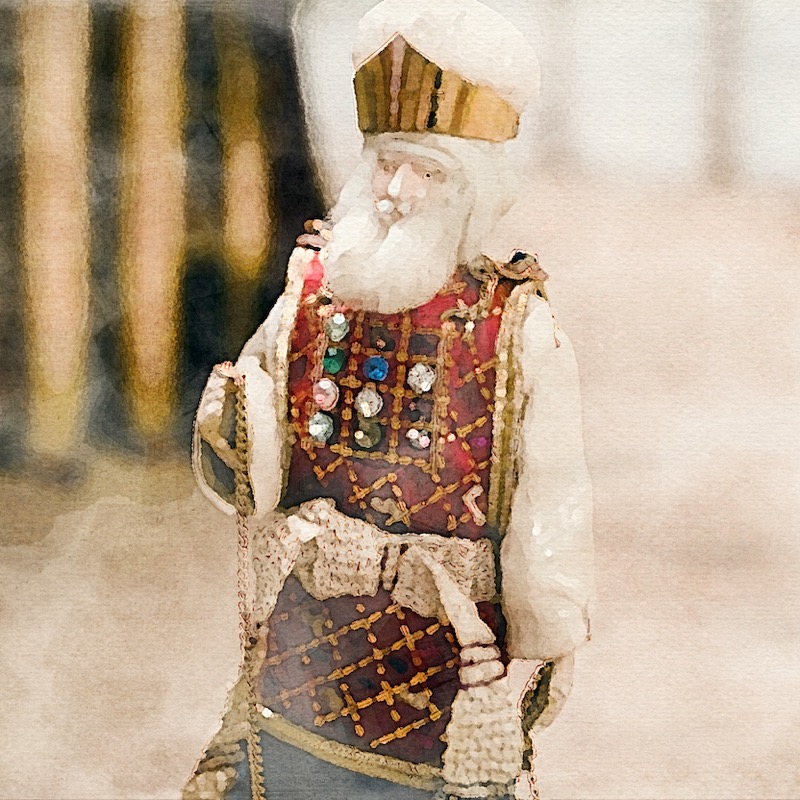
Well, let's turn then to our epistle to the Hebrews. Our epistle to the Hebrews. And begin this morning by reading a verse from chapter eight. It is chapter eight and verse one. Hebrews chapter eight and verse um one. And will be someone be so very kind as to read the verse for us. Hebrews eight and verse one. Point. Go ahead. No, after you. The whole point of what they are saying is that we have such a high priest who sits at the right of the throne of the divine majesty of heaven. Thank you so very much. The whole point of what we are saying is that we have such a high priest. So let's that take that as our starting point this morning. If we get nothing else, obviously this, says the writer, is the chief point that we need to lay hold on with both hands of all that we are saying. This is the chief point, that we have such a high priest. It is obvious to every Christian person that we have a savior. His name is Jesus Christ, our Lord. But, uh, in my little experience, you don't always hear Christian folks, uh, emphasizing quite so strongly now that the chief point is this: we have an high priest. Of course, the reason why the writer talks thus about it is, as we found last night, he is now beginning to talk about our approach to God, our coming near to God, our... uh, entry into the holy places in order to serve God and to worship God and to bring God our sacrifices. And when we begin to think in terms of that, our approach to God and our worship of the Lord, well, the very chief point you want to get hold of is that we have a high priest. What should we do if we didn't have a high priest? I don't make a practice myself of calling on Her Majesty the Queen, you know, in in London. I got nothing against the dear woman. She's a good soul. I and some others are in a in a club, uh, that is run, which we pay so much a week to keep her horses, you see, and the odd Rolls-Royce, you see. And again, the woman, but what do you say when you go and see the queen, you see? I don't know what you say, what you talk about, and all that foul du rel of these exotic servants, you see, going around about the place, you know. So I don't, I don't go a lot. And uh, uh, if I were going, I think I would like to know somebody who knew about the palace, and what do you do now, and do you go backwards here and forwards there, and which of these ten knives by the side of my plate are you meant to pick up now, you see, and all that kind of thing. Uh, and you spoke before you're spoken to, or do you have to wait till she graciously turns and addresses you, and all that kind of stuff. Would be great comfort, wouldn't it, to have someone who knew the Queen and knew the court and yet was approachable, uh, that was prepared to take you by the hand and lead you in. And we're talking about coming into the presence of Almighty God. Not some figment of our own emotional imagination, but to the creator of the universe. And I've got to come and appear before him. And offer sacrifices that are pleasing to him. Why, the very thought, if we had any sense in our heads, would from the outset be overwhelming. What should I say? What should I do? How should I come? How should I be dressed? What would he find acceptable? And thank God, as we come, says the writer, now the chief point in all that we're saying is we have an high priest. You'll see. Let's see how he's going to develop his argument and bring it to its high point of conclusion by turning over the page to chapter ten. Chapter ten, verse twenty one and twenty two. Somebody read it so kindly, please. Chapter ten, verses twenty one and twenty two. And since we have a great priest over the house of God, let us draw near to God with a sincere heart, with in full assurance of faith, having our hearts sprinkled to cleanse us from guilty conscience, and having our bodies washed with pure water. Thank you so very much. And you see, uh, the verse twenty one, How are we to approach? How can I approach? Well, one of the major things that, uh, enables me to approach, having a great priest over the house of God. Let us draw near. In the Old Testament days, of course, you can imagine the awe with which a junior priest, the first day he was inducted into the priesthood, entered into the tabernacle to do his service. How grateful he would be for Israel's great priest to come along, so to speak, and take him by the hand and show him the ropes and lead him in and tell him what to do. And now, says the writer, as he's coming to the great climax of this argument that is being developed, seeing we have a great priest, let us draw near. That is true at every level, isn't it? It is true when we first came to God to find salvation. It is true as we come in our devotions. We can come to the Lord Jesus to lead us in our devotions. Having then a great priest, and this is the chief point in what we are saying. How is it that he can act as a high priest? Let's look back to for a moment, uh, to chapter four and verse fourteen. Having then a great high priest who has passed through the heavens, Jesus, the Son of God. Let us hold fast our confession. And you notice in that verse that the Holy Spirit uses the two addresses, calls him first Jesus, and then calls him Son of God. He is both human, for Jesus is his human name. He is divine. He is Son of God. And when I think of our worship, uh, I can see, can't you, how we need someone who is both that. If I'm going to worship God, I shall need to know God, shall I not? For what is worship anyway? You take me into a art gallery to see a picture that you love. You think it is marvelous, you see. Uh, and you take me in and lead me by the hand, and you stand me in front of this oil painting, and you say, isn't that marvelous? Look at the color scheme, look at the architecture of the piece. And I say, yes, that's marvelous. I think it's the prettiest dog I ever saw. It's a marvelous dog. Look around, ain't a dog at all. That's the Empress Caterina. Oh, which I don't mind, but to me it's like a dog. And you look around, I've got my eyes shut. And here I'm dancing around about the place with my eyes shut. Uh, wait a minute. I think it's a dog. But ain't a dog. And you would conclude I'm not reacting to the picture at all. Well, then that isn't true art appreciation, is it? If my appreciation is going to be anything worth, got to be based on that picture. Yes? If I'm going to worship God acceptably, then it's got to be my response to what God is. What is God like? Let's take a few rough examples of what's involved. You'll get some people to say, God is so beautifully kind, you know, he would never damn anybody. You should listen to Jesus Christ. Standing in the streets of Jerusalem and looking at the Pharisees and saying to them, you whited sepacles, you generation of vipers. How shall you escape the damnation of hell? That's what God is like. Because now, ha, here's the reality. Here is the Son of God come down to tell us what God is like. And if our worship of God is going to be real and valid, then it's got to be a response to what God is like. Oh yes, thank God he told us as none other did, that God is love and supremely at Calvary's cross told us that God so loved that he gave his son that whosoever believed should not perish. The point I'm making is this, we need, if we're going to worship God properly, a high priest who can tell us exactly what God is like. Yes? And then he's got to be somebody who can understand us and lead our responses. Let's look at, uh, chapter, uh, uh two of this, uh, uh, letter, shall we? Hebrews chapter two. um, verses eleven and twelve. Somebody read it, please. Hebrews two eleven and twelve. For both he that sanctifieth and they who are sanctified are all of one, for which cause he is not ashamed to call them brethren, saying, I will declare thy name unto my brethren, in the midst of the church will I sing praise unto thee. That's delightful, isn't it? That's a quotation, of course, from the Old Testament, Psalm twenty two. eh, in the midst of the church I will sing praise unto thee. And the one talking, the one who says I will sing praise, is none other than the Lord Jesus, of course. And here, through the language of the psalmist, do you see he, uh, it is Psalm twenty two twenty two, I will declare thy name unto my brethren in the midst of the church, I will sing praise unto thee. And here is our great high priest doing those two things. Do you see them? I will declare thy name unto my brethren. This is the high priest telling us what God is like. Son of God coming out to us. Secondly, in the midst of the church I will sing praise to you, leading our responses. What a lovely picture. Here are the believers all gathered. Here is the Lord Jesus in the midst, and he leads the singing back to God. Now, in the Gospels, of course, we have the record of this, haven't we? Um, in John seventeen, our Lord, in speaking to his Father, says, I have declared thy name unto the men that thou hast given me out of the world, thine they were, and thou gavest them me. I have declared thy name, and I will declare it, that the love wherewith thou hast loved me may be in them, and I in them. I will declare thy name unto my brethren. And, uh, he did it supremely, as that Psalm twenty two tells us. For Psalm twenty two, from which this quotation comes, I will declare thy name to my brethren, is the Psalm that begins, my God, my God, why hast thou forsaken me? The name of God told out by Christ at Calvary. Jesus, the Son of God, then telling us God's name and then leading our response. And when I come to praise God, be it publicly or privately, and I feel all inadequate, I can come simply to the Lord Jesus as my high priest and ask him to lead me in my worship of the Lord. He is our great high priest then, and this is the chief thing to get hold of. We have a high priest. When Israel came, of course, to offer their sacrifices, then, um, uh, they would come to the priest, wouldn't they? You imagine some dear man from up in Galilee, farmer Zedekiah or somebody, and uh, he thinks he'd like to offer the Lord a good, beautiful sacrifice. So he takes a beautiful pig, scrubs it up well, nice and clean, beautiful pink, curly tail pig, and brings it down under his arm all the way to Jerusalem and presents himself at the temple and starts to enter in. The high priest comes along and says, well, man, what are you doing bringing that thing in here? I want to offer it to the Lord. And he's in all innocence, do you see? He can offer this pig. And the high priest says, tat, tat, tat, you can't, you can't offer that. You think not? Why not? All my friends do. Yeah, but he was living amongst a lot of old Gentiles way up there in Galilee, and of course they offered pigs to their God, but uh, the Old Testament said you couldn't offer a pig, not to Jehovah, for a pig on his altar would desecrate the whole place. That would be marvelously useful, wouldn't it, for old farmer Zedekiah to have a high priest that could say, well, that was a very good thought of yours, my good man. Sure, that was going to cost you a lot of money, my dear chap, but I tell you what to do. You go and sell that pig, get the money, and I'll show you what you can buy with it that would be acceptable to the Lord, eh what? And in his kindliness, the Bible says a priest, he's got to be able to have mercy on those that are ignorant and out of the way and and don't know their way around, and in his kindness and mercy can show them how to offer what is acceptable to the Lord. The chief point in what we are saying is that when it comes to the worship of God, we have an high priest. He reads our hearts, he knows our intentions, he knows what we really want to do, and if we got it wrong way round and upside down, then he can have mercy on us and patient with those that are, as the Bible puts it, ignorant and out of the way, and he can instruct us so that our devotion is kept and preserved, but channeled in the right directions. Yeah. Righto, let's have a look then at this high priest. You'll see this is the first thing that is necessary if we're going to worship God acceptably. Later on today and tomorrow, we shall find out that certain other things are necessary. You have to have the right place, and you have to have the right kind of sacrifices. But we start off with the most important thing, you need a great high priest. Righto. And he's better, says this epistle, than the Jewish high priests. So now we're going to look at the fact that he is better. In what sense? How could he possibly be better? For do you know, if I might remind you, that this letter is written to Jews who had come to believe in the Lord Jesus. When they first heard that Jesus was a high priest, it must have, um, shocked them, if not worried them. You imagine one of these young, um, uh, Jews, and he's heard the gospel, and he's trusted the Savior, and he's been along to the Christian meetings, and they've told him about the Lord Jesus, and they've told him that Jesus is a great high priest, and he's gone home full of enthusiasm and told his parents, do you know, mum, uh, Jesus is a high priest? And mum says, that can't be. What are you? So blasphemy. And so she gets the rabbi in, and the rabbi comes, beard and all, and says, my dear good young man, what is this I hear of you? You'll become a Christian, yes? Hmm. And you say that Jesus is your high priest? Well, yes, marvelous. And I come to Jesus when I, when I need to approach God, and I come to Jesus. And the rabbi looks sternly and he says, young man, do you know you're uttering the most terrible blasphemy? Oh. Oh no. Well, you are. Let me remind you of what the Bible says in the Old Testament. Don't you remember how when the our ancestors were in the wilderness, and there came a man called Korah. He was a Levite, and he rebelled against Moses and Aaron, and he said, look here, we're fed up with this chap Aaron as high priest. Who said he could be high priest? I want to be high priest. And he set himself up under how two hundred and fifty men all joined him as priests, and they got themselves census and said, look here, we have a right to be priests as much as he has. And the rabbi says to this young convert, you, you know what happened to Korah, Dathan, and Abiram, don't you? The Lord did an extraordinary thing, opened the oven, swallowed the lot up. And you standing there and saying that this Jesus of yours, this son of Mary and Joseph the carpenter, is, what do you say is high priest? Man, you'll come by me. So what do you say now? Who said he was high priest? And who appointed him to be high priest? Yes, so we, um, we better look at that, hadn't we? But who, who, who, who do you know? You might meet the Jew one of these days, and if you were telling him about the Lord and what he means to you and what a delightful high priest he is, do understand that the Jew would be cringing inside his shoes. He didn't know whether he ought to carry on listening to you, Josie, whether you aren't speaking absolute blasphemy. How do we know he's high priest? Well, it's no good, is it, for this writer to say, ah, well, that's what we Christians believe. Because the Jew would say, well, who are you anyway? What he's got to do is to show that from the Bible itself, from the Old Testament that the Jew accepts as the word of God, that Jesus is rightly high priest. So let's look at chapter seven, shall we? Chapter seven and verse eleven. which says as follows: If there was perfection through the Levitical priesthood, for under it hath the people received the law, what further need was there that another priest should arise after the order of Melchizedek, and not be reckoned after the order of Aaron? Now, what is that? Let's have a look. He's referring to Old Testament, isn't he, to the Psalms. If we could turn back and look at the Psalms, Psalm one hundred and ten, verse one to four. Psalm 110, verse one to four. and somebody be so kind as to read it for us. The Lord says to my Lord, sit at my right hand until I make thine enemies a footstool for my feet. The Lord will stretch forth my strong scepter from Zion, saying, rule in the midst of thine enemies. Thy people will volunteer freely in the day of thy power, in holy array from the womb of the dawn. Thy youth are to, are to thee as the Jew. The Lord has sworn and will not change his mind. Thou art a priest forever, according to the order of Melchizedek. Righto, and it's that verse four to start with that we need to get hold of. Thou art a priest forever after the order of Melchizedek. And here is God himself saying it, and God himself adding an oath. It must be extremely important. The Lord, if you please, has sworn, and he will not change his mind. Thou art a priest forever after the order of Melchizedek. One or two questions, therefore. When was this psalm written? When were psalms written? You say, what's the point of that? Well, this, this Aaron here, who got a model standing here, and this tabernacle, if you want to read about that, you'll read about it in the book of Exodus and in the book of Leviticus and in the book of Numbers. For this whole tabernacle thing and Aaron as the high priest was instituted by God when Israel came out of Egypt and were going through the wilderness on their way to Palestine, and God set up Aaron. And when, as I say, Korah, Dathan, and Abiram tried to seize the priesthood from Aaron, then God opened the earth and swallowed them up. So that was in Exodus, Leviticus, and Numbers. All right, but when were Psalms written? Oh, you say it was written centuries after with that? Ah. Yes, so it was. So centuries after Aaron was instituted and that whole tabernacle set up, now God speaks again. This is after Exodus. And God is talking to somebody, and he says, now I'm going to make you a priest after the order of Melchizedek. Yes? And what does that show? Well, here is God doing something new then. For For if if... this Levitical priesthood had given you everything you needed, if perfection had been through this Levitical priesthood, then the Bible wouldn't have later on spoken of another priesthood. Yes? By the very fact that later on in history, in the time of the Psalms, God begins to speak of another priesthood. Shows that that first one was not perfect, and God needed to have another one. So the Old Testament itself is the authority for saying that one day there should come another priest of a different order, not one like Aaron connected with all this tabernacle, but of a different order completely. Righto? Point number one. Now let's look back to chapter five, shall we, of Hebrews. Verse four, and nobody takes the honor unto himself but when he is called of God, even as Aaron was. Now we're going to ask the question once more, who appointed the Lord Jesus as our high priest? Well, he didn't take the honor to himself, says the verse. You can't suddenly decide to appoint yourself as a high priest. No one takes the honor unto himself, but when he is called of God, you have to be called of God to be high priest. So says verse five, Christ also glorified not himself to be made a high priest, but he that spoke unto him, thou art my son, this day have I begotten thee, as he saith also in another place, thou art a priest forever after the order of Melchizedek. Who is it appoints the Lord Jesus as priest? It is God who appoints him as our great high priest. When and how did he appoint him as our great high priest? Now look at the two verses. It was the one who said, thou art my son, this day have I begotten thee. The very one who said in another place, thou art a priest forever after the order of Melchizedek. So we here we have the answer to two questions. Who appointed him? And when did he appoint him? It was the one who said, thou art my son, this day have I begotten thee. And when did God say that? Well, that's a quotation from the Old Testament too, isn't it? So let's read it. It comes from Psalm two. Psalm 2. And we're looking for the verse that says, Thou art my son, this day have I begotten thee. And it would be nice if somebody very courageously were to read the Psalm to us, the whole of Psalm two. It Would be good, wouldn't it? We're asking the question, when did God say, thou art my son, this day have I begotten thee? To quote from Psalm two, somebody be so kind as to read the Psalm. Why, why do the nations rage and the peoples plot in vain? The kings of the earth take their stand, and the rulers gather together against the Lord and against his anointed one. Let us break their chains, they say, and throw off their feathers. The one enthroned in heaven laughs. The Lord scoffs at them. Then he rebukes them in his anger and terrifies them in his wrath, saying, I have installed my king on Zion, my holy hill. I will proclaim the decree of the Lord. He said to me, you're my son, today I have become your father. Ask of me, and I will give the nations your, and I will make the nations your inheritance, the ends of the earth your possession. You will rule them with an iron scepter and will dash them to pieces like pottery. Therefore, you kings, be wise, be warned, you rulers of the earth. Serve the Lord with fear and rejoice with trembling. Kiss the Son, lest he be angry and you be, and you be destroyed in your way, for his wrath can flare up in a moment. Blessed are all who take refuge in him. Yes, marvelous psalm this. Yes, marvelous psalm this. Because, you know, in this psalm, through the words of the prophet David, who wrote the psalm, our blessed Lord Jesus is heard speaking. From verse seven onwards, he says, I will declare the decree. The Lord said unto me, Thou art my son. This day have I begotten thee. This is the declaration of the great decree, the declaration, the public declaration of the sonship of the Lord Jesus. When did it happen? When was this great public declaration of the decree? Well, we can soon find out. Let's turn to Acts chapter four. Acts chapter four. That quotes this Psalm two. and it will tell us when this great occasion was, when the heathen raged, and God in his tremendous power, um, defied all the nations and set his king upon his holy hill of Zion. When did it happen? Acts chapter four, somebody, uh, and uh, we'll read, shall we, uh, verses twenty four to twenty eight. verses twenty four to twenty eight of Acts chapter four. When they heard this, they raised their voices together in prayer to God. Sovereign Lord, they said, you made the heaven and the earth and the sea and everything in them. You spoke by the Holy Spirit through the mouth of your servant, our father David. Why do the nations rage and the peoples plot in vain? The kings of the earth take their stand, and the rulers gather together against the Lord and against his anointed one. Indeed, Herod and Pontius Pilate met together with the Gentiles and the people of Israel in this city to conspire against your holy servant Jesus, whom you anointed. They did what your power and will had decided beforehand should happen. Yes. So now we have how the apostles understood it. They had recently seen their beloved Lord crucified at Calvary, with the Jewish high priest and Pilate and Herod all joined together eventually to condemn the Lord Jesus to be crucified at Calvary. What a terrible thing it was to experience. And then the wonderful thing had happened, that God himself had entered in and defied the rulers of the earth, defied Herod and defied Pilate, and defied the Jewish high priest, and raised the Lord Jesus from the dead. And here are the apostles rejoicing in the glorious fact of the resurrection of Christ and his ascension to glory, and they remember the words of the Psalm. Ah, why do the heathen rage and the peoples imagine again thing? We saw them six weeks ago in this very city do that very thing against the Lord's anointed, and God has raised him from the dead. And that shows what? Why, that God has made this Jesus both Lord and Christ. And now we get the setting of Psalm two. God has defied them. He has set the holy king on his holy hill of Zion. That is, he's raised him from the dead, seated him at his own right hand in glory, and now speaks the Lord Jesus, I will declare the decree, the uh, Lord said unto me, thou art my son, this day have I begotten thee. That doesn't mean that our Lord began to be the Son of God when he was raised from the dead. It does mean that the public demonstration that Jesus is the Son of God, the public demonstration was his resurrection and his ascension to God's right hand. Very good. So now we come back to our passage in Hebrews five, and we can begin to see how those early Christians are discovering from their Old Testament itself, one, the evidence that Jesus is the Son of God, his death and resurrection planned by God and now executed by God. Now he's enthroned, he's on the holy hill of Zion, and this chapter five is saying, look at verse five and six, Christ didn't appoint himself a high priest. The one who appointed him was God, who said, thou art my son, this day have I begotten thee, who also said in another place, thou art a priest forever after the order of Melchizedek. You say these early Christians hopped all over the place. There's no rhyme or reason in it. One minute they're quoting Psalm two and the next minute they're quoting Psalm one hundred and ten. You can prove anything that way, uh, taking scriptures out of their context and applying them as you will. Oh no. No, no. Let's follow the argument. How did our Lord Jesus get appointed high priest, and who appointed him? One, God appointed him. When did he appoint him? He appointed him and announced him as Son of God when he raised him from the dead and set him at his own right hand. That's what Psalm two says. Set my king on my holy hill of Zion in spite of the heathen raging. And the Son of God says, I will declare now the decree. God has said, thou art my son. He's the king. Yes? In resurrection, demonstrated to be the king. Now let's look back to Psalm one hundred and ten verse one, shall we? Psalm one hundred and ten, and you'll see how the writer is thinking. Psalm one hundred and ten, And the verse that we were particularly interested in was verse four. The Lord hath sworn and will not repent. Thou art a priest forever after the order of Melchizedek. So here is his appointment as priest. And how did that come about? Well, look finally at Psalm one hundred and ten, verse one. The Lord said unto my Lord, sit thou at my right hand until I make thine enemies the footstool of thy feet. So here's another psalm, and it too is talking about the resurrection of Christ and his ascension to the right hand of God. The Lord said to my Lord, sit at my right hand, and in the very same breath. As he invited Messiah to come and sit at the right hand of God, in that very same breath, God appointed him as high priest and said, thou art a priest forever after the order of Melchizedek. Who appointed Jesus Christ? When did he appoint him? And how did he appoint him? Ah. Do you know, it's God who appointed him. Yeah. When did he appoint him? Well, at the resurrection. How did he appoint him? Oh, I like this bit. Do you know Charles? Perhaps you don't. I'm an incorrigible Englishman. And Charles, he's the oldest son of the Queen Elizabeth, bless his heart. So Charles grew up and had to be appointed Prince of Wales. Rascally old English, isn't it? That's how they keep the Welsh quiet, you know, the Welsh can't see through it. Just, just see, they give him a prince. They don't tell them that they have to pay for him, but that's beside the point. Anyway, they he he you see, he grew up because he was always the king's, the queen's son, you know, right from the very start, and queen's blood in his veins, see, the queen's, uh, son. But now he grew up, see, and now it was the time for him to be officially installed as the Prince of Wales. So the queen went down to Caernarfon, of all places on earth, they got a big castle there, and all the druids came in their robes and their songs, and the Welsh divisions of the army were there, and the ecclesiastics were there, and the priests were there, the buglers were there. And, uh, at last, when everybody was there, in came Charles with a big lot of velvet stuff hanging from his shoulders, you see, walked across the lawn, and Her Majesty, in all that pomp and ceremony, got a big sword or something and patted him on the shoulder and said, you're the Prince of Wales. And everybody said, we agree. So that was very nice. Ah, that was how? And this fellow here, how was he appointed? Well, they took him in front of the tabernacle and bathed him all over, and then they put on those bits of stuff, you see. Oh, good friends, that ain't enough, is it? How was your high priest appointed? Oh, just imagine it if you can. I know it was hid from mortal eyes, but they saw him go as he led them out, the once time carpenter of Nazareth, and he led them out as far as Bethany, and he raised his hands to bless them as the priest he was, and as he blessed them, he was parted from them, and the very gates of heaven lifted up their heads so that the King of glory might come in. I tell you, the bugle sounded there, and not an angel and not the archangels themselves that covered their heads for the sheer glory to see the Jesus of Nazareth appointed high priest. That's how he was appointed. And you see, the how of the appointment tells us about the wonder of the office that he holds, called of God a high priest. Why does he have to be a high priest? Well, when they appointed Charles, Prince of Wales, that was to make out that he concerned himself with the affairs of Wales. I think he does a bit. Oh, about this tremendous thing, Jesus Christ installed at the right hand of God as a high priest to look after your affairs. And to bring you to God. Oh yes, we promised ourselves, the scripture promised us last night, didn't it, that we were going to, to see that Jesus Christ was better. I don't need to point it out, do I? How was he better than any high priest on earth? Consider who appointed him. Consider how he was appointed. And when was he appointed? Yes. But now when we think of finally, and we're going to have some coffee, when we think of the high priest, says chapter five, we must think not only of who appointed him and when was he appointed, and how was he appointed, but s- then we must turn to think about what are his qualifications for being high priest. Do you see? And so let's just finish off with chapter five of Hebrews there and its, um, last observation. Hebrews, Hebrews five, uh, verse seven ten. to ten, please. Somebody read Hebrews five verses seven to ten. During the days of Jesus' life on earth, he offered up prayers and petitions with loud cries and tears to the one who could save them from death, and he was heard because of his reverence to mission. Although he was a son, he learned obedience from what he suffered, and once made perfect, he became the source of eternal salvation for all who obey him and was designated by God to be high priest in the order of Melchizedek. Yes. Now that's a very interesting phrase in verse nine, isn't it? How does it, let me check how that reads in all your translations. That translation there was made perfect, yes? Good. And that's what I've got in mine. Anybody else got something in verse nine? My s- mind says, and having been made perfect, he became unto all them that obey him the author of eternal salvation. What has your version got? Being made perfect. Being made perfect, yes? Anybody else got any other translation from being made perfect? Anybody got the translation being qualified? No? No? No. Well, that's what it means anyway. Being qualified, you'll say. Um, being made perfect. You see, if we think a moment about our Lord Jesus, he was never sinful, was he? So he didn't have to be cured of sin, so to speak, and gradually made less sinful and less sinful and less sinful, until at last he was perfectly sinless, for he never was sinful. No? So now we, uh, read now, now, um, uh, uh, he was made perfect. What do you mean he was made perfect? Wasn't he always the Son of God? Well, yes, he was always Son of God. But now we're thinking of him as high priest, and to be a high priest, you've got to be qualified. Yeah? You see, I can tell you, ladies and gentlemen, if you won't spit on me, that if ever I suffered from skin diseases, I would know where to go, because I'm sleeping, uh, in a room, ha, and around the walls of this room are beautiful certificates, diplomas, charters, and things all around the room. And they are kind of arranged in order o- of dating, you see. And one says Queens nineteen forty five, was it, or fifty five? and another says Dublin in seventy or something, and another says South Africa some other time, and another says Dublin again some other time again. And you know what they are? They are ascending order of qualifications. Uh, uh, uh, until this good man, to very far, has got to the complete pinnacle, you see, perfection in his profession. Ah. And if you're going to be treated, you want to make sure you're not going to some amateur who hasn't finished the course yet. You want to go to somebody that's gone right through the course and is qualified. And now we hear, uh, uh, something that is absolutely breathtakingly superb and almost incredible. God wants you and me to approach him to worship. He perceives we shall need a high priest to take us by the hand, and who can have what chapter five says, you see, verse two, he can bear gently with the ignorant and the erring, for that he himself also is comfort, uh, encompassed with weakness. And by reason of this, and so forth and so on, yes? Who can speak to us in terms we can understand? Who can understand us and our difficulties and temptations? Before his son can be appointed high priest, he's got to be qualified as a high priest. What would he understand if he'd remained in glory about what it's like to be human? And so verses, uh, seven and eight tell us of his qualifications, his training, who in the days of his flesh, that doesn't mean that he no longer has flesh, he still has a body of flesh and bone, but now it's a spiritual body. In the days of his flesh, when he was still here on earth in a body like our bodies at the moment, he offered up prayers and supplication with strong crying and tears unto him that was able to save him from death and was heard for his piety, although he was son, he learned obedience. Not he learned to obey, he never needed to be taught to obey in the sense that he f- he was sinful and his will had to be broken or something from sinful ways, but he learned what it means and what it costs, what obedience is. In a world full of disobedience and rebellion against God. He had to learn it. Why? So that he could be our high priest. How qualified is he? Well, as earlier chapters have observed, he suffered being tempted. He knows the pain of being tempted. And he knows it more than we do. You see, how, how's that? Because he never gave in. As Bishop Westcott observed years ago, you'll see, the man who feels temptation the most is the man who never gives in. Most of us give in before the end. He didn't give in. And in Gethsemane, after a life of complete sinless service to God. To be asked of God to offer himself as a sacrifice for our sins. The very thought of being made sin was so repellent. That he sweat, as it were, great drops of blood, we're told, falling to the ground, and cried to him that was able to save him out of death. Doubtless it means physical death, and he was raised in the resurrection. It means more than that, doesn't it? To sink into that death that was abandonment by God for our sakes. He learned obedience by the things that he suffered. And he knows what it is to pray. Just ponder it, that someone who is God should learn what it is to pray. Here are his qualifications. Oh, if you're going to a high priest, get the one that's most qualified. Hey, what? How you, I hope you won't think I'm elitist, but I say if you're really want to go to the top. What ho? Go to the top every time. But of course. And if you need to be saved, why, go to the very top. Go to the priest that is qualified. Finally, for the moment, because he's qualified, he has become responsible for, how do your translation translate that phrase? And being made perfect, being qualified, he's become unto them that obey him. Verse nine, how does your version read it? And once made perfect, he became the source of eternal salvation. Yes, he became the source of. Yes. Uh, any other volunteers? Any other translations? He became the author. The author of Salvation. of eternal salvation. Unto all them that obey. By him. Author, source, author, any other? Yes. Greek word means, uh, someone who is responsible for doing something. He is, uh, uh, uh, if you see a crime done, you say, who was responsible for that? In other words, who did it? Who was the author of it? Who, who, who, who contrived it? Do you see? Or, as I say, if you go to a medic, uh, and you get cured somewhere else, well, who cured you? Who, who, who did that for you? Jesus Christ, being qualified, becomes the author of, responsible for it. Ha. You ask any believer, if he's a true believer, you're saved and you're going to glory, you're eternally secure. Who, who did that for you? He has become the author of, oh, listen to it, eternal salvation to them that obey him. He's a priest. We've only thought so far of his person, of course, what's required of him. He's got to offer gifts and sacrifices. He's got to be able to have mercy and patience with those that are a bit dull and out of the way, like me, of course. And, uh, then he has to be appointed, and we thought of who appointed him and when he was appointed and how he was appointed. And now we've thought of his qualifications. In our later session, we'll have to start talking, thinking about his ministry and what he does, shall we? Let's leave it there for a moment.